Food crops grown on agroforestry farms at CATIE will benefit vulnerable populations in Turrialba and Coronado.
San Jose, 28 April 2020. In an effort to address the immediate impacts of the Covid-19 pandemic, the European Union (EU), the Inter-American Institute for Cooperation on Agriculture (IICA) and the Tropical Agriculture Research and Higher Education Center (CATIE) have strengthened their partnership to increase food security in the communities of Turrialba and Vázquez de Coronado, in Costa Rica, by creating a food bank.
The food bank initiative was proposed by CATIE, which has already achieved progress in developing a food production model to be applied on diversified agroforestry plots.
The partnership between the three organizations is supported by the cooperation activities of the PROCAGICA and AGRO-INNOVA projects, which will allow for bolstering the food bank project at the IICA-CATIE experimental and commercial farm.
The project will implement diversified agroforestry production models that guarantee the production of quality food year-round. The plots will also play an important role in providing thousands of producers with online training in the use of innovations that improve resilience and sustainable production.
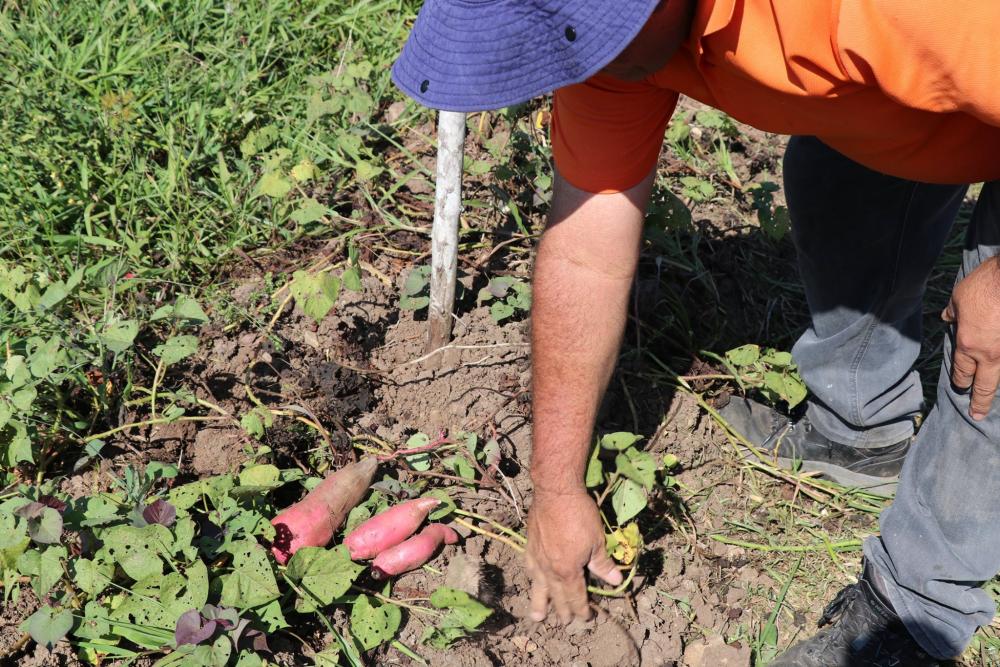
During the first phase of the initiative, the food bank will include white corn, beans, cassava, sweet potato, plantain, pumpkin, banana and highly nutritional fruits like soursop, citrus fruits and guava; as well as some minor species such as poultry and tilapia.
The objective will be to distribute this food to families in the Turrialba and Coronado cantons, where the Covid-19 pandemic has hindered access to food. Through their joint efforts, the EU, IICA and CATIE are demonstrating their social responsibility and solidarity towards the communities that neighbor their facilities.
The food production and diversification model will also be replicated in Central American countries where the PROCAGICA and AGRO-INNOVA projects are currently being implemented. This, in turn, will provide small-scale farming families with access to research findings and innovations that can assist them in overcoming issues related to food and nutritional security.
PROCAGICA stands for Central American Program for Integrated Coffee Rust Management, while AGRO-INNOVA refers to the project Innovative Multi-Strata Agroforestry Systems in the Central American Dry Corridor.
More information:
On behalf of IICA:
Erick Quirós, IICA Special Affairs Coordinator for the Central Region
On behalf of CATIE:
Guillermo Deltlefsen, Coordinator of the AGROINNOVA project on behalf of CATIE