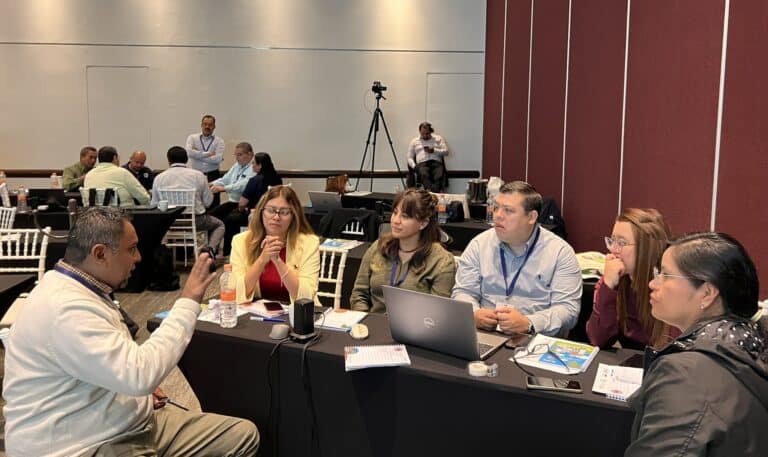
Through an online training course, representatives from 24 countries in the hemisphere will improve their consensus-building skills.
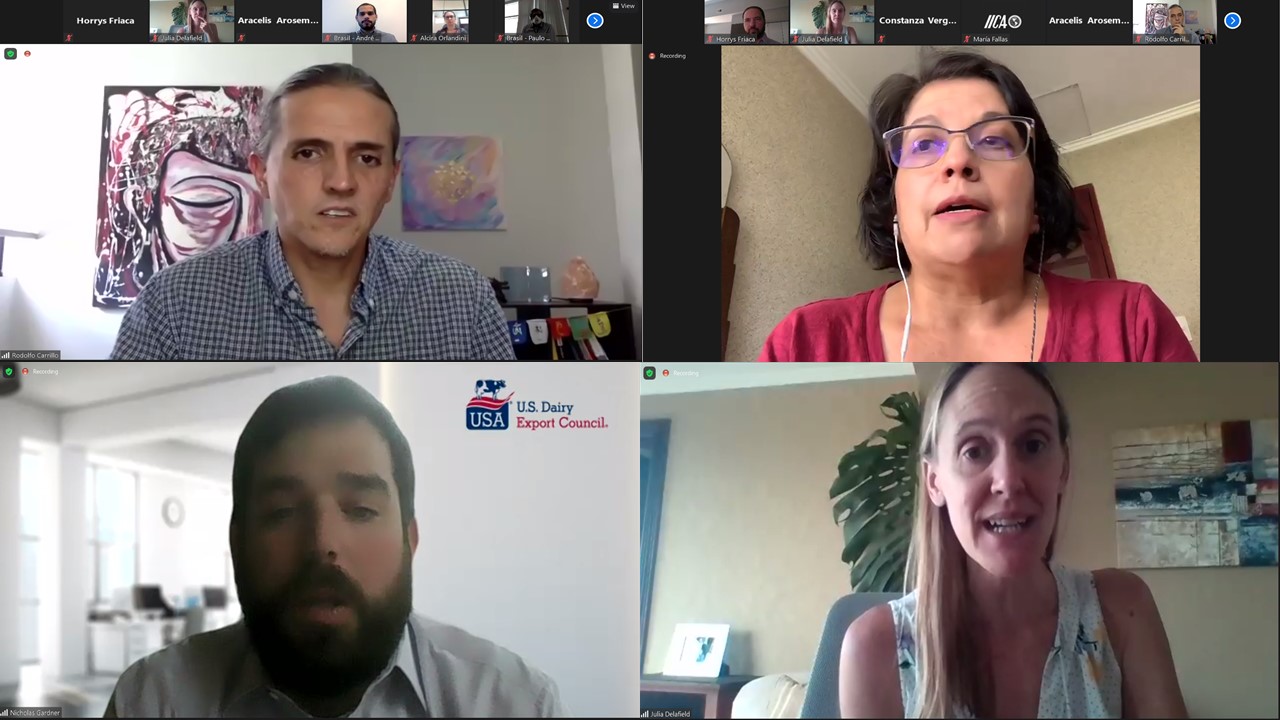
San Jose, 15 April 2021(IICA). The Inter-American Institute for Cooperation on Agriculture (IICA), the U.S. Dairy Export Council (USDEC) and the United Nations University for Peace (UPEACE) began a training exercise in consensus building for members of national Codex Alimentarius committees.
The six-session online course will end next month. Training is in Spanish and English and there are 46 participants from 24 countries in Latin America and the Caribbean (LAC).
The first three sessions addressed concepts and techniques to facilitate consensus and the remaining sessions will cover practical aspects, allowing participants to apply the knowledge gained to solve problems observed in Codex negotiations.
The Codex Alimentarius Commission is the organization that is tasked with defining international standards for food production, control, verification and trade and is recognized by the World Trade Organization (WTO). These science-based food standards are designed to protect consumer health and to guarantee fair practices in the food trade.
“In the Codex system, decisions are usually arrived at by consensus. The process begins at the country level with positions first being established within national committees, and later within working groups and Codex committees and then the Commission. At all levels, consensus building skills are important to enable the process to advance in the correct manner, explained Horrys Friaca, an international specialist in IICA’s Agricultural Health, Safety and Food Quality (AHFS) program.
Horrys also mentioned that the consensus building techniques “usually support the specific knowledge that national officials already have about Codex” and the techniques in the course are “also applicable to other professional challenges commonly faced by national officials”.
Participants who complete the close to 15 hours of theoretical and practical instruction and pass the course will receive a certificate issued by IICA and the University for Peace.
More information:
Ana Marisa Cordero, Interim Manager of the Agricultural Health, Safety and Food Quality (AHFS) program, IICA
ana.cordero@iica.int
Horrys Friaca, International Specialist in the Agricultural Health, Safety and Food Quality (AHFS) program, IICA.