With farmers as key players in agrifood systems transformation, countries of the region are being called upon to consolidate their leading role in food security, noted IICA’s Deputy Director General during an international seminar.
San Jose, 14 February 2024 (IICA)- The use of science-based data and technology, with farmers at the center of productive transformation, will play a key role in strengthening trade in agricultural products from the Americas in European Union markets. The topic was discussed during a specialized panel that included the participation of Lloyd Day, Deputy Director General of the Inter-American Institute for Cooperation on Agriculture (IICA).
During the virtual event, entitled “How the European Union exports its crop protection policies to the developing world”, Day emphasized the fact that countries of the Americas account for one fourth of food production and a third of global exports. Therefore, the share of the region’s agriculture-based economies in European markets is growing.
However, he added, the European Union’s crop protection policies are impacting regional markets and hindering the growth of exports. “The Americas are home to 50% of the planet’s biodiversity. Therefore, thanks to their agricultural production, these countries are the guarantors of the world’s food security. It is important that the voices of their representatives be heard in Europe as well”, said Day during the webinar, which was organized by Agri-Pulse Communications and sponsored by the Crop Protection Action Coalition for Trade (CPACT).
Also participating were Macy Merriman, an independent Brussels-based consultant; Lucy M. Namu, Senior Principal Analytical Chemist at the Kenya Plant Health Inspection Service (KEPHIS); Neil Nagata, President of Nagata Bros. Farms in California, United States; and Hoang Thi Lien, President of the Vietnam Pepper Association.
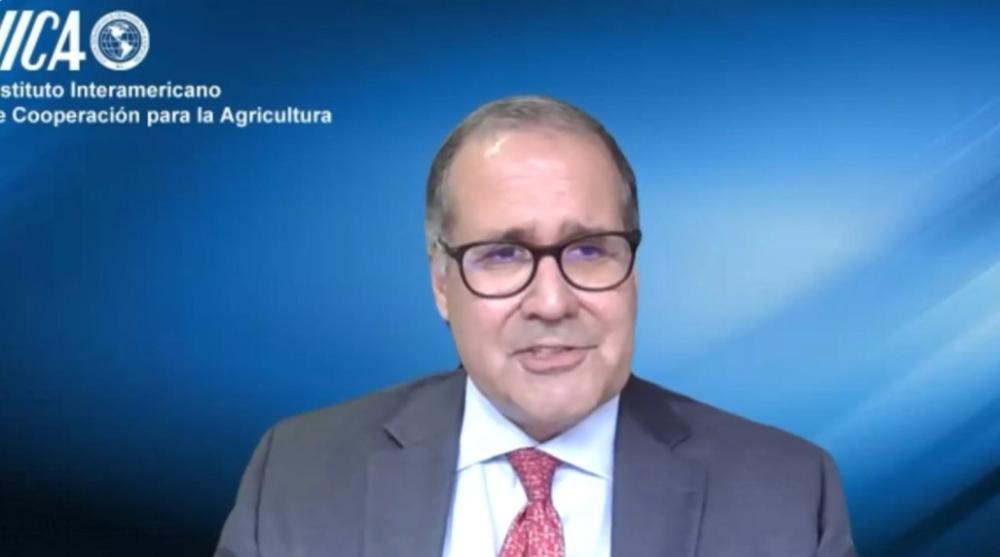
The IICA Deputy Director General commented that the Institute is building bridges to amplify the voice of the region’s agriculture in global forums and international agencies, citing, as an example, the Global Forum for Food and Agriculture held in Germany in January 2024.
“We recently participated in meetings with European Union countries for the benefit of agricultural producers in the Americas, looking to expand their market access and maintain trade relations with Europe”, he explained.
Day also stressed that the European Green Deal and similar regulations around the world must be based on science, to truly generate positive impacts on the economies of participating countries.
“Science, not political science, but rather science-based data, technology and the leading role of farmers must be the pillars of agrifood systems transformation in the Americas, thereby ensuring the continued participation of these economies in European Union markets”, he commented.
Day concluded his remarks by emphasizing the important role of agriculture as part of the solution to the climate crisis, under the principles of producing more with less and minimizing environmental impacts.
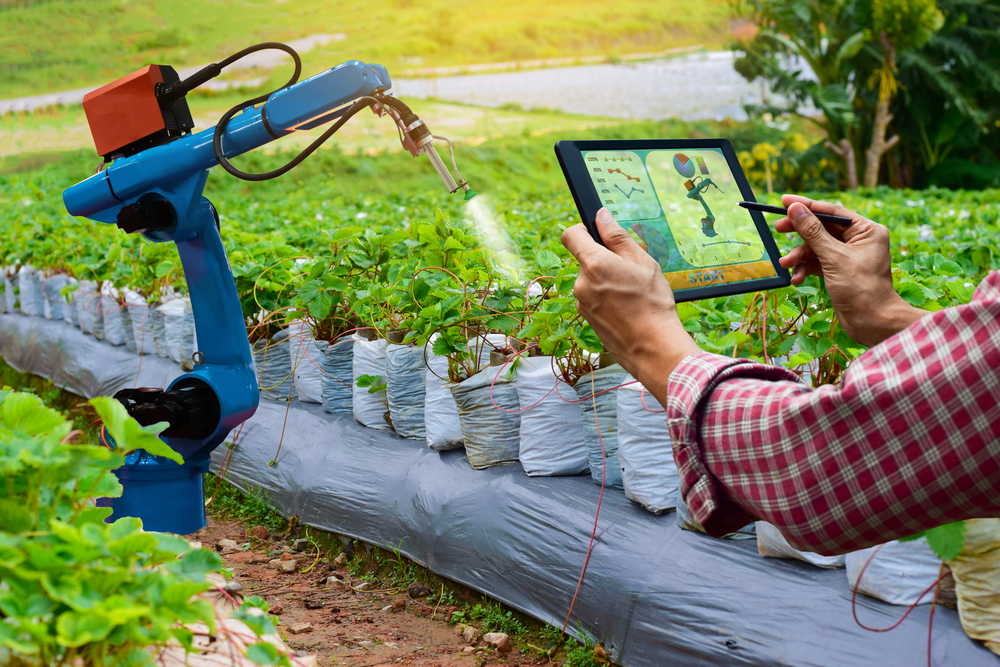
“We are experiencing a new green revolution, with innovation and technology in all its forms, from artificial intelligence to information technology and life sciences, and the combination of all of these branches is creating a revolution in agriculture”, noted the Deputy Director General of IICA.
More information:
Institutional Communication Division.
comunicacion.institucional@iica.int