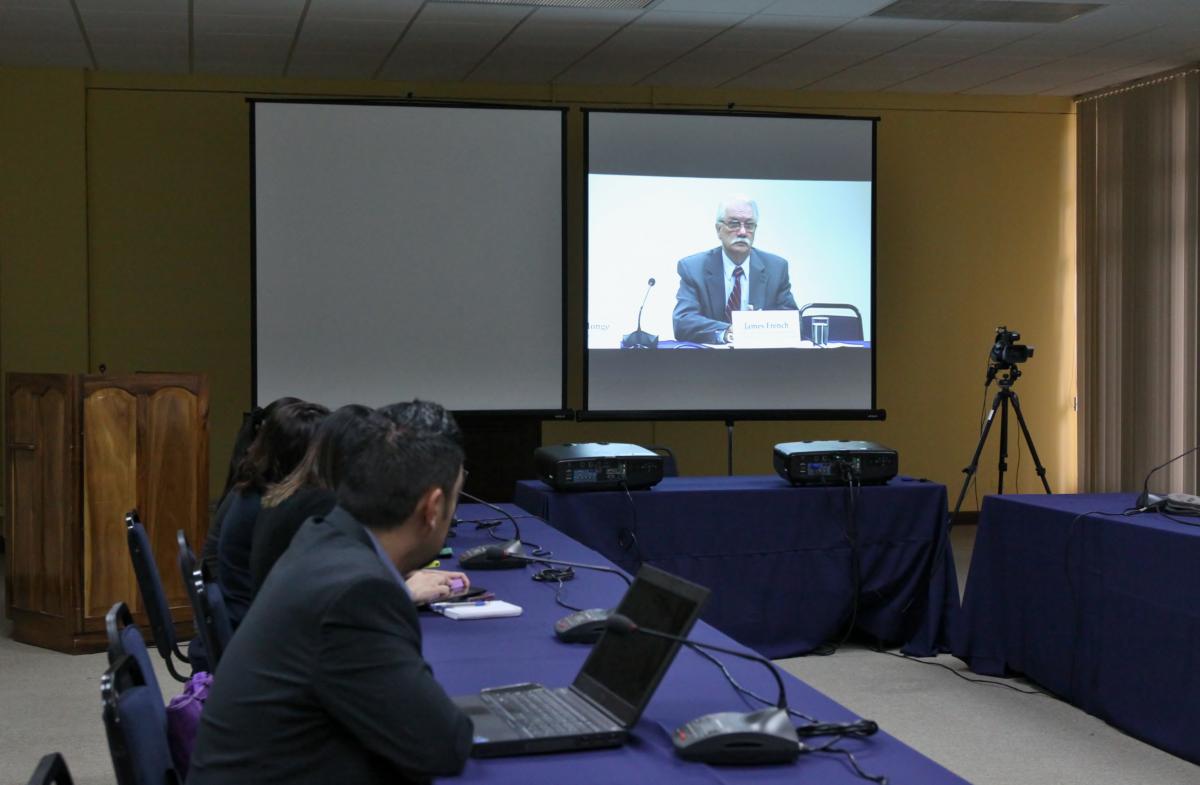
Over 20 countries in the Americas participated in a virtual meeting to analyze how the decisions adopted at the Ministerial Conference in Nairobi could affect their trade policies.

San José, 2 May 2016 (IICA). The Ministerial Conference in Nairobi, held in late 2015, culminated in the adoption of a “package” of ministerial decisions on agriculture with various implications for countries in the Americas, which underscores the critical role the World Trade Organization (WTO) plays in global trade governance.
The Declaration of Nairobi establishes a special safeguard mechanism for developing country members and preferential treatment for Least Developed Countries (LDCs), as well as rules for public stockholding for food security purposes and rules for export competition.
With the aim of strengthening knowledge of this topic, the Inter-American Institute for Cooperation on Agriculture (IICA), which manages the WTO Reference Center at the regional level, organized a global forum, attended by representatives from over 20 countries in the hemisphere. The forum was organized in recognition of the broad range of economies and levels of development across the American continent and of the need for countries to analyze the possible implications of these decisions for the development of trade policy and international business.
The Declaration of Nairobi reinforces the commitment made by governments at the Doha Round to eliminate export subsidies for agricultural exports; although these subsidies were more common in the past, their elimination is critical to reducing distortions in global trade.
In the case of developed countries, these subsidies would be completely eliminated by the end of 2023. The LDCs and Net Food-Importing Developing Countries agreed to eliminate the subsidies by 2030.
“The Nairobi decisions also include an agreement to expand trade, ranging from agriculture, development and treatment of least developed countries, to trade in information technology products. These decisions are international commitments in which governments agree to generate reforms in order to improve trade and reduce distortions in the market,” stated Nadia Monge, WTO Reference Center technician.
“Countries that will eliminate the use of export subsidies, guarantees or credits must also worry about macroeconomic policies, such exchange rates, which could significantly affect the competitiveness of the agricultural sector,” stated Joaquín Arias, IICA Specialist in Policies and Sectoral Analysis, who served as the event moderator.
Monge added that changes in trade and trade rules also required governments and businesses in developed countries to build up their technical and strategic capacities for negotiating, managing, and implementing international trade and other agreements, in order to consolidate positions and benefit from trade.
The analysis of the implications of the Nairobi Package was presented by renowned experts at the national and regional levels. Ulla Kask, Counsellor with the Agriculture Division of the WTO Secretariat, gave the main presentation of the forum.
Eugenio Díaz Bonilla, of the International Food Policy Research Institute (IFPRI); José María García Álvarez-Coque, of the Polytechnic University of Valencia; Timothy E. Josling, of the University of Stanford; Débora Cumez, of the Office of the Guatemalan Mission in Geneva before the WTO; Alex Rafael Salazar, of the Ministry of Agriculture, Livestock and Food of Guatemala; and James French, Nadia Monge and Joaquín Arias, IICA specialists, were among the participants.
Held in the form of a virtual meeting, the IICA forum received support from the WTO Reference Center Program in Geneva, the WTO Reference Center at the Ministry of Economy of Guatemala, as well the IICA Delegations in the United States and Guatemala and the IICA Permanent Office in Europe. The initiative is also part of the actions implemented by the IICA Flagship Project “Competitiveness and Sustainability of Agricultural Chains.”
More information: nadia.monge@iica.int
Information about the event: goo.gl/Z24pKq