
Santa Cruz de la Sierra, Bolivia, 13 July 2026 (IICA). The ministers of agriculture of the countries that make up the Southern Agricultural Council (CAS) have spoken out against unilateral non-science-based regulatory approaches that are disguised restrictions on open and predictable international trade in foodwith clear rules.
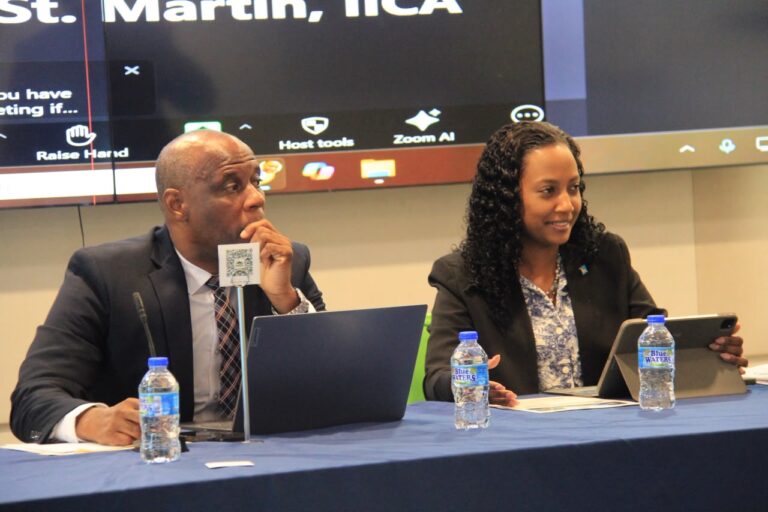
The ministers of agriculture of the CAS member countries (Argentina, Bolivia, Brazil, Chile, Paraguay, and Uruguay) were unequivocal in their rejection of such measures at the 52nd Regular Meeting of the forum for consultation and coordination of regional actions, which was held in Santa Cruz de la Sierra, Bolivia.
The participants reaffirmed the CAS’s role as a promoter of regulatory solutions that combine environmental objectives with the preservation of an open and predictable rules-based international trading system.
They expressed satisfaction with the fact that this month the European Parliament voted to reject a rule that would have classified soybeans as a raw material with a high risk of indirect land use change. Had this rule been adopted, the use of biofuel made from soybeans would have been banned in the EU as part of its energy transition objectives.
The meeting in Santa Cruz de la Sierra was attended by the Minister of Productive, Rural and Water Development of Bolivia and Chair pro tempore of the CAS, Óscar Mario Justiniano; the Minister of Agriculture of Chile, Jaime Campos; the Minister of Livestock, Agriculture and Fisheries of Uruguay, Alfredo Fratti; the Advisor to the Ministry of Agriculture and Livestock of Brazil, Sibelle de Andrade Silva; the Undersecretary for Food Markets and International Integration at the Ministry of Agriculture, Livestock and Fisheries of Argentina, Agustín Tejeda; and the Director of Planning at the Ministry of Agriculture and Livestock (MAG) of Paraguay, Félix Carballo.
The participation of Chile’s Minister of Agriculture, who took office this year, marks the return to the CAS group of one of its founding members, as Jaime Campos also served on the Council in 2003.
Campos praised the work of the CAS and mentioned important figures such as Roberto Rodrigues and Gonzalo González, who were the ministers of agriculture of Brazil and Uruguay, respectively, at the time of the forum’s founding.
Other participants in the meeting included the Technical Secretary of the CAS and Representative of the Inter-American Institute for Cooperation on Agriculture (IICA) in Brazil, Gabriel Delgado, and the IICA Representative in Bolivia, Federico Ganduglia.
IICA operates the Technical Secretariat of the CAS, which for more than 20 years has played a key role in defining the common agricultural agenda of the six member countries, and in establishing joint positions on issues of regional interest. The forum has a network of regional technical support groups that underpin and implement the ministers’ decisions.
Need for coordinated action
Minister Justiniano drew attention to the “special significance” of the meeting for Bolivia, since it had been 13 years since the CAS had held a session in that country, describing the forum as a key space for regional dialogue and knowledge sharing.
He also referred to Bolivia’s regularization of its membership of the Standing Veterinary Council (CVP) of the Southern Cone.
During the meeting, the participants stressed the fact that, while the issues on the agricultural agenda have changed since the CAS was created in 2003, the need for dialogue and coordinated action among countries remains as relevant as ever.
The ministers also emphasized the CAS countries’ important contribution to global food production and exports, thanks to their proven track record as leaders in the adoption of good production practices, sustainable production systems, and innovative technologies.
The declaration approved by the ministers welcomed the European Parliament’s rejection of a rule that would have set specific limits for biofuels produced from food and feed crops that the EU considers constitute a high risk of indirect land use change.
The ministers pointed out that the vote to reject the rule on July 8 was “a measure that reflects our concern about the adoption of measures which are not supported by a scientifically validated methodology for accurately quantifying their real impact and would therefore impose an arbitrary and discriminatory technical barrier to trade.”
The rule change would have had a significant impact on the CAS region, one of the world’s largest producers of soybean, and, in particular, on soybean-based biodiesel exports to the EU.
The CAS declaration noted the importance of continuing to strengthen the strategic relationship between the EU and the countries of South America in order to deepen the technical and political dialogue aimed at reconciling environmental objectives with an open and predictable rules-based international trading system.
During the meeting, the ministers also exchanged information and discussed common strategies of the CAS countries in light of the EU’s Regulation 1115 concerning primary products that cause deforestation, whose entry into force was postponed last December for the second time.
Furthermore, they discussed a common position regarding the regulatory initiatives under discussion in the EU on maximum residue levels (MRLs) and import tolerances for plant protection products, given the strategic importance that these issues have for agrifood relations between the CAS countries and the European bloc.
The ministers attended a presentation by World Bank specialists on the progress made in analyzing a regional group insurance project for climate events that impact agricultural activities. It is an insurance project for states – not individual agricultural producers – which, if adopted at the regional level, would be less expensive and basically cover losses caused by droughts, which are the climate events that have the biggest economic impact on agricultural activities.
The Bolivian Hydrocarbons Industrialization Corporation (EBIH) also gave a presentation about its granular fertilizer production plant in Cochabamba, while the Cooperative Program for Agrifood and Agroindustrial Technology Development in the Southern Cone (PROCISUR) presented a report on the climate outlook in the region and its impact on productive activities.
More information:
Institutional Communication Division.
comunicacion.institucional@iica.int