
Santiago, Chile, 10 July 2026 (IICA). Latin America and the Caribbean is transitioning toward sustainable rice production, as demonstrated by a technical cooperation project being implemented by the Inter-American Institute for Cooperation on Agriculture (IICA) with support from the Global Methane Hub and other regional agricultural research institutions. The project, which is being carried out in Brazil, Chile, Ecuador, and Uruguay, has the potential to generate lasting economic, social, and environmental benefits.
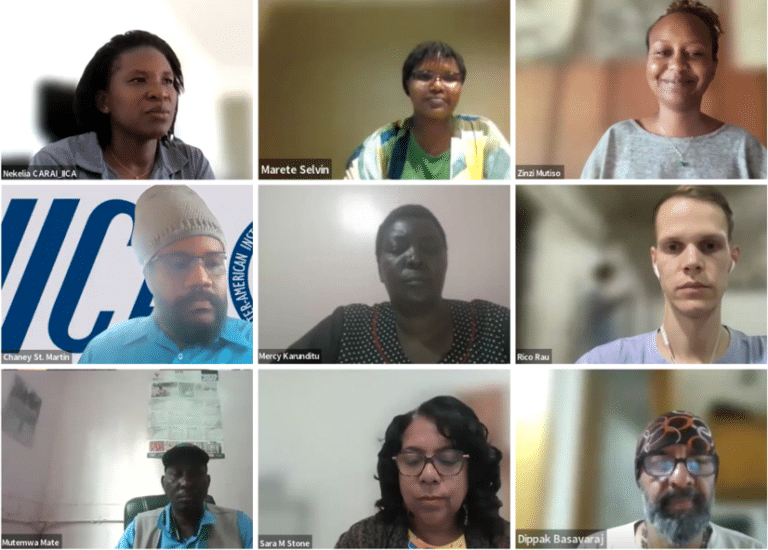
The main results of the last two growing seasons, as well as the lessons learned and the challenges that lie ahead, were shared during a regional webinar in which researchers, rice producer organizations, and other stakeholders involved in climate finance took part.
Rice is an essential crop for Latin America’s food security, and small farmers produce most of it. Traditional paddy rice production generates significant amounts of methane, a highly potent greenhouse gas, and is also inefficient in the use of resources such as water.
Therefore, the transition toward sustainable production offers great opportunities, including lower production costs, greater resilience for farmers, and a drastic reduction in emissions and water consumption.
The “Transition toward sustainable rice production in Latin America” initiative is based on technological innovation, and focuses on the actual situation, background knowledge, and practices of the farmers who grow rice,one of the most consumed foods in the countries of the region.
Fernando Barrera, an IICA specialist based in Chile and the regional coordinator of the project, gave a presentation on the initiative’s objectives and what has been achieved so far, while the experiences in the different countries were described in detail by Karla Cordero from Chile’s Agricultural Research Institute (INIA), Alvaro Roel from Uruguay’s National Agricultural Research Institute (INIA), Marcelo Castro from IICA Ecuador, Cimelio Bayer from Brazil’s Rio Grandense Rice Institute (IRGA), and André García, from the Santa Catarina Agricultural Research and Rural Extension Corporation (EPAGRI), also located in Brazil.
Barrera explained that the project employs a holistic strategy based on technological innovation, emissions measurement, public policy advocacy, access to financing, and scaling up with climate funds.
Based on the conviction that the human factor is essential to bring about change, the project set out to gather information about farmers’ background knowledge, attitudes, and practices. By conducting more than 170 interviews, it obtained a clear picture of the Latin American rice producer.
Researchers found that farmers were largely unaware of the scale of the methane emissions generated by the use of the paddy system to grow rice. Producers were also extremely reluctant to reduce flooding periods, fearing that such action would lead to lower yields or quality, and given the growing interest in adopting short-cycle varieties. The interviews were combined with participatory workshops aimed at ascertaining the situation at the local level and developing practice plots.
Studies were also carried out on consumer preferences and attitudes in various parts of the world to find out whether the public was willing to pay a higher price for rice.
“Economic incentives and carbon markets can be an important driver of change,” Barrera said. “Making the rice sector in our region visible as an area of high strategic potential for emission reduction projects is key to attracting investments.”
The webinar was opened by Lloyd Day, IICA´s Deputy Director General, andKofi Boateng, representing the Global Methane Hub.
“This project symbolizes exactly the kind of technical cooperation that the agricultural sector in our region needs. We are responding with evidence to the question of whether it is possible to produce rice sustainably and build capacity at the regional level. The technical teams in the four countries previously worked in parallel, but are now working in coordination. That is the most valuable asset of this project,” Day noted.
He pointed out that the process of transitioning toward sustainable rice systems requires time, investment, the development of technology, public policies, and regional collaboration. “No country can do it alone,” he emphasized. “The project’s strongest point is the fact that is being implemented at the regional scale, and IICA is a key player because it has a unique presence in all the countries of the continent and enjoys the confidence of the public and private sectors.”
Kofi Boateng referred to the importance of its work in Latin America for the Global Methane Hub, which set itself the goal of reducing agricultural emissions by 10% by 2020, and 50% by 2050. “It is an ambitious goal,” he acknowledged, “but one that can be achieved with coordinated efforts.”
Boateng also said that the Global Methane Hub, a network of scientists, experts, activists, policymakers and philanthropists based all over the world, is working in different countries to advance the development of methods to mitigate methane emissions from rice that are viable for farmers and easy to scale.
“The focus of our research is on agronomic practices, emission measurement tools, seed genetics, improved soil health, and methane emission reduction agents,” he explained.
More information:
Institutional Communication Division.
comunicacion.institucional@iica.int