San José, 7 July 2026 (IICA) – The Americas have consolidated their position over the last decade as the world’s largest producer of liquid biofuels, accounting for more than two-thirds of total global output and an even greater share of bioethanol production, according to a new comprehensive report by the Inter-American Institute for Cooperation on Agriculture (IICA), which provides country-by-country data and analysis on production, consumption, prices, and foreign trade across the region.
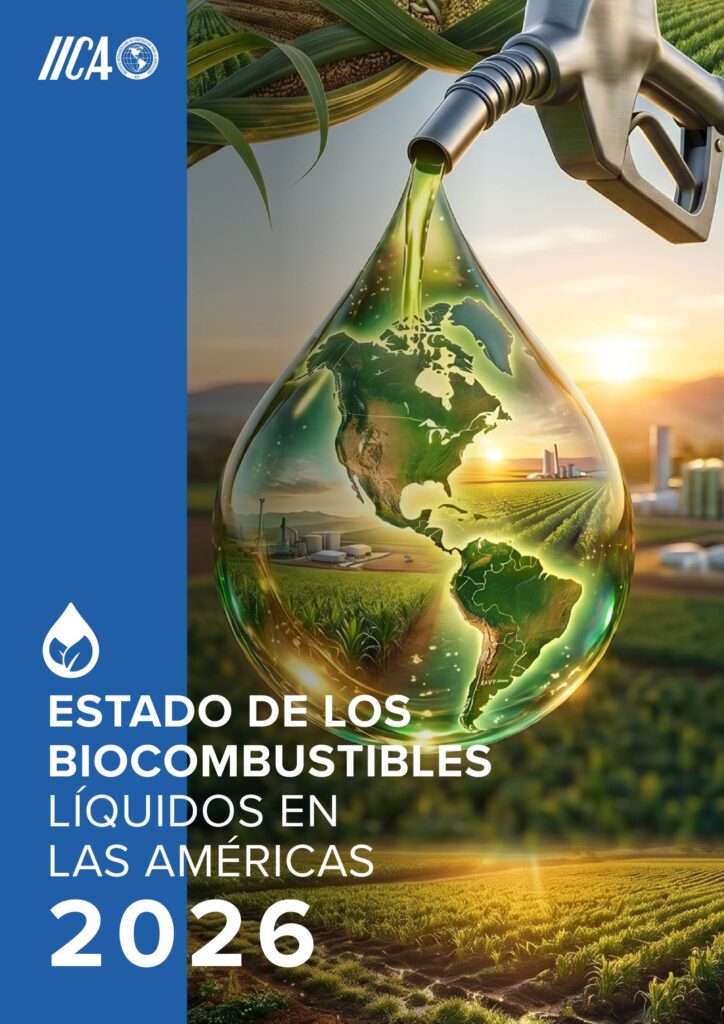
The report, “State of Liquid Biofuels in the Americas 2026”, indicates that in 2025 the Americas accounted for 79% of global bioethanol production (103,103,000 cubic meters) and 40% of global biodiesel production (27,544,000 cubic meters).
The document also notes that biodiesel production in the Americas increased by 125.9% in 2025 compared with 2015 levels, whereas bioethanol production rose by 15.3% over the same period.
As of last year, 11 countries in the Americas had blending mandates requiring the use of liquid biofuels with fossil fuels. Sugarcane, corn, soybean oil, palm oil, and rapeseed oil were the main agricultural value chains supplying feedstocks for the sector. The development of these biological fuels is particularly widespread in the Southern Cone, the United States, and Canada.
The global leadership of the Americas in terms of biofuels is driven by the United States and Brazil, which together accounted for 95.8% of regional bioethanol production and more than 85% of biodiesel production in 2025. The report, which describes the current situation, evolution, and perspectives of the sector, was authored by Agustín Torroba and Anabel Chiara.
Biodiesel consumption in the Americas increased by 87.6% over the last decade, again led by the United States and Brazil, while domestic demand for bioethanol grew by 14.1% during the same period.
Liquid biofuels—renewable fuels produced primarily from feedstocks supplied by the agricultural sector—are a key tool for the energy transition. They provide an immediate and sustainable alternative to fossil fuels and continue to strengthen their position globally, as reflected in the 50% increase in worldwide production over the last decade and the fact that 83% of global consumption takes place in countries or regions that comply with strict sustainability criteria.
Continuous improvements in carbon capture and storage have further reduced the carbon footprint of biofuels, making them an increasingly important instrument for achieving global decarbonization goals.
The region’s strong share of global biofuel production is supported by the abundant availability of biomass throughout the Americas and by the implementation of public policies in several countries. In recent years, these policies have been further accelerated by geopolitical conflicts affecting energy security.
In addition to advancing conventional biofuels, countries across the Americas are making significant public- and private-sector efforts to position the region as the leading supplier of abundant, cost-effective, and sustainable feedstocks for the production of Sustainable Aviation Fuel (SAF). Sustainable marine biofuels are also expanding and are expected to gain further momentum in the coming years.
“Biofuels are a fundamental contribution made by agricultural value chains to strengthen energy, environmental, and food security. These low-carbon renewable fuels make it possible to produce food, fiber, and energy simultaneously, generating significant positive impacts for agriculture. Alongside the already well-established biofuels that contribute to decarbonizing land transport, a new generation of renewable fuels—Sustainable Aviation Fuel and sustainable marine fuels—is emerging to help decarbonize the skies and the seas,” said Agustín Torroba, one of the report’s authors and IICA International Biofuels Specialist.
IICA leads and serves as Technical Secretariat of the Pan-American Liquid Biofuels Coalition (CPBIO), established in 2023 and made up of the leading business and industry associations across the Americas involved in the production and processing of sugar, alcohol, corn, sorghum, soybeans, vegetable oils, grains, and other agricultural commodities. The Coalition’s mission is to decarbonize the economy by promoting the sustainable production and use of these clean energy sources throughout the hemisphere.
More information:
Report: State of Liquid Biofuels in the Americas 2026
comunicacion.institucional@iica.int