This initiative is part of the Mexico-Caribbean-Central American Countries Technical Cooperation Program led by IICA and SAGARPA of Mexico.
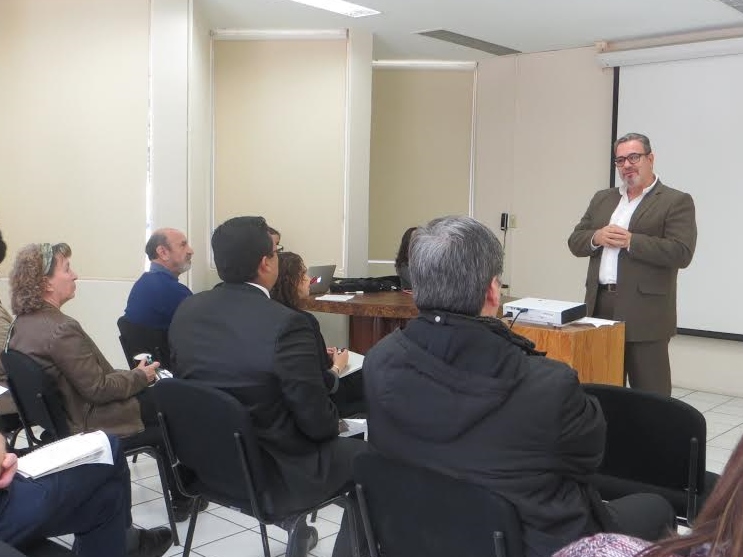
Guanajuato, 25 February, 2016 (IICA). Agricultural technicians, specialists and producers from Latin America and the Caribbean (LAC) will be able to benefit from a course entitled “Applied Biotechnology in Agriculture,” available online as of March. The objective of the course is to improve agricultural production in the region and strengthen national capacities.
The technical training course for professionals and producers is organized by the Inter-American Institute for Cooperation on Agriculture (IICA) and the Center for Research and Advanced Studies of the National Polytechnic Institute of Irapuato (CINVESTAV).
The course, which seeks to strengthen the agricultural sector’s national capabilities, is part of the Mexico-Caribbean-Central American Countries Technical Cooperation Program led by IICA and the General Secretariat of Agriculture, Livestock, Rural Development, Fisheries and Food (SAGARPA) of Mexico. This program addresses the specific needs of the participating countries through short training events that focus on improving agricultural productivity and generating a positive economic impact.
The course lasts eight weeks and includes six modules that provide an overview of biotechnology and its foundations; soil and its microorganisms; genetics and molecular tools; and food security.
According to Franklin Marín, Coordinator of IICA’s Center for the Promotion of Technical Capabilities and Leadership, this initiative is an effective tool for fostering the agricultural, productive and economic development of participating countries.
“Biotechnology contributes to the development of agriculture, hence the importance of promoting training courses that harness the use of techniques for improving production and preserving biodiversity,” he stated.
On the other hand, the Director of CINVESTAV Irapuato, Gabriela Olmedo, stated that food security requires multidisciplinary work, since Latin America and the Caribbean face diverse and common problems in the development of a more productive and competitive agriculture.
Aníbal González, Director of Planning for SAGARPA, stated that Mexico is committed to driving cooperation with LAC via in-person and online courses, as well as doctorates, to contribute to the region’s agricultural development. Applications can be submitted here.
More information: franklin.marin@iica.int – ena.resendiz@iica.int