
Inter-American Institute for Cooperation on Agriculture

Agribusiness

PH Management Training

Tiempo de lectura: 3 mins.

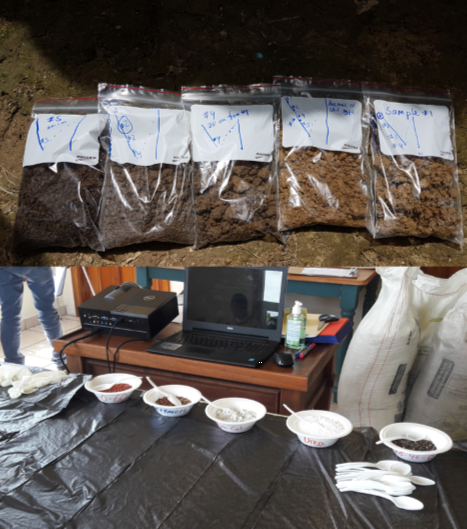
One of the main problems facing the banana industry in Belize is a decrease in productivity due primarily to declining soil fertility/health. Banana farms in Belize suffer from varying degrees of soil compaction and high soil acidity (low pH) levels, and nutrient depletion that leads to soil degradation. Pest and disease infestations are also prominent in the hot and humid environment of Belize. Bananas prefer a slightly acidic to neutral soil, ranging from 5.5 to 6.5 on the pH scale.  PH can be modified in soils by doing several practices.  Just as you can add compost to moderate the consistency of a clay or sandy soil, there are amendments that can make the soil more acidic or more alkaline to better suit banana production, but the amendments do not change the soil overnight.

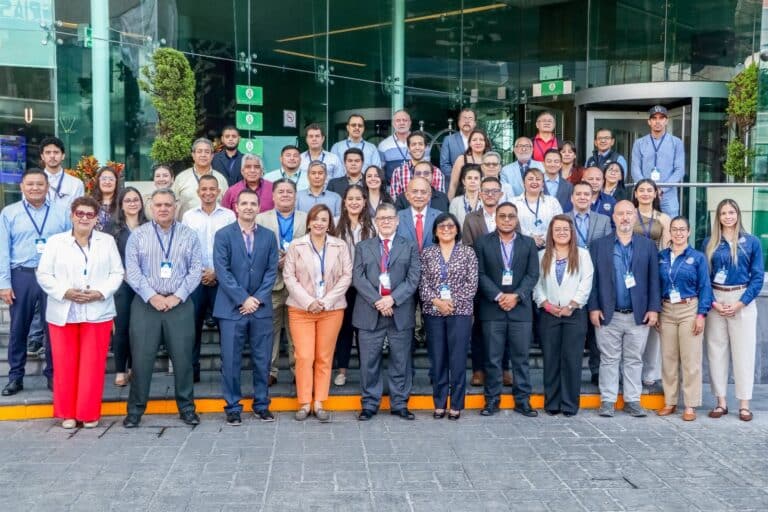
In keeping with the Technical Capacity Building for “Upgrading farmers and technicians agronomic and diagnostic skills under the framework of good agronomic practices”,  on June 18-19, 2018, a two-day workshop was done on pH management and was delivered by the International Specialist on Soils and Water Management, Dr. Chaney C.G. St. Martin from the IICA Delegation in Trinidad and Tobago.  Twenty-three persons including, farm managers, technicians and extension officer from the Ministry of Agriculture, attended the training. 


More information:
everalda.westby@iica.int

Share

Related news​

Ciudad de México

March 2, 2026

Liliana Riva Palacio, a Mexican educator who has unleashed the power of indigenous agricultural communities in her country and is fighting to strengthen them, is named as an IICA Leader of Rurality of the Americas

Liliana founded ConcentrArte, an organization that works in rural areas affected by multi-dimensional poverty, crop-related problems and lack of access to basic resources, such as electricity and water.

Tiempo de lectura: 3mins

San José, Costa Rica

March 2, 2026

IICA and the Japanese cooperation agency will promote a globally successful methodology to strengthen the market integration of family farmers in the Americas

Through a five-year agreement, the international organizations will promote the SHEP methodology in Latin America and the Caribbean to advance toward market-oriented family farming with greater profitability, climate resilience and stronger institutional coordination.

Tiempo de lectura: 3mins

Gainesville, USA

February 27, 2026

University of Florida and the Inter-American Institute for Cooperation on Agriculture Join Forces for Safe and Abundant Food in the Western Hemisphere

Key areas of focus include preventing agricultural threats, enhancing safe and nutritious food supply, and other long-term cooperation actions to improve agricultural health and prosperity for farmers and consumers.

Tiempo de lectura: 3mins