The Inter-American Institute for Cooperation on Agriculture (IICA) Delegation in Guyana in Collaboration with the New Guyana Marketing Corporation (NGMC) continues to provide technical assistance in the form of training of to farmers and agro-processors.
The Inter-American Institute for Cooperation on Agriculture (IICA) Delegation in Guyana in Collaboration with the New Guyana Marketing Corporation (NGMC) continues to provide technical assistance in the form of training of to farmers and agro-processors.
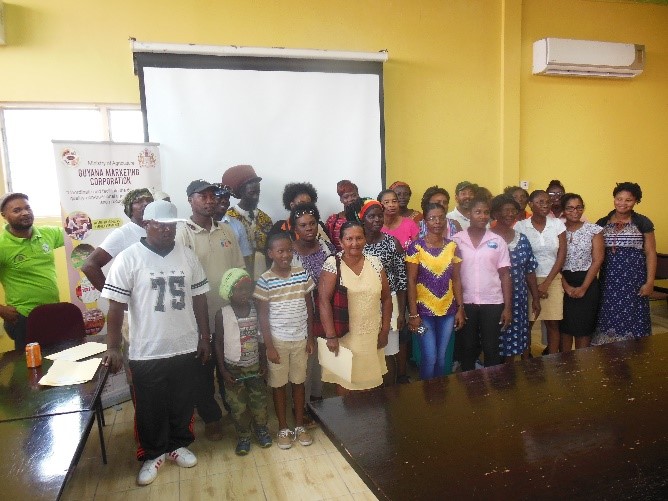
The ongoing partnership in this instance targeted twenty-five farmers and agro-processors in a cost of production workshop held in the boardroom of the LEN Building in the mining town of Linden, Region 10. The participants comprised of farmers producing seedlings for sale and crops such as sorrel, vegetables and fruits. The agro-processors indicated that they were into the production of virgin coconut oil, soaps, cosmetics, hams and sausages, seasonings, pepper sauce and plantain chips. The presentation defined what Cost of Production is and the benefits of knowing costs of inputs for producing primary and value added products.
Like the previous workshops in St. Ignatius, Supernaam, Parika, Crabwood Creek, Mara and Georgetown the training workshop facilitator by IICA placed participants to work in groups for selected items. Participants were then guided, allowing them to list and cost all the activities that make up the chain of events that is needed for production. The methodology used was simple and participants got a quick grasp of the calculations.
In evaluating the activity at Linden the agro-processors indicated their appreciation for the training and indicated that they are in a better position to calculate their profit margins and this will allow them to more competitive.
The lone agro-processor producing plantain chips indicated after the workshop that when she compared the input to output benefits, it made more sense to her to only produce these chips when the price of the raw plantains was lower. She said that the workshop “opened her eyes” and if she got an order for plantain chips now that the price per packet has to be more in order for her to “make something”.