
San José, Costa Rica, 5 December 2024 (IICA) Health authorities from Latin America and international organizations strengthened strategies to prevent the spread of the New World Screwworm in the region during a meeting held in San José, Costa Rica. The event focused on coordinating actions to address this parasite and advancing its control through training and communication initiatives.
The meeting was part of the project “Capacity Building in Risk Management and Communication for the Prevention, Control, and Eradication of the New World Screwworm in Central America and Mexico,” led by the Inter-American Institute for Cooperation on Agriculture (IICA) in partnership with the Panama–United States Commission for the Eradication and Prevention of Screwworm (COPEG), the International Regional Organization for Plant and Animal Health (OIRSA), and FAO, with support from the Animal and Plant Health Inspection Service (APHIS) of the United States Department of Agriculture (USDA).
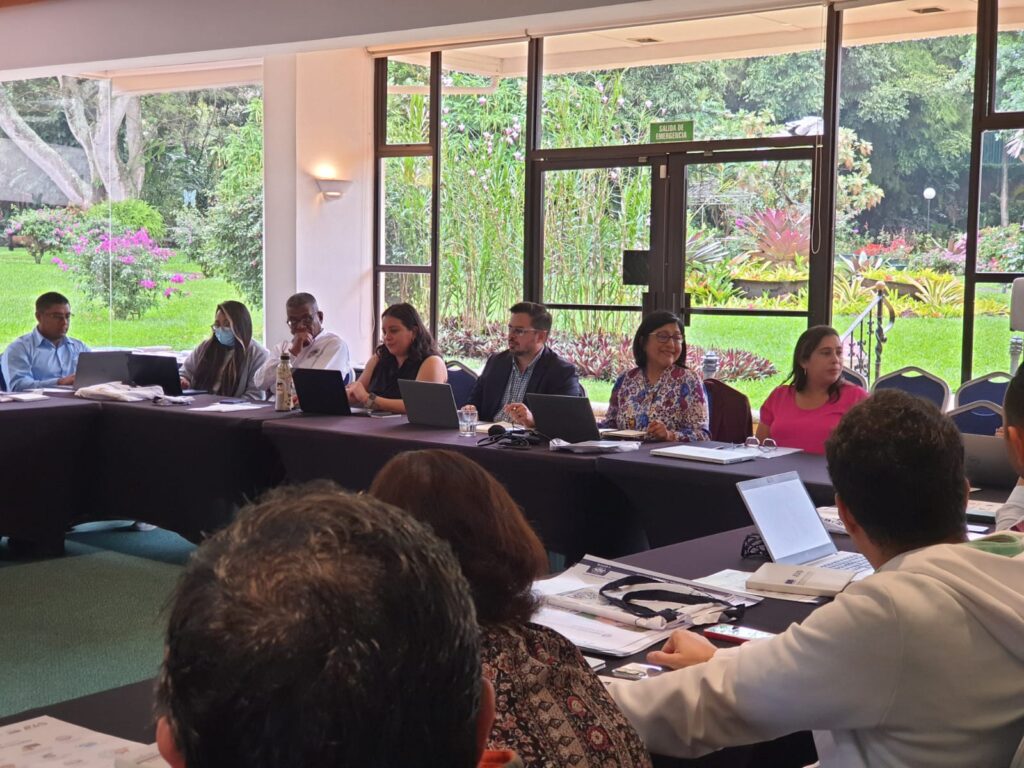
Participants jointly planned the training and communication aspects necessary for the prevention, control, and eradication of the New World Screwworm. At the meeting, experts emphasized the importance of timely and effective communication in addressing the health emergency caused by this parasite. Strengthening coordination among regional and international organizations was proposed as a strategy to better meet countries’ demands for training and communication on the pest.
The meeting highlighted the need for strategic partnerships with the private sector to implement coordinated actions that contribute to the eradication of the New World Screwworm and the protection of animal and public health in the region.
The New World Screwworm (Cochliomyia hominivorax) is a parasite that causes a disease known as myiasis, primarily affecting livestock but also capable of infesting other warm-blooded animals, including humans. Myiasis occurs when screwworm fly larvae infest open wounds or mucous membranes, feeding on the host’s living tissue, leading to severe damage, secondary infections, wound enlargement, and even death. The parasite is endemic to tropical and subtropical regions.
Inter-institutional Collaboration
The event featured the participation of Manuel Otero, Director General of IICA; José Urdaz, Manager of the Animal Health and Food Safety Program at IICA; Monike Sánchez, Head of Communications and Strategic Alliances at COPEG; Eva Bravo, Animal Health Specialist at FAO’s Subregional Office for Mesoamerica; and Alejandra Díaz, Specialist in Agricultural Health, Food Safety, and Quality at IICA and the project’s coordinator. They emphasized the importance of collaboration among countries, international organizations, and the private sector and the need to implement effective training and communication strategies.
They also underscored the importance of raising awareness about the pest and its consequences and explained that eradicating the New World Screwworm is a long-term challenge requiring sustained commitment.
Otero stressed the importance of joint efforts between the public and private sectors of affected countries and the need for institutional resources to support them. He noted that IICA is actively working on communication and training campaigns throughout Central America, utilizing various media such as radio, television, social networks, and printed materials.
“I am concerned about the arrival of the screwworm at Mexico’s border and the need for precautionary measures related to trade. We must not overlook the importance of raising awareness about the pest’s impacts on production, human health, and the environment,” Otero added.
Urdaz highlighted the seriousness of the screwworm pest and the need for a joint and sustained effort for its control, stressing that eradication cannot be achieved in just one or two years. He pointed out the pest’s growing incidence, negatively affecting animal welfare, public health, and regional and international trade. Urdaz emphasized the importance of keeping producers informed about the magnitude and consequences of the pest and ensuring effective inspection and control of their animals.
Monike Sánchez emphasized the unique opportunity to work together and unify criteria and messages to combat this pest. She called for coordinated efforts among the population, producers, and all stakeholders to understand how the pest operates, how to prevent it, and how to fight it effectively.
Bravo emphasized the importance of collaboration among affected countries to tackle the pest. On behalf of FAO’s representative in Costa Rica and Mesoamerica, she stressed the need to work as a united bloc, avoiding redundancies, and seeking the best options to combat the disease.
Alejandra Díaz outlined the project as an IICA-APHIS work plan to develop capacities in risk management and communication for the prevention, control, and eradication of the New World Screwworm in Central America and Mexico.
“The project is being implemented under the One Health approach, given the disease’s characteristics and its impacts on animal health, human health, and the environment,” Díaz added.
More information:
Institutional Communication Division.
comunicacion.institucional@iica.int