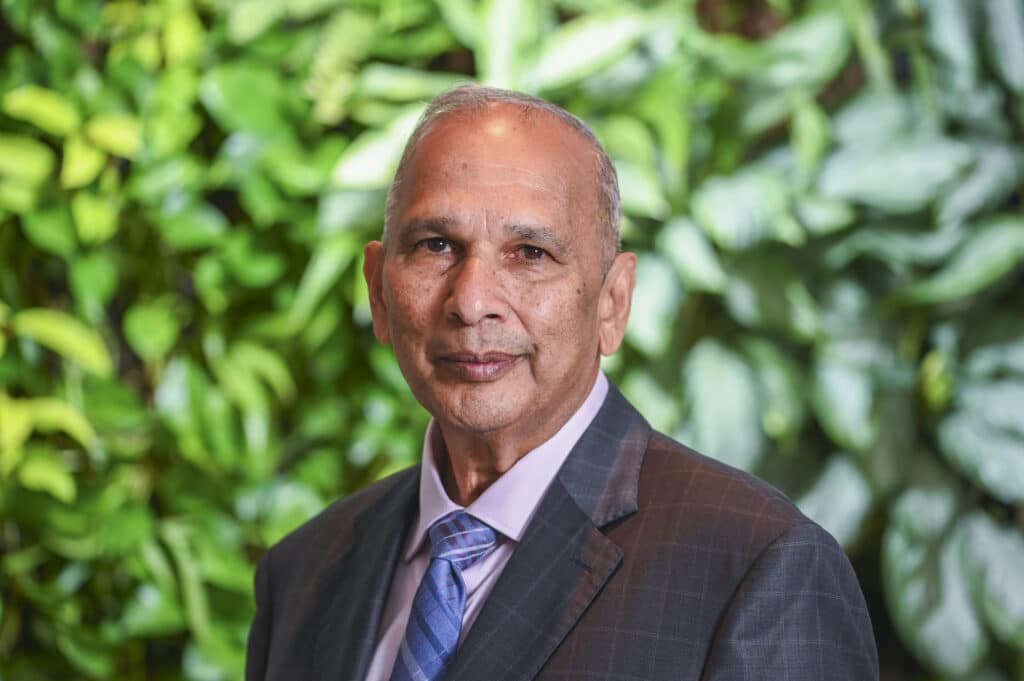
“The challenge that agriculture faces are significant and IICA cannot do it alone” stated Director General of IICA, Víctor M. Villalobos.

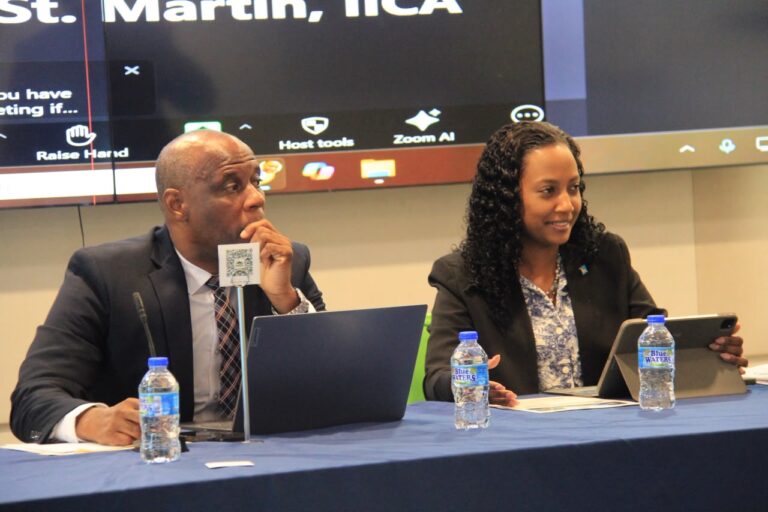
Washington, 2 May, 2016 (IICA). On April 19th, 2016, the Inter-American Institute for Cooperation on Agriculture (IICA) convened a meeting with members of the private sector to offer IICA as a platform to work together to address the challenges of agriculture.
The Director General of IICA, Víctor M. Villalobos, the Deputy Director General of IICA, Lloyd Day and IICA’s U.S. Representative to the USA and Head of the Center for Strategic Analysis for Agriculture (CAESPA), Miguel Garcia Winder provided an overview of what is IICA and how IICA works to create a competitive, inclusive and sustainable inter-American agriculture.
During the meeting IICA’s Director General stated that it is not an easy task to provide technical assistance to all 34 member countries. He emphasized that the advancement of the agriculture sector relies on working with the private sector. He asked attendees of the meeting to suggest ways in which IICA could advance in this important task with them. For those already working with IICA, he thanked them for considering IICA as a partner in projects and activities that have been executed in various countries. He expressed hope to do more to increase working together.
The Director General stated that the Institute understands the challenges agriculture faces and IICA has the capacity to respond to this internally, but externally IICA recognizes the many limitations of the institute and needs strong alliances with partners.
Villalobos also shared that IICA has made changes in how the institute functions moving from traditional practices of providing technical assistance to a modern practice through the use of projects. Through this system, IICA is now more efficient to respond rapidly to IICA member countries.
IICA operates projects that produce concrete results, through the effective and transparent use of all human, financial and infrastructure resources in each country.
The Director General listed the institute’s flagship projects:
- Competitiveness and sustainability of agricultural chains for food security and economic development
- Inclusion in agriculture and rural areas
- Resilience and comprehensive risk management in agriculture
- Productivity and sustainability of family agriculture for food security and the rural economy
Similarly, he explained other areas through which the institute operates:
- Externally funded projects, whose technical or administrative management is assigned to IICA by one or more of its partners.
- Rapid response actions to address specific situations as they arise, for which IICA mobilizes its technical capabilities in answer to a request for short-term support from a member country.
- Pre-investment initiatives, aimed at securing and mobilizing complementary financial resources.
Additionally, IICA has continued to make Agricultural Health and Food Safety (AHFS), an issue of particular importance for the member countries, a high priority of technical cooperation.
IICA’s Deputy Director General, Lloyd Day shared support with the Director General stating that the innovation that occurs in agriculture can be accomplished by working with the private sector.
He added that the opportunity for IICA to work with the private sector will help to create more science based policies for member countries. He proposed the creation of a Friends of IICA consultation group with the private sector to work on issues that are important to both parties. He shared that international aid for Latin America and the Caribbean (LAC) agriculture is quite small since most of it goes to other regions. He encouraged the members of the private sector to view LAC as the breadbasket to feed the world.
More information: