The event highlighted the fact that the bioeconomy is a tool to harness biological resources for the production of goods and services, in an environmentally friendly manner.
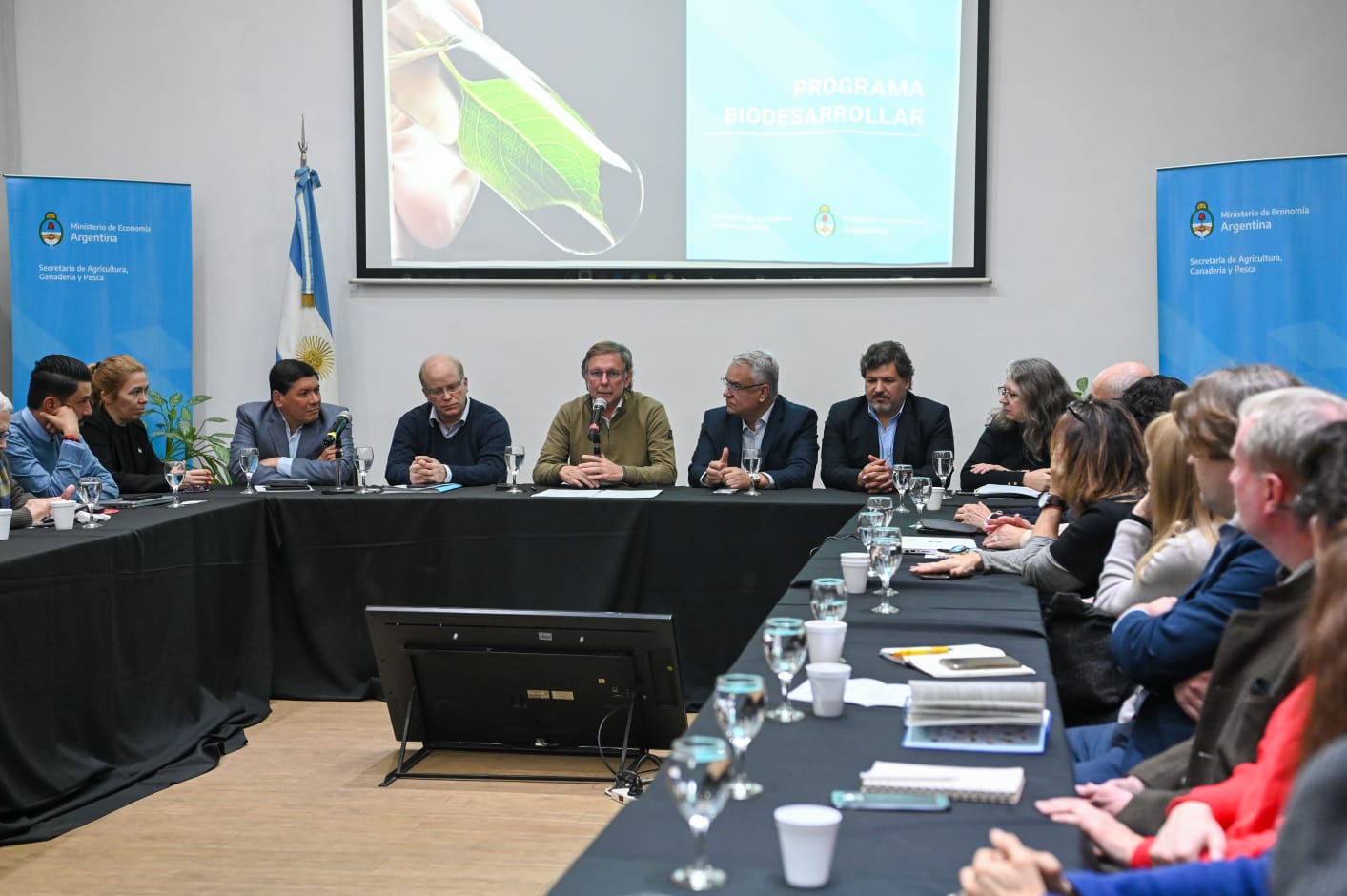
Buenos Aires, 13 July 2023 (IICA) – In a bid to strengthen the bioeconomy and fuel bioproduct development, the Government of Argentina has introduced a program to offer technical and financial assistance to micro, small and medium-sized businesses, cooperatives and research entities that are either public or joint public-private ventures.
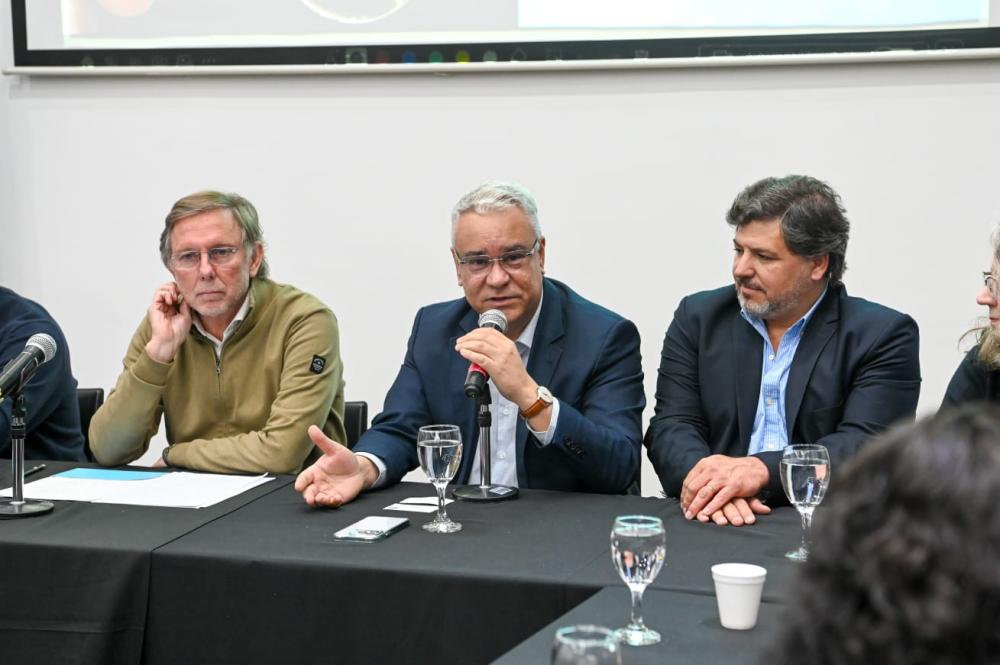
The BiodesarrollarAr initiative was launched at a seminar in Buenos Aires, which was attended by Juan José Bahillo, Secretary of Agriculture, Livestock and Fisheries of the Nation, and Fernando Camargo, Representative in Argentina of the Inter-American Institute for Cooperation on Agriculture (IICA). The bioeconomy can be defined as the use of biological resources to produce goods and services in an environmentally friendly manner. It is seen as an alternative to the fossil fuel-based economy and therefore as a key tool to overcome the climate crisis.
Bahillo remarked that, “We are moving one step forward with the bioeconomy and implementing concrete public policies. Sometimes the State lags behind the private agenda, but with the Biodesarrollar Program we are promoting new ways to generate and apply knowledge, aimed at bolstering the social, production and environmental development of various communities across the country”.
Argentina’s Secretary of Agriculture highlighted the support of IICA and, in reference to the specialized agency for agricultural and rural development said, “We have a similar vision of the world that we love and the way in which we should produce food”.
On the other hand, Fernando Camargo indicated that the development of the bioeconomy is a priority on the agenda of IICA. “Argentina is a bioeconomy leader in Latin America. It was one of the first to develop biotechnology projects, spurred by the private sector. Today there is public support, and this collaboration is the secret to success, as we always say at IICA”.
“When we mention the bioeconomy, we are talking about tackling the climate emergency. We must advance and create first-class institutions to drive the development of bioinputs, biofertilizers, biogas, bioethanol and other bioeconomy products”, he stressed.
Speaking at the event, Luis Contigiani, Undersecretary of Food, Bioeconomy and Regional Development, explained that, “This is a program that is in keeping with the Secretariat’s bioeconomy development strategy, which seeks to establish closer contact with businesses and institutions that want to develop these types of projects”. He stressed that, “It is our responsibility to create the conditions for this to happen, introducing flexible approaches within the State, which will help us to make a significant qualitative leap”.
Latin American Bioeconomy Network
Hugo Chavarría, Manager of IICA’s Innovation and Bioeconomy Program was also present. He gave an overview of the status of the bioeconomy in Latin America and the world. Other participants were Milagros Barbieri, Undersecretary of Production and Sustainable Improvement of Small and Medium-scale Farmers; Juan Manuel Fernández Arocena, Chief of Staff of the Secretariat of Agriculture; Dalia Lewi, National Director of Bioeconomy; José Portillo, Coordinator of Fondagro, and experts from academia, among others.
Last week, the Argentine Government and IICA co-organized the 27th Annual Conference of the International Consortium on Applied Bioeconomy Research, bringing together the world’s leading researchers and scientists in the field for four days of work and discussion in Buenos Aires.
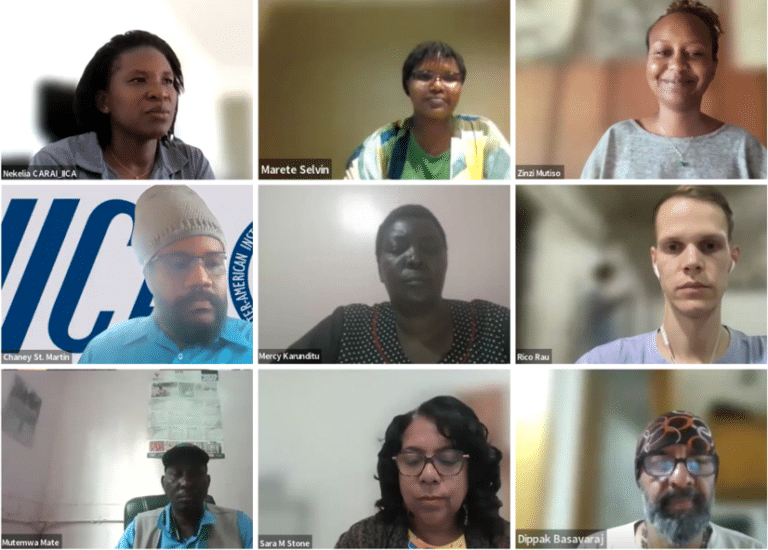
One of the outcomes of the conference was the creation of the Latin American Bioeconomy Network, by 25 public, private and academic institutions, as well as regional and international cooperation organizations, during a workshop convened by IICA. At the request of the network’s members, the specialized agency for agricultural and rural development of the Americas will serve as the Executive and Technical Secretariat.
The hope is that the Latin American Bioeconomy Network will become a forum for discussion, sharing and development among the region’s leading bioeconomy experts.
Más información:
Gerencia de Comunicación Institucional
comunicacion.institucional@iica.int