Belém do Pará, Brazil, 24 November 2025 (IICA) – Bioeconomy was one of the most prominent topics at COP30, the massive conference that brought together governments, organizations, activists, and communities in the Brazilian Amazon.
In that setting of enormous global visibility, the Inter-American Institute for Cooperation on Agriculture (IICA) showcased the diversity of the continent’s bioeconomy as well as the shared potential that exists to drive development in rural territories.
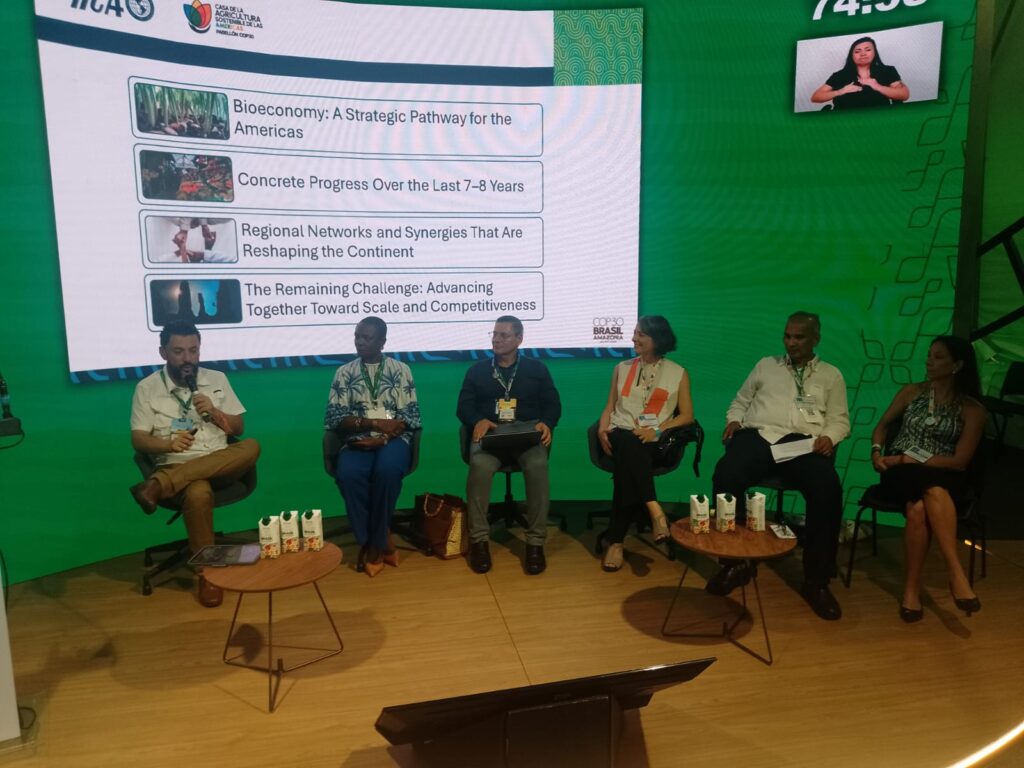
Initiatives currently underway in the Amazon, the Andes, Mesoamerica, and the Caribbean attracted participants’ interest at the Home of Sustainable Agriculture of the Americas, the name of IICA’s pavilion, which was present for the fourth consecutive time at a COP, following the experiences in Egypt, the United Arab Emirates, and Azerbaijan.
At IICA’s pavilion at COP30, high-level strategic exchanges were promoted among governmental, institutional, and productive-sector leaders from the various bioeconomies of the Americas. These exchanges recognized progress, challenges, and complementarities and identified joint actions aimed at strengthening a regional agenda for a sustainable, inclusive, and transformative bioeconomy for agriculture and agrifood systems.
IICA is developing a robust bioeconomy program based on the conviction that the sustainable use of biological resources can generate employment, diversify production, restore ecosystems, and create new value chains.
In 2023, the hemispheric organization created the Latin American Bioeconomy Network, which now includes around 100 institutions from 18 countries and serves as a space for discussion and promotion of initiatives, explained Hugo Chavarría, head of the Technical Cooperation Directorate, speaking in Belém do Pará.
Costa Rica, a pioneer country
Fernando Vargas, Costa Rica’s Vice Minister of Agriculture and Livestock, explained at IICA’s pavilion at COP30 that bioeconomy is transforming the productive model of the Central American country, which has set out to harness the value of its extraordinary biodiversity and was a regional pioneer in designing a national strategy on the matter.
“We have launched new production methods that not only are in harmony with the environment, but are also more competitive, in sectors such as coffee, rice, and sugarcane. In the livestock sector, we have made great strides in using waste to produce organic fertilizers, and we are now engaged in the next step, which is using it for electricity generation,” he said.
Vargas shared results from the development of the Sustainable Agro-Landscapes program launched in Costa Rica and noted that sector-specific labels have already been created to certify carbon neutrality and the absence of deforestation in production.
“Environmental issues are in Costa Ricans’ DNA. Our energy matrix is 98% renewable, and we are now encouraging the growth of more renewable sources, which help us reduce production costs,” Vargas said.
The vice minister nevertheless warned that it is essential to promote knowledge exchange among countries in the region, standardize methodologies, further implement evidence-based policies, and attract greater financial support.
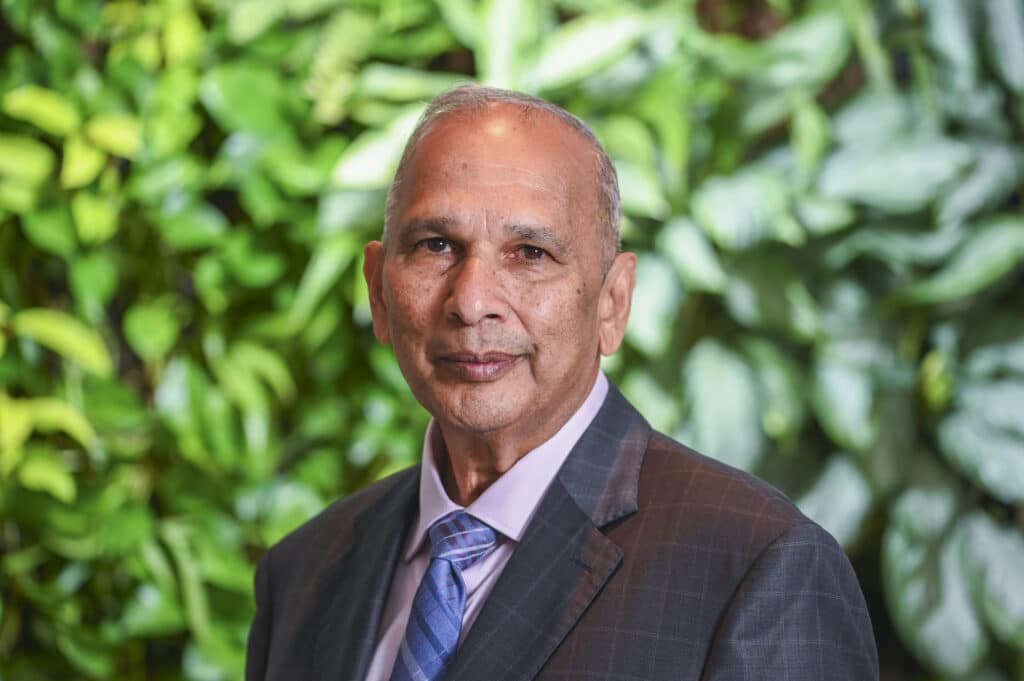
Along the same lines, IICA’s Director General-elect, Muhammad Ibrahim, noted that the challenges are so great that they require joining forces, sharing lessons, and building joint solutions that integrate science, policy, innovation, and cooperation.
“IICA,” he explained, “is advancing a new narrative for agriculture—one that promotes a systemic vision that integrates agriculture’s role in energy, transport, and health. In this context, bioeconomy represents a new frontier of science. We know that the Americas hold the greatest wealth of biodiversity and natural resources. And we have concrete data showing that implementing bioeconomy leads to economic growth, employment, and social inclusion in rural areas.”
Ibrahim—who was elected this month by the ministers of agriculture of the Americas and will succeed Argentine Manuel Otero in January as IICA’s Director General—said he will deepen the organization’s work in capacity building and the development of bioeconomy incubators. “Decision-makers in countries need information on the real economic, social, and environmental impact of bioeconomy,” he said.
Bioeconomy is also showing its potential in the Amazon, according to Edith Paredes, Director of the Amazon Cooperation Treaty Organization (ACTO).
“Where there’s a will, there’s a way. National bioeconomy agendas differ, but despite that, we are making progress together. The Amazon has unique characteristics that must be recognized. We have no doubt that bioeconomy is an alternative for development and inclusion for Indigenous peoples and local communities,” Paredes said.
“The Amazon,” she concluded, “has an enormous supply of natural products and services that we must enhance by working in networks and making its resources visible. We are sitting on a gold mine. With bioeconomy, the Amazon can become a region of solutions.”
More information:
Institutional Communication Division.
comunicacion.institucional@iica.int