With support from IICA, the Canadian Food Inspection Agency presented the most significant modifications to its food safety system, which will become effective this year.
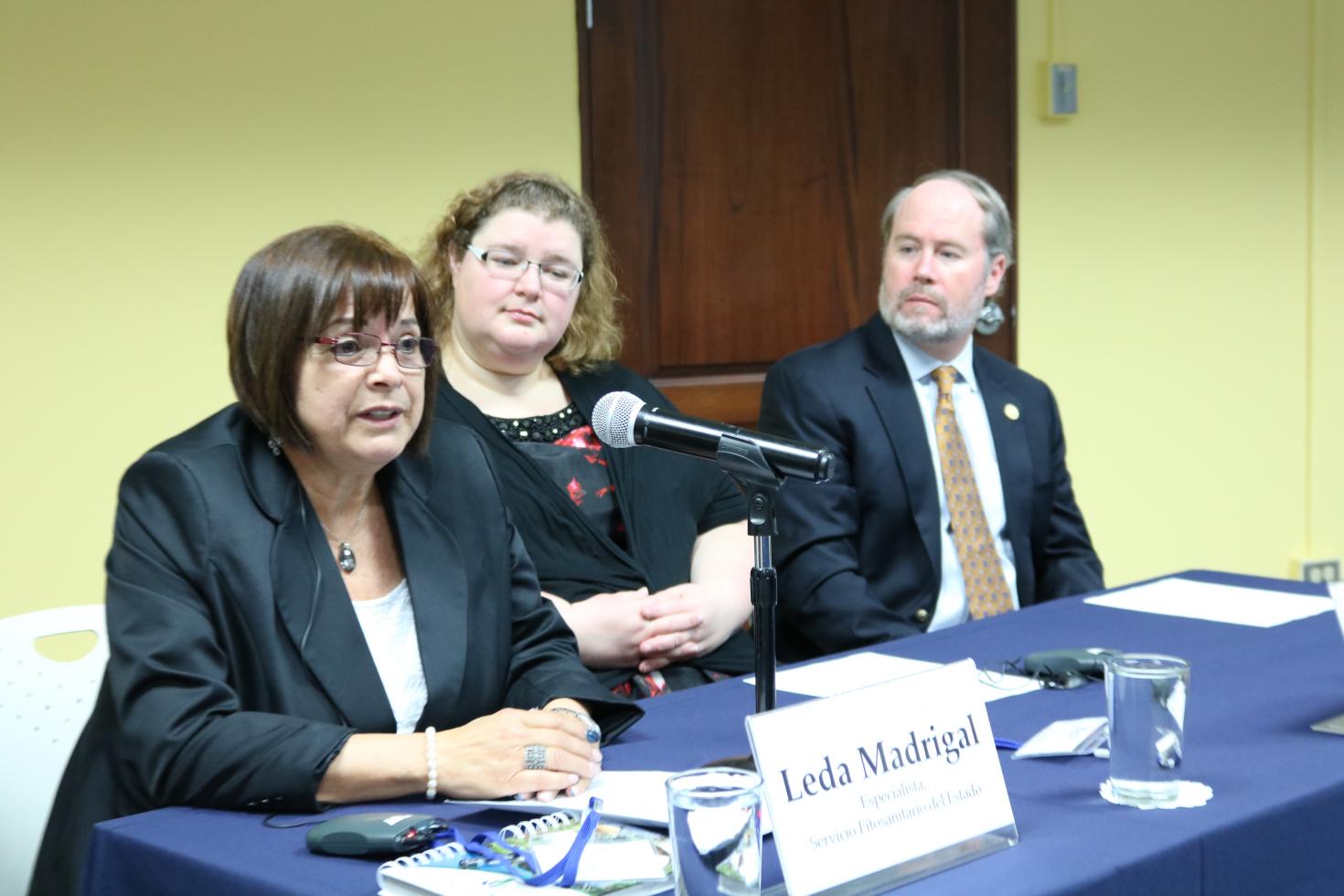
San Jose, 7 March, 2018 (IICA). During a meeting organized by the Inter-American Institute for Cooperation on Agriculture (IICA), Costa Rican exporters, producers, producers’ organizations, and public and private stakeholders learned about the new regulatory mechanisms that will apply to food exports to Canada this year, as well as their implications for trade and export.
With support from IICA, the Canadian Food Inspection Agency (CFIA) participated in a series of meetings to announce key changes to the Safe Food for Canadians Act (SFCA), which was submitted for review and observations in 2017. Once distributed, the final version would be approved during the second semester of this year.
The modifications seek to implement uniform, internationally-recognized requirements for any food that is imported, exported or marketed between provinces; to establish a level playing field between different food sectors, as well as between national food businesses and imports; and to support market access while increasing trust in food safety.
According to data from the CFIA, Canada is the sixth largest importer of agrifood products at the global level. These imports come from more than 190 countries whose food safety control levels, surveillance and regulations vary greatly.
“By learning about trends in international regulations, we are able to analyze needs at the country level in order to guarantee the safety and health of consumers, as well as respond to market demands. This, in turn, will enable us to market more Costa Rican products in Canada,” stated Sacha Trelles, Specialist in Agricultural Health and Food Safety of the IICA Delegation in Costa Rica.
According to speaker Annie Locas of the CFIA, the modifications to the regulation include the establishment of permits to regulate food importers and exporters, traceability standards and preventive control mechanisms.
“These changes will result in more robust regulations that apply to all food products and are results-based, preventive and simplified,” she stated.
According to Leda Madrigal, specialist of the State Phytosanitary Service of Costa Rica, the meeting with the CFIA enabled participants to learn about the actions that must be taken to ensure that national agricultural products can continue to be exported to Canada.
“We now face a new challenge as we begin to learn about Canada’s new food safety regulations. As the State Phytosantary Service, we must meet this challenge, and are certain that we will be able to produce and process in accordance with these regulations. We hope to not only maintain the current market, but to increase the number and quantity of our products in this demanding market,” stated Madrigal.
This first workshop was held at IICA Headquarters. The CFIA will carry out two similar activities in Mexico and Guatemala.
The meetings were held while the Director General of IICA, Manuel Otero, visited Ottawa, where he agreed to increase cooperation actions with Canada to benefit Caribbean and Central American countries in particular.
More information:
Robert Ahern, Leader of the Agricultural Health and Food Safety Program at IICA