Gibson was not born into a farming family, but he understood from a young age that The Bahamas needed to increase local food production to become stronger as a country.
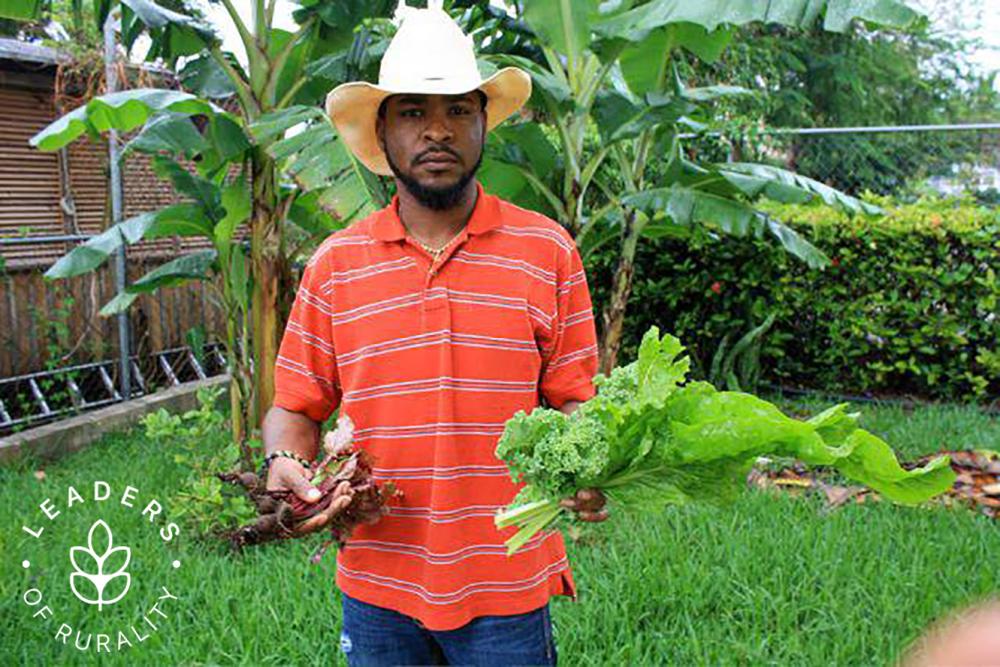
San Jose, 16 June 2022 (IICA) – Deon Da Costa Gibson, a Bahamian farmer who works for resilient agriculture and promotes increasing local food production and consumption to reduce the dependence on food imports in the Caribbean, was recognized as a “Leader of Rurality” of the Americas by the Inter-American Institute for Cooperation on Agriculture (IICA).
The “Soul of Rurality” award is an initiative by the agency specialized in agricultural and rural development to pay tribute to men and women who are leaving their mark and making a difference in the rural communities of the Americas, a key region for food and nutrition security and the environmental sustainability of the planet.
Gibson was not born into a farming family, but he understood from a young age that The Bahamas needed to increase local food production to become stronger as a country, choosing to study agriculture in Cuba and the United States before returning to his home nation with the idea of developing backyard food production.
Gibson is known in The Bahamas as Gibby da Farma, which is also the name of his business through which he advises other farmers on best agricultural practices. Gibson is also in charge of the farm at One Eleuthera Foundation, named for the Bahamian island on which he resides. The organization aids rural communities in The Bahamas in becoming self-sufficient, while caring for their ecosystems and increasing production.
The Leaders of Rurality award recognizes individuals who are playing a critical dual role as guarantors of food and nutrition security and custodians of the planet’s biodiversity, by producing under any condition. The recognition also highlights these individuals’ capacity to serve as role models in the region’s rural areas.
Gibby da Farma, the young man who saw agriculture as a tool for national development
“I’m convinced that a country cannot guarantee national security nor access security in terms of health and employment, or even financial security, without first ensuring food security”, says Deon Da Costa Gibson.
A farmer from The Bahamas—a Caribbean country looking to leave behind its dependence on food imports—Gibson is one of the faces of the campaign “Buy Fresh, Buy Local, Buy Bahamian”, launched by IICA.
Gibson agreed to participate in the campaign because it maintains that any country is capable of producing its own food if the right policies are put in place to promote not only agricultural production, but also the consumption of local foods and provided that the private sector is committed to the initiative. The campaign is based on the premise that the consumption of food produced in the country will alleviate heavy spending on imports, create jobs, stimulate the economy and improve the social situation.
Born 33 years ago in Nassau, the capital city of The Bahamas located on the island of New Providence, Gibson actually grew up on the island of Eleuthera, where as a child he would visit sheep, chicken, goat, and—his favorite—pig farms. He used to dream of being a veterinarian to take care of animals and, while he had never heard of food security, he became aware that agriculture needed to be more productive in The Bahamas for the country to grow.
“I started looking for information on agriculture and reading everything I could find. At that time there were no agriculture programs in The Bahamas and so I took an opportunity to study agronomy at the Agricultural University of Havana, Cuba”, says Deon.
During his stay in Cuba, Gibson became interested in sustainability and in innovations that were driving food production. Due to his charisma and his early role as a project creator, he was invited to the United States to participate in a Young Rural Leaders of the Americas forum organized by the University of Nebraska at Lincoln and IICA.
At the forum, he presented his philosophy on how to do things: “When life gives you lemons, make lemonade; when life gives you oranges, make orange juice; and when life gives you apples, make apple juice”.
Later, Deon continued his studies in the United States after being accepted to Sterling College in Craftsbury, Vermont, a school focused on environmental studies and sustainable agriculture.
“Many would ask me why I wanted to study agriculture given the many difficulties facing the activity, and I would say that when you can prepare an omelet with the eggs you collected or when you harvest with your own hands the tomatoes or peppers you are going to eat, that is when you begin to see agriculture in a different light”, says Deon.
“Without farming and farmers”, he adds, “humanity would not survive. The best way to involve young people in farming is to teach them to have patience to wait for harvest and to show them the fruit of their work”.
After returning to The Bahamas in 2013, Deon settled on Abaco Island and started running a small farm for a local restaurant and promoting backyard food production. In September of 2019, Abaco was devastated by Hurricane Dorian, the strongest hurricane to affect the northwestern Bahamas. Deon experienced firsthand the natural disaster’s impact on the livelihoods of rural communities. He later returned to the island of Eleuthera, where he joined the One Eleuthera Foundation, a non-profit organization created in 2012 to aid rural communities in The Bahamas in becoming self-sufficient, while caring for their ecosystems and improving production.
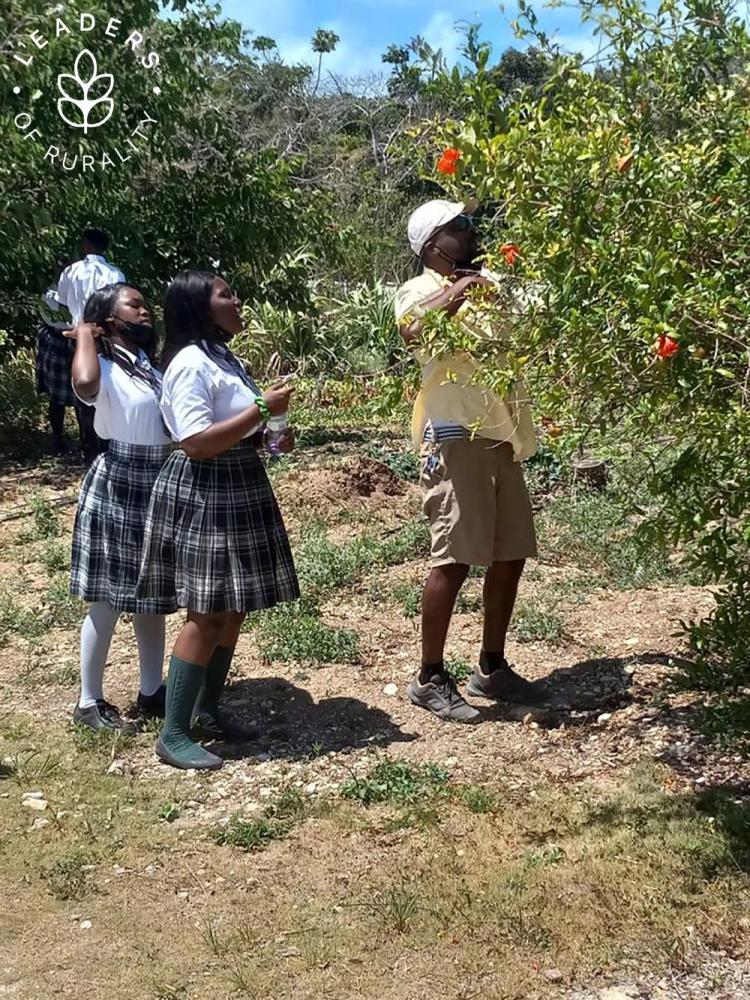
As manager of the foundation’s farm, Gibson’s work focuses on empowering and providing technical support to local farmers, as well as collaborating with ongoing agricultural education at high schools across the country. At the farm, Gibson looks after the chickens and oversees honey production. It is he who collects the eggs and tends the bees. He also collaborates in organizing a fair for farmers to sell their products.
“A farm is a living organism. Everything existing on a farm is alive, and just like each of us monitors our own health, we have to monitor the health of plants and animals, ensuring that they aren’t sick and that they have enough water and food”, says Deon.
In addition to his work at the foundation, Deon owns and operates Gibby da Farma Backyard Gardens and Agricultural Consultancy, a company that advises promoters of small food production enterprises.
“I am committed to achieving food sovereignty by increasing our food production; an objective we can only attain if we strengthen our local farmers and stimulate consumers to buy local produce”, says Gibson.
He does recognize, however, that climate change is a very real obstacle facing Caribbean farmers given the intensification and increased frequency of extreme weather events.
“Hurricane Dorian is the best example,” he recalls. “Many farmers lost their crops and their homes. We’ve also had major flooding and periods of drought lasting months, which are impossible to survive without irrigation systems. I believe we need much better education on climate resilience. On our farm, we’re using hydroponics, which helps to reduce water consumption. I like it and I think it can be a positive tool in facing climate change. All living generations realize that we must improve. Recently, even my grandmother told me that she thinks we should study climate change better and that should be our main objective today”.
More information:
Institutional Communication Division
comunicacion.institucional@iica.int