Private estimates indicate that the pest has destroyed 20% of the projected corn production for this year in Argentina.

Buenos Aires, 30 May 2024 (IICA) – The Inter-American Institute for Cooperation on Agriculture (IICA) will collaborate with technical agencies of the Argentine government in the prevention and control of the corn leafhopper disease, which during the 2023/24 season has spread across corn plantations in the northern and central regions of the country, causing severe economic losses and posing a threat to food security.
Private estimates indicate that the pest has destroyed 20% of the projected corn production for this year in Argentina.
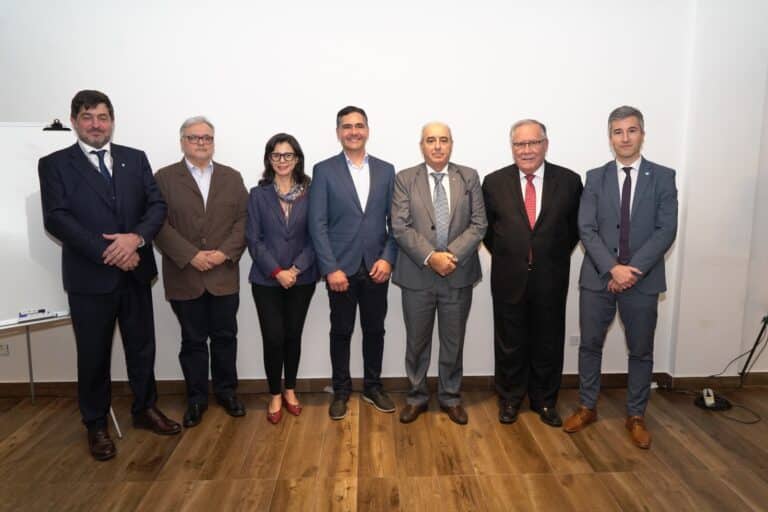
The cooperation initiative for the 2024/25 agricultural season was outlined in a meeting attended by the National Director of Agriculture, Nicolas Bronzovich; the President of the National Agrifood Health and Quality Service (SENASA), Pablo Cortese; the IICA Representative in Argentina, Fernando Camargo; and IICA technical experts Carolina Pivetta and Tomás Krotsch.
The population of the insect known as the corn leafhopper (Dalbulus maidis), a vector of the disease known as corn stunt, has experienced an unprecedented growth in Argentina this year. This prompted the Secretariat of Bioeconomy to create a special working group composed of public and private actors, with the mission of mitigating the spread of this pest and providing tools to farmers to prepare for the upcoming corn season.
Mitigating the Impact
The goal of the initiative is to reduce the economic losses associated with decreased production while preserving grain quality, and ensuring environmental sustainability through integrated management practices that optimize the use of approved phytosanitary products for pest prevention and control.
Given its expertise in agricultural health issues in the hemisphere and its capacity to provide technical cooperation, IICA will work with Argentine agencies on issues related to the governance of information networks that contribute to making early warning and disease prevention systems more efficient.
The fundamental objective of this effort is to provide timely information and technical tools to farmers so they can make decisions that mitigate the impact on corn cultivation.
More information:
Institutional Communication Division.
comunicacion.institucional@iica.int