he crisis situation with respect to fertilizer prices and supply, which began to materialize in 2021, has resulted in serious imbalances this year due to the war in Eastern Europe. It has also given greater visibility to an issue that is a serious threat to food security and the environmental sustainability of agriculture in the region
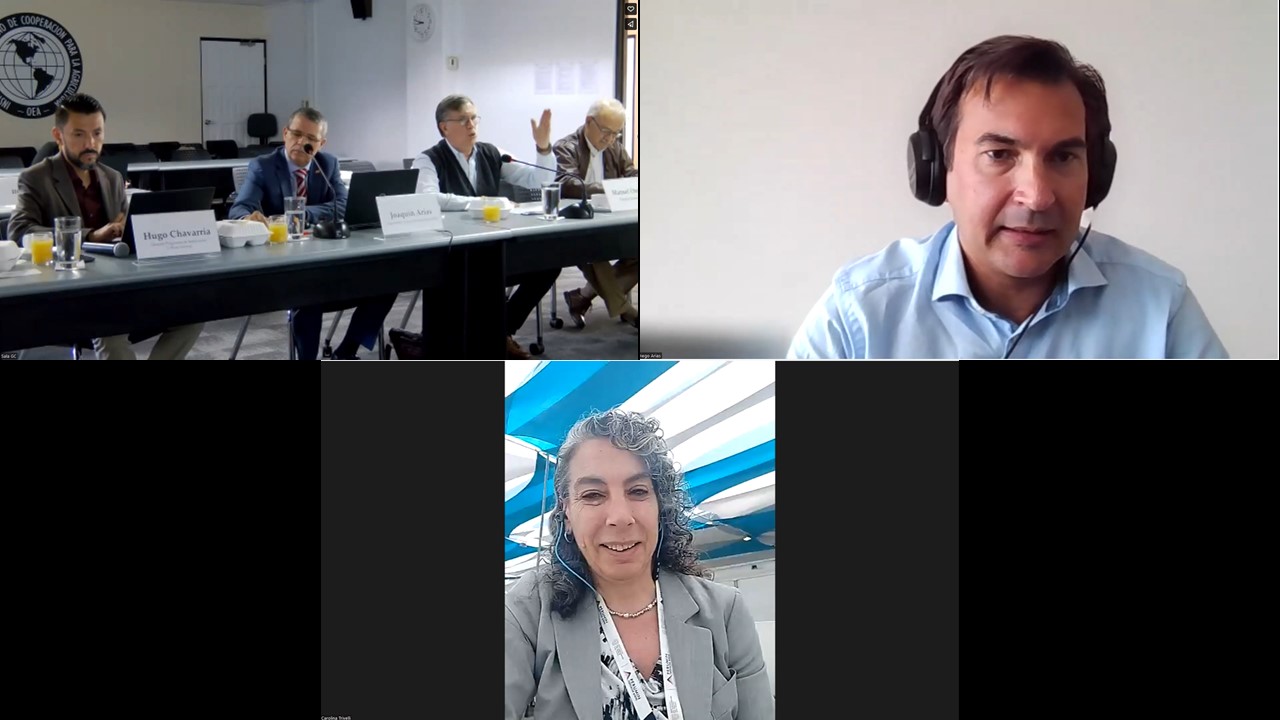
San Jose, 4 October 2022 (IICA) – Latin American and Caribbean countries must work together to develop medium- and long-term strategies to reduce their strong dependence on the import of chemical fertilizers, agreed experts convened by the Inter-American Institute for Cooperation on Agriculture (IICA).
The crisis situation with respect to fertilizer prices and supply, which began to materialize in 2021, has resulted in serious imbalances this year due to the war in Eastern Europe. It has also given greater visibility to an issue that is a serious threat to food security and the environmental sustainability of agriculture in the region, concluded the specialists.
This topic was discussed during a workshop held at IICA Headquarters in San Jose, Costa Rica, which was also attended virtually by a large number of participants. The purpose of the activity was to analyze the impact of the global fertilizer crisis on consumers and farmers throughout the Americas, as well as its cost for governments. Participants also reviewed and assessed possible avenues for countries in the region to overcome the challenges posed by future scenarios.
A research project commissioned by the hemispheric agricultural development agency was also presented during the workshop. The project involved the development of a simple methodology that could be immediately applied by countries in the region to analyze the potential effects of alternative or complementary measures to mitigate current conditions with respect to fertilizer import prices and their repercussions for the main agrifood stakeholders.
The workshop was opened by the Director General of IICA, Manuel Otero, and the methodology was presented by Carlos Pomareda, Manager of International Services for Business Development (SIDESA).
Participating in the discussion were Diego Arias, Agriculture and Food Manager for the World Bank in Latin America and the Caribbean; Carolina Trivelli, a rural development specialist and researcher at the Institute of Peruvian Studies; and Hugo Chavarría, Manager of IICA’s Bioeconomy and Production Development Program.
In turn, Joaquín Arias, IICA Specialist in Policies and Sectoral Analysis, encouraged participants to exchange knowledge on this topic via the Public Policy Observatory for Agrifood Systems (OPSAa), a digital tool that the Institute created this year to help countries navigate this period of instability.
“Fertilizers are the Achilles’ heel of agriculture in the hemisphere—its most vulnerable area”, said Manuel Otero.
“It is an issue that was somewhat unexposed, but that has recently resurfaced for Mercosur, Central American and Andean countries, which must respond to demands for more sustainable production while facing rising production costs. It is a very serious situation”, he added.
Otero pointed out that the fertilizer market has a highly concentrated supply, with most production centers located far from the Latin American and Caribbean region, which aggravates the situation due to transportation and energy costs.
IICA has been carrying out various actions to address the fertilizer issue, including providing the ministers of Agriculture of its member countries with concrete and clear information on the impact of the crisis and alternative scenarios.
Diego Arias of the World Bank remarked that “the work carried out by IICA adds value and knowledge to the discussion, because we are not very knowledgeable about the fertilizer market and the impact of this price volatility on food security. Research on fertilizers has primarily focused on the impact of subsidies, not the market itself”.
“At the World Bank, we are trying to monitor the fertilizer market in the region. There is a lack of information and, in Central America for instance, prices vary greatly even within countries. We can join forces with IICA to foster greater market transparency”, he added.
Pomareda shared details on a research study on the fertilizer market in Peru, developed with contributions from technical specialists, businesspeople and producers.
“We started to see rising fertilizer prices in 2021, but values shot up starting in February, following Russia’s invasion of Ukraine. In July, Russia and Ukraine reached an agreement to resume exports, which has enabled prices to drop”, said Pomareda. He explained that the biggest challenge is the availability of urea for crops such as rice and sugarcane, noting that farmers have faced fewer obstacles finding solutions for other inputs.
Chavarría, in turn, referred to the importance of governments having access to ideal tools for designing and implementing public policies, and underscored the need to develop a long-term strategy for fertilizers in Latin America and the Caribbean.
Chavarría also highlighted the growing interest in bioinputs in the region. “Countries of the region are working to foster the use of these products, which are not intended to replace the current technological package, but rather to complement it in order to increase the efficiency and environmental sustainability of agriculture”.
More information:
Institutional Communication Division.
comunicacion.institucional@iica.int