At the meeting, the participants decided to create a network, with technical support from IICA, which will seek to promote actions to strengthen and empower rural territories and their stakeholders, and prioritize their role as guarantors of food and nutrition security and guardians of the planet’s biodiversity.
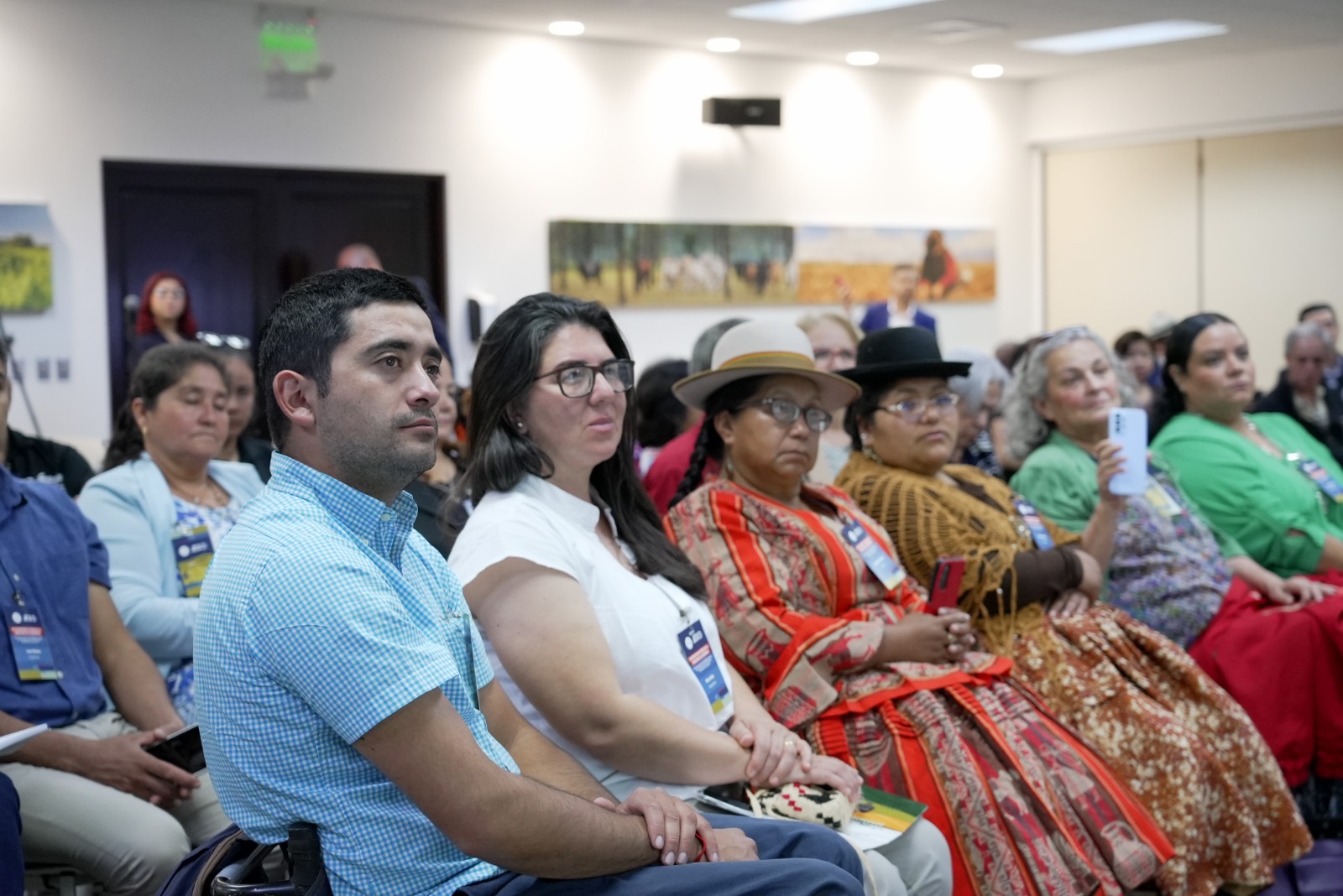
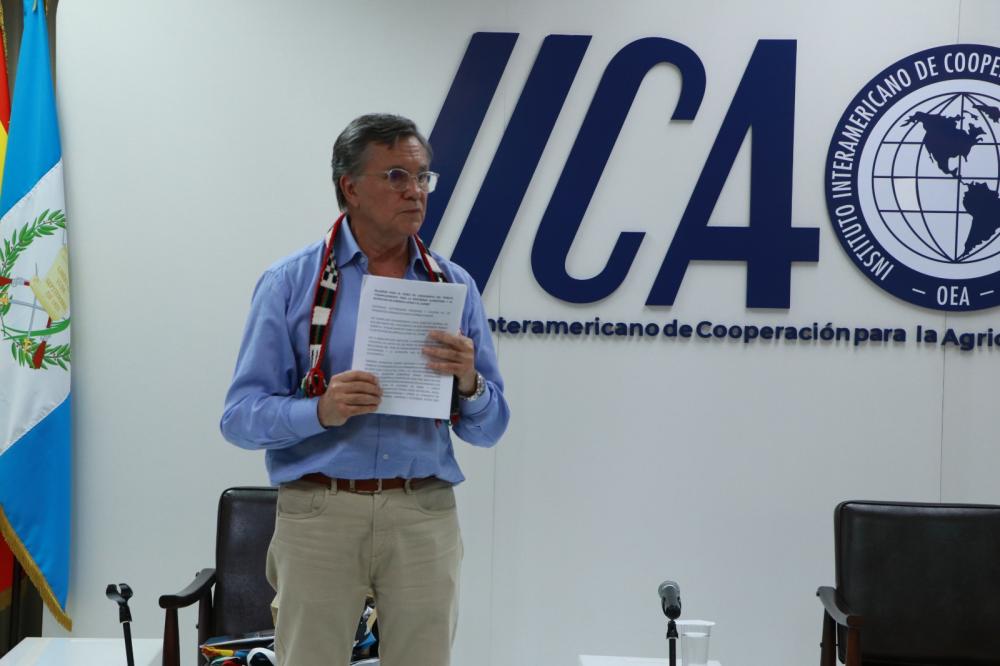
San José, April 22, 2024 (IICA). The Director General of the Inter-American Institute for Cooperation on Agriculture (IICA), Manuel Otero, presented to 40 rural leaders from 21 countries meeting in Costa Rica a proposed roadmap and concrete actions designed to strengthen the organization, production, income and resilience of the communities represented at the meeting.
Rural leaders from every region of the Americas participated in several days of intensive dialogue and the sharing of experiences at the “First Meeting of Leaders of Rurality of the Americas: Strengthening Rurality through Sustainable, Resilient and Inclusive Production,” organized by IICA at its Headquarters in San José, Costa Rica.
During the meeting, the participants decided to create a network, with technical support from IICA, which will seek to promote actions to strengthen and empower rural territories and their stakeholders, and prioritize their role as guarantors of food and nutrition security and guardians of the planet’s biodiversity.
At the meeting, there were presentations by, among other speakers, Rattan Lal, the head of the Rattan Lal Carbon Management and Sequestration Center (C-MASC) at Ohio State University; Álvaro Lario, President of the International Fund for Agricultural Development (IFAD); and the former Minister of Agriculture of Brazil, Roberto Rodrigues, a leading world expert on the cooperative movement.
Otero said that, based on what was discussed, “I identified eight hemispheric actions to galvanize this network. The first involves the cooperative movement, promoting it at the level of family farmers and vulnerable groups through an inter-American platform for which we will have Roberto Rodrigues as a mentor.”
The IICA Director General’s other proposals were: the creation of a “seal” for family and peasant farming in the Americas, the creation of a network of germplasm banks of native seeds, the systematization and dissemination of experiences, for example, of food production in rainfed areas, the role of rural and agricultural technical schools, new extension strategies, the creation of a catalogue of family farming products in the Americas, and the dissemination of information on access to financing for rural communities.
During the discussions, the leaders suggested, in addition to Otero’s proposals, issues related to profitability, access to connectivity and technology, youth migration, gender equality, water scarcity, associations, education and security in the countryside, and sustainability.
“The migration of young people from the countryside to the city is a gradual process. First, they leave their area to go to the nearest town, so they have access to a school, then they go to a larger town to continue studying, and the children love it there because they have amenities they don’t have in the countryside, such as electricity, showers and beds. From there, many go to the big cities. The problem is that these youngsters are at risk and unprotected; 95% end up in activities that are dangerous and 5% go to university. Ultimately, young people migrate to the city to be better off, but they can have a more protected life if they stay in the countryside. That’s why I think we have to bring a little piece of the city to the countryside and also a little bit of the countryside to the city, because the city also needs a little bit of the countryside.” These were the observations of Trigidia Jiménez, a Bolivian and Quechua agronomist who combined scientific knowhow with ancestral practices to promote the cultivation of cañahua, developed in pre-Hispanic times but later displaced.
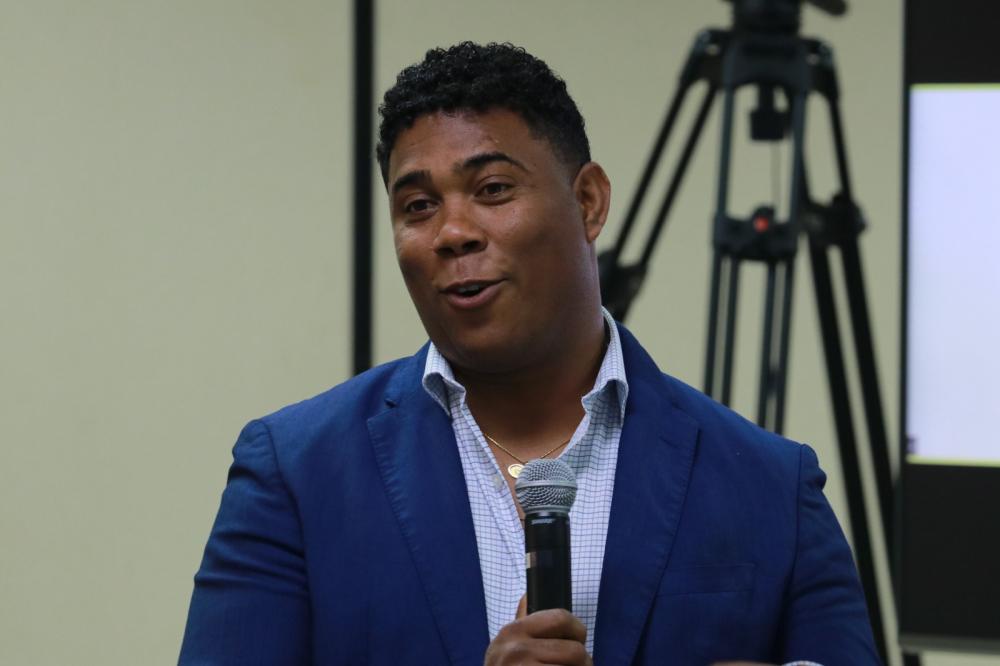
Joelin Santos, a promoter of an innovative agriculture model that has attracted a large number of young people to pineapple production in the Dominican Republic, spoke of his commitment to “generational integration” and the incorporation of technology.
“Things that used to take 20 days to do are now done in 30 minutes. Technology allows us to manage soils more responsibly, allows us to produce foodstuffs that do not contain excessive amounts of harmful chemicals or hormones. We are able to produce and make money. Using technology we get less tired; we do less harm to the land and we can also forecast the results. “We engage in mindful, responsible agriculture,” he remarked.
More information:
Institutional Communication Division.
comunicacion.institucional@iica.int