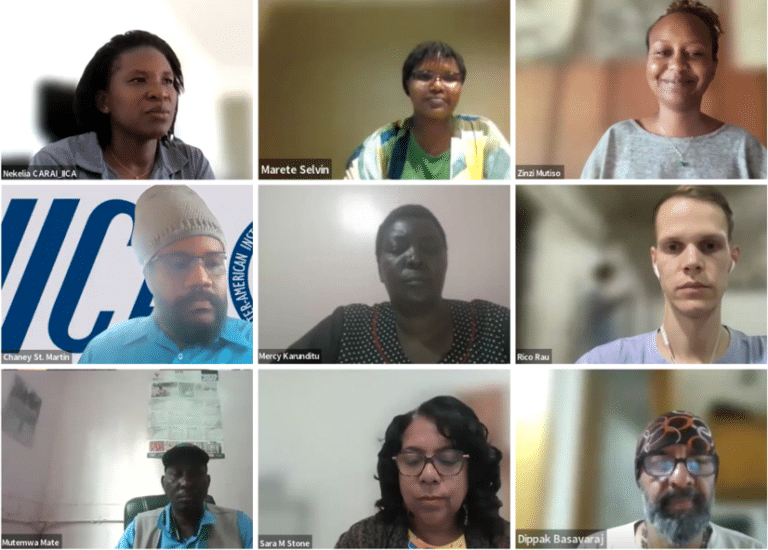
More than 120 specialists from the public and private sectors participated in an event organized by ALADI and IICA, in which measures were discussed to increase efficiency and competitiveness in the trade of products and services in Latin America and the Caribbean.
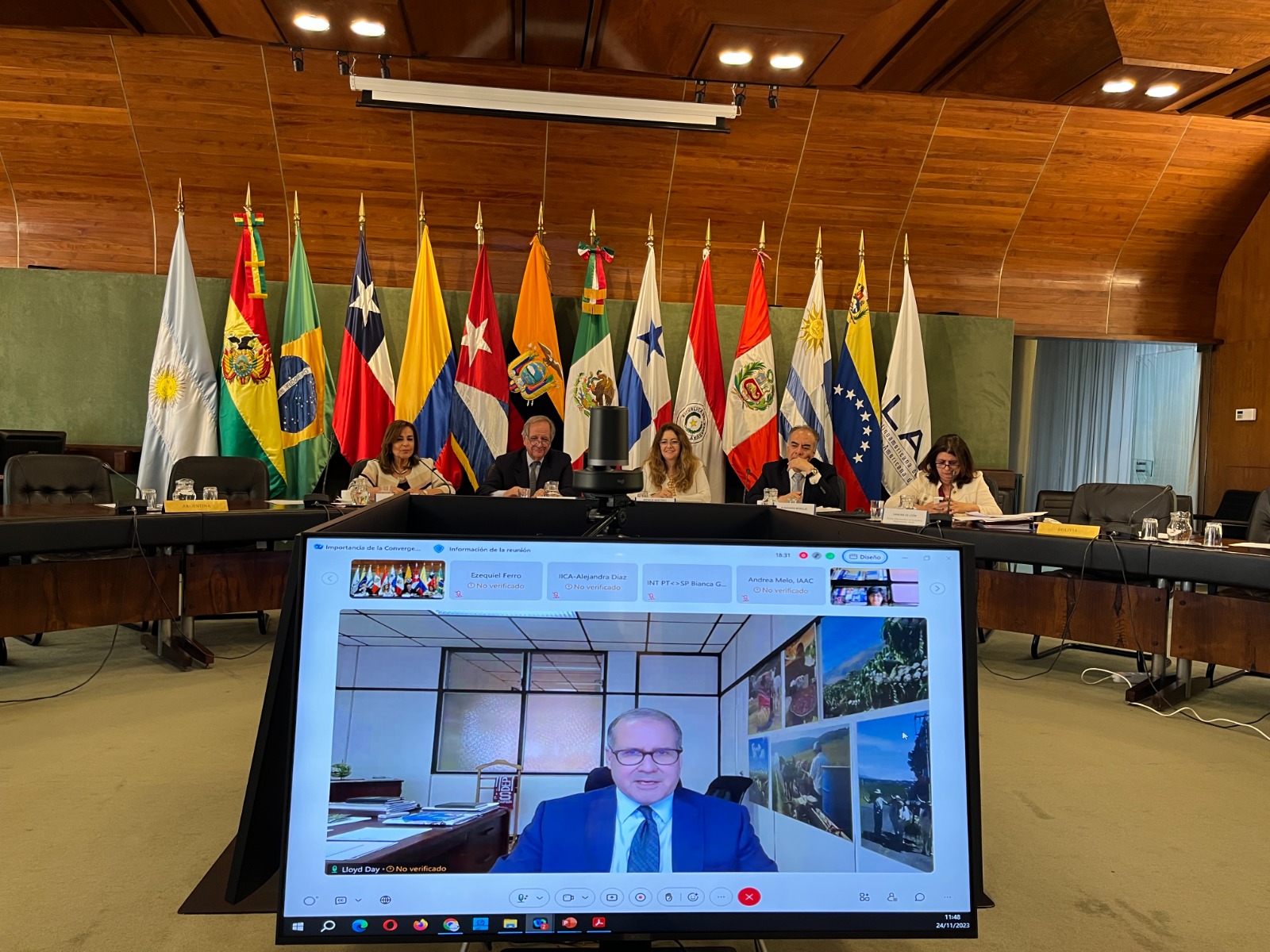
San José, December 14, 2023 (IICA). Achieving regulatory convergence in the countries of the Americas on the degree of compliance with regulations (known as conformity assessment) is key to intensifying intraregional trade and facilitating the joint establishment of clear standards to promote food safety, efficiency and commercial competitiveness, concluded specialists convened by the Latin American Integration Association (ALADI) and the Inter-American Institute for Cooperation on Agriculture (IICA).
The meeting, with more than 120 participants, included representatives of organizations specialized in the subject of conformity assessment and accreditation, health and food safety, and the private sector of the 13 member countries of ALADI (Argentina, Bolivia, Brazil , Chile, Colombia, Cuba, Ecuador, Mexico, Panama, Paraguay, Peru, Uruguay and Venezuela).
There, they exchanged perspectives on advances in conformity assessment and mutual recognition, and identified possible joint actions to promote policies and practices that facilitate food trade.
Conformity assessment is the determination of the degree of compliance with regulations, national technical standards, international technical standards or other specifications, requirements or characteristics of a product or service. It may include, among others, sampling procedures, laboratory testing, calibration, certification and inspection or verification. Every product, process, method, installation, service or activity must comply with some type of technical standard or regulation.
During the exchange session, the experts agreed that regulatory convergence is crucial, because it acts as a bridge to connect small farmers with markets, contributing to better use of trade agreements; In addition to the fact that advances in this field would also make it possible to enhance the tariff advantages that the region has, since thanks to the network of ALADI agreements, more than 80% of the universe of goods is freed from the payment of import tariffs.
They also indicated that the aspects of regulatory convergence that are oriented towards access to international markets should be linked to efforts to incorporate small and medium-sized companies into global value chains, including those related to financing and access to other mechanisms of promotion.
The specialists also concluded the importance of having a solid quality infrastructure in the countries, and making extensive use of it by sanitary and phytosanitary authorities, and recognized that promoting conformity assessment is not enough, especially if it is not It is accompanied by accreditation, to provide the reliability and security of its processes.
They also agreed that although regulatory convergence in conformity assessment procedures constitutes an essential pillar to increase intraregional trade, there are an important series of factors that must be addressed together between countries and the public and private sectors. to achieve more open and competitive trade.
The event highlighted the status of conformity assessment systems, and the importance of the accreditation of the competent bodies in the matter, particularly the efforts made in this regard by the Inter-American Accreditation Cooperation, the Andean Community and MERCOSUR.
They argued that the regulations of destination markets are increasing, even with the efforts of the Codex Alimentarius for international harmonization, and pointed out that the application of a diversity of standards, tariffs and provisions that also address environmental aspects, affects the preferences and trade flows.
In the exchange of criteria, the private sector called for action to establish a work route with the highest authorities of the countries to address these issues, and asked as next steps to work more in relation to the exchange of experiences between the countries. , and the creation of a network of laboratories related to sanitary and phytosanitary measures.
This exchange day on the Importance of Regulatory Convergence in Conformity Assessment Procedures is part of a process coordinated by ALADI and IICA that began in 2021.A similar event was held in July with the aim of promoting regulatory convergence regarding equivalence in agri-food trade.
More information:
Daniel Rodríguez, Manager of the International Trade and Regional Integration Program of IICA.
daniel.rodriguez@iica.int
Alejandro Bonilla Muñoz, Head of the Department of Agreements and Negotiations of the ALADI. abonilla@aladi.org