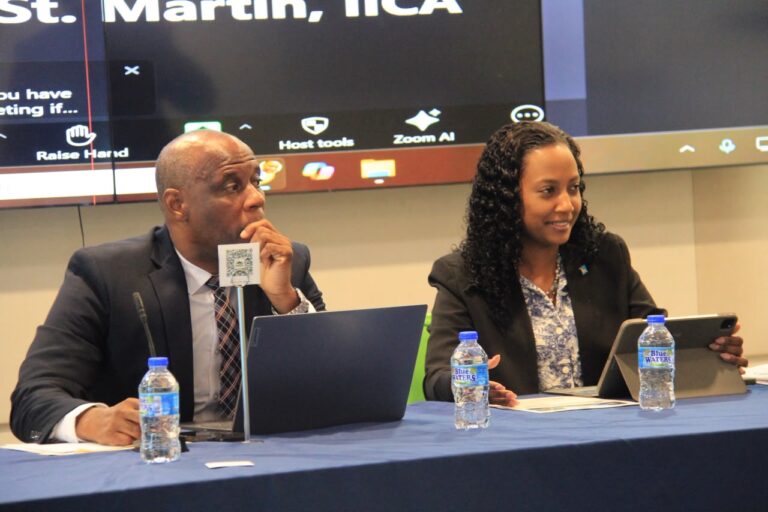
Joachim von Braun, President of the Scientific Group for the UN Summit, issued this appeal during a meeting of IICA’s Advisory Council for Food Security in the Americas.
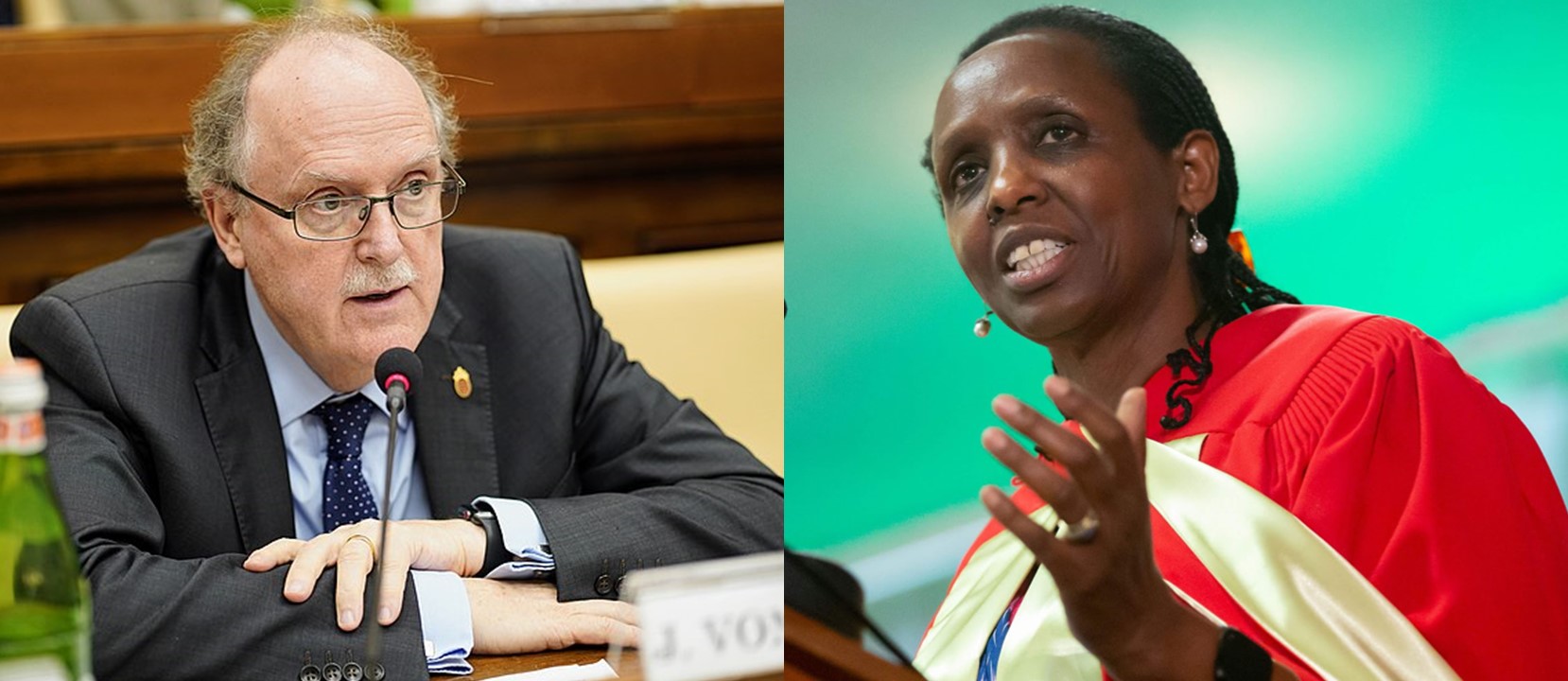
San Jose, 16 February 2021 (IICA). Chair of the Scientific Group for the UN Food Systems Summit, Joachim von Braun, urged Latin America and the Caribbean to project a “strong voice” in the organization of the global meeting that is slated to take place at the end of September, in a bid to build more productive, sustainable and equitable food systems.
Von Braun made the appeal during his presentation as a special guest of the Advisory Council for Food Security in the Americas of the Inter-American Institute for Cooperation on Agriculture (IICA). The Council is comprised of experts from ten countries with a track record of major contributions to the agrifood sector, in the areas of policy and academics.
As Chair of the Scientific Group for the UN Food Systems Summit, von Braun leads a team of close to 50 experts, whose purpose, according to him, is to ensure that “the Summit uses the most outstanding scientific evidence from around the world, based on shared knowledge and experience, to foster more sustainable, inclusive and equitable food systems”.
Agnes Kalibata, UN Special Envoy for the Summit, recently remarked that the global forum “should serve as a turning point on the path that the world should take to achieve the 2030 Agenda Sustainable Development Goals”, and thus, she reaffirmed that the “Scientific Group plays a critical role”, by presenting “bold science-based measures and innovative solutions in the interest of a more equitable future for upcoming generations”.
At the invitation of Kalibata, IICA Director General, Manuel Otero, joined the Summit Champions Network, one of the four main support structures of the global meeting.
Von Braun, who is also a Professor at the University of Bonn, stressed that, “it is important that Latin America and the Caribbean project a strong voice leading up to the United Nations Food Summit”.
“I hope that the Latin American and Caribbean region will emphasize the role of food trade and the development of a sustainable trade agenda – trade that is rules-based trade and that allows us to reduce the global footprint of food systems. It is important that the voice of the region be heard”, he added.
Last week, at a meeting of the Central American Agricultural Council (CAC), the IICA Director General advised the ministers of agriculture of Central America and the Dominican Republic that an information campaign would be launched throughout the Americas, in a bid to spark a hemisphere-wide discussion to ensure that deliberations at the Summit reflect the interests of agricultural producers in this region – the world’s major net food exporter.
On September 1 and 2, prior to the UN Food Systems Summit, the ministers of agriculture of the Americas will attend a meeting of the Inter-American Board of Agriculture (IABA) – IICA’s highest governing body. Here, they are expected to arrive at a common position for the global forum.
At the meeting with the IICA Advisory Council, von Braun remarked on the importance of governance to the process of transforming food systems. “Food systems have evolved rapidly in the last three decades and the issue of processed foods is as much a rural as an urban one. It is critical that we work with industry to develop affordable and sustainable diets. We cannot transform food systems without addressing issues of governance”, he indicated, adding that he also hopes that IICA “will be one of the actors” in the meetings of scientific groups prior to the Summit.
The IICA Advisory Council for Food Security in the Americas monitors the impact of the Covid-19 pandemic on food security in the region, with a view to presenting an analysis and recommendations that may be useful for decision-making by various public and private sector entities.
More information:
Institutional Communication Division, IICA.
comunicacion.institucional@iica.int