San Jose, 1 September , 2025 (IICA). During a forum to promote discussion and collaborative development, experts from Latin America and the Caribbean (LAC) analyzed opportunities, challenges and experiences surrounding the digitalization of technical assistance for the family farming sector, and stressed its potential to strengthen local capacities, drive agricultural innovation and connect producers to markets.
The event, entitled “Digitalization of Technical Assistance to Integrate Family Farming into Value Chains” was organized by the Inter-American Institute for Cooperation on Agriculture (IICA) and the Latin American Network of Rural Extension Services (RELASER).
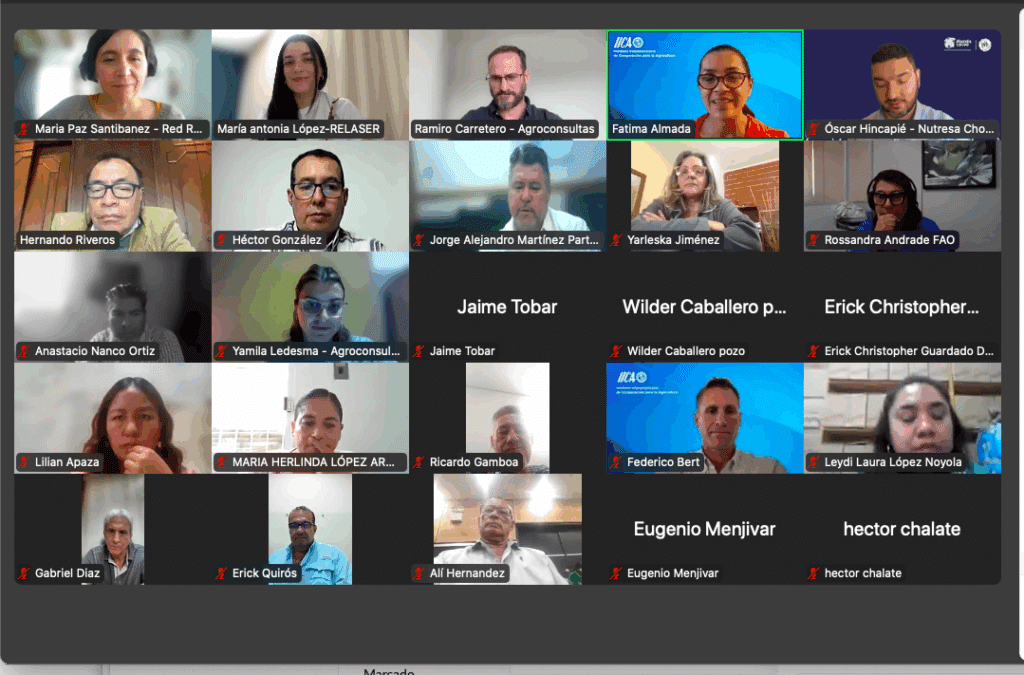
Hosting more than 150 participants, the event took place within the framework of “Value at Source and Sustainable Linkages of Family Farming to Dynamic Markets” – a series of virtual meetings led by IICA to promote a more competitive agriculture sector and to drive its digital transformation and integration into agrifood value chains.
During the discussion, the experts agreed that digital transformation is a key tool to expand access to knowledge, modernize technical assistance services and promote more equitable, sustainable and resilient rural development models.
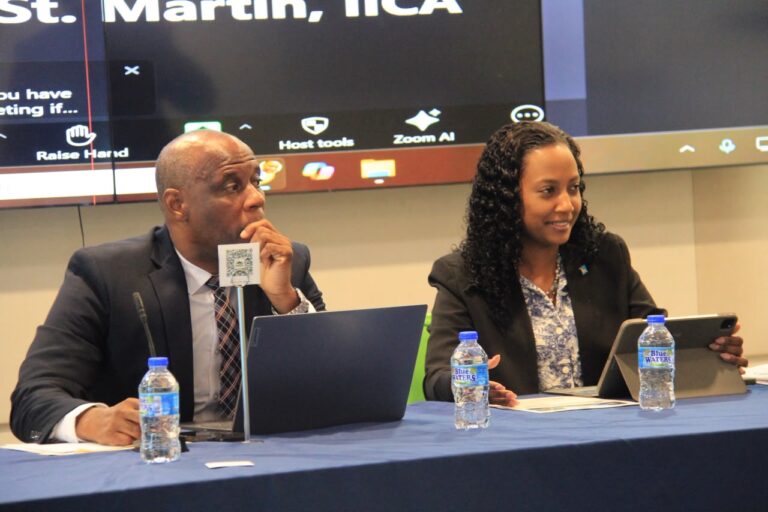
Mario León, Manager of IICA’s Territorial Development and Family Farming Program; Federico Bert, Manager of the Institute’s Digitalization of Agrifood Systems Program and Technical Specialist, Fátima Almada, opened the event. The moderator was María Paz Santibáñez, Programs Officer and Rural Extension Specialist at RELASER.
Léon stressed that digitalization today is an unparalleled ally in connecting technical assistance providers and family farmers, and he argued that technological tools, such as sensors, apps, cloud platforms and digital traceability technology, among others, facilitate data-based decision-making, improve productivity, reduce costs and strengthen value chains.
Moreover, he maintained that, “Digital tools are no longer a luxury and have become unparalleled allies. Digitalization provides a means of democratizing access to these services, to the market and to action. We must do whatever we can to make them available in rural areas, to provide knowledge, 24/7 support and instantaneous solutions to the problems of producers and rural communities”.
Bert noted that, “Technical assistance and rural extension services are the processes that are most subject to transformation” and stand to benefit the most from the incorporation of digital technologies.
“Traditionally, technical assistance has been based on analog methods that have been very effective and have included extensive support, but they still have some limitations. According to agricultural censuses in various countries, only 20 or 30% of farmers receive effective technical assistance and digital technologies are revolutionizing this field, enabling more inclusive processes, a wider scope and greater efficiency in the interaction between farmers and technical officers”, he explained.
Successful experiences
There were presentations during the meeting on three successful technical experiences in Colombia, Salvador and Argentina.
Óscar Hincapié, Researcher in the Agricultural Promotion division of the Compañía Nacional de Chocolates of the Nutresa Group in Colombia, presented “Mundo Cacao”, a mobile app that that has facilitated the digitalization of technical assistance to cocoa producers.
Along with platforms such as WhatsApp, YouTube and downloadable technical material, the initiative has facilitated training, bidirectional communication and access to key information to boost the productivity and sustainability of more than 65,000 cocoa producing families in that country.
Hincapié explained that “Mundo Cacao has given producers direct access to information, training and consultation with experts, using digital tools that enable technical assistance and strengthen the entire cocoa value chain”.
On the other hand, Jaime Tobar, Director of Agriculture in the Management of Microfinance and Unregulated Entities Department of Catholic Relief Services (CRS) in El Salvador, spoke in detail about the “Agua y suelo para la agricultura” (ASA virtual) tool, developed in partnership with the Centro Nacional de Tecnología Agropecuaria y Forestal, to assist coffee farmers.
The initiative aims to strengthen the capacities of virtual extension officers who have been tasked with disseminating lessons learned to other farmers in rural areas. The tool incorporates digital resources to strengthen, accelerate and improve the quality of technical support provided using the existing community extension services.
Tobar noted that, “We are working to digitally map soil properties that will enable farmers and their technical extension officers to devise the best production management plan. By determining how fertile the soil is, they can then consider the nutrition of the plant and introduce practices to resolve production problems. We are also promoting a Blue Harvest approach to restore watersheds through regenerative agriculture”.
Moreover, Ramio Carretero. CEO of Agroconsultas in Argentina, spoke about the digital platform created in 2011 that connects farmers to more than 250 experts, offering training, a library of 2,000 technical documents and an AI chatbot that responds in real time, which benefits more than 300,000 users per year.
In closing, Carretero remarked that, “Digital technical assistance has allowed us to reach more farmers, putting them in contact with the best specialists and providing precise responses in real time, which is something that would be unthinkable with traditional methods”.
More information:
Fátima Almada, Specialist – Territorial Development and Family Farming, IICA.
fatima.almada@iica.int