IICA as lead implementing agency seeks to strengthen capacities in three major areas: legislation, coordination and capacity building.
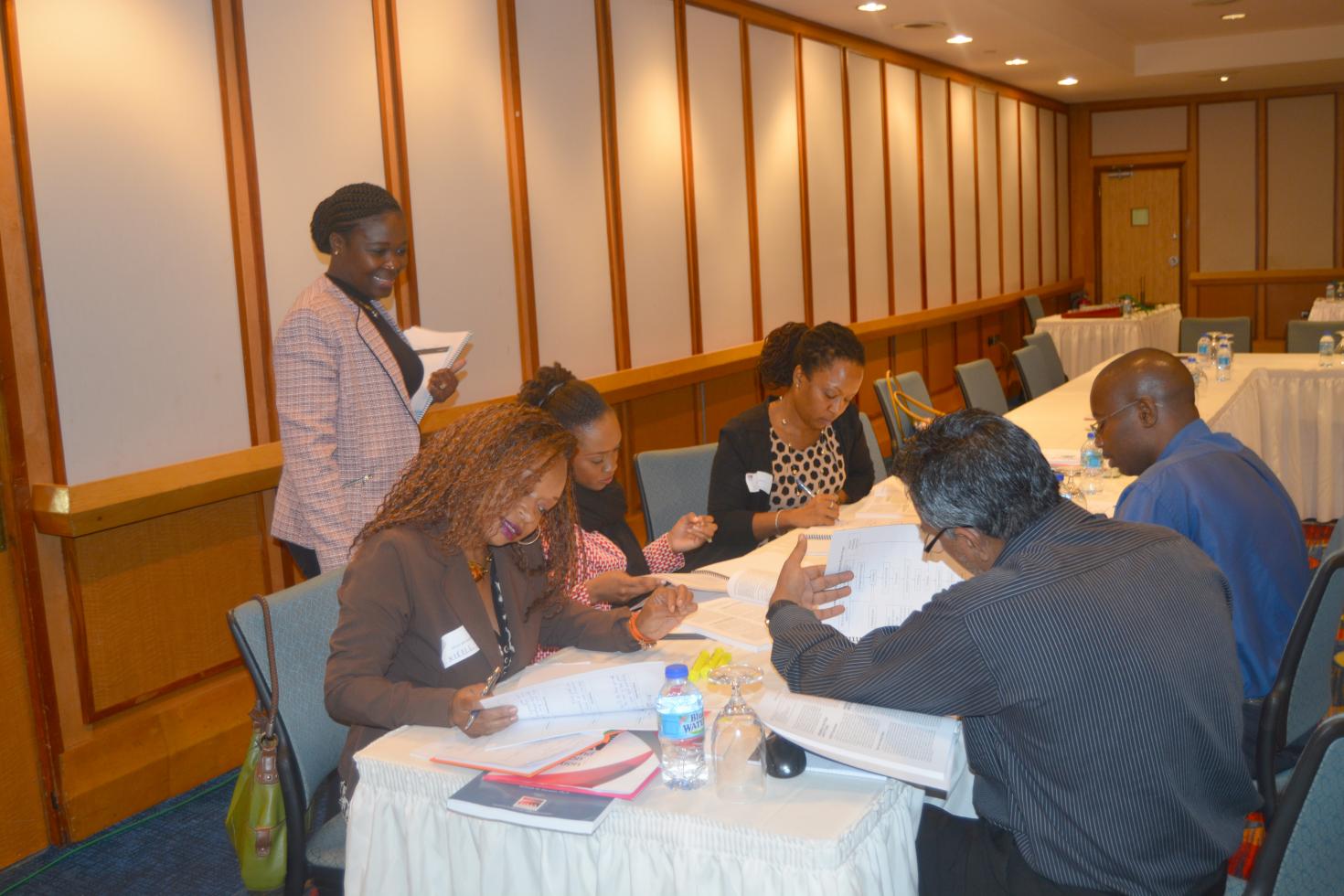
Port of Spain, Trinidad, August 09, 2016 (IICA). Food manufacturers from several Caribbean Community (CARICOM) countries gathered in Trinidad for two days of food safety training that could help them access major export markets.
The sub-regional workshop on “Hazard Analysis Critical Control Points (HACCP) Plan Development and Implementation” was attended by private sector participants from Guyana, Haiti, Suriname and Trinidad and Tobago. Course Coordinator, Microbiologist Dr. Melinda Hayman said participants at the end of the workshop would leave with an understanding of how to implement a HACCP plan, which is internationally accepted as the best means of ensuring food safety.
The sub-regional HACCP training and the provision of Technical Assistance to Private Sector Companies is the result of one action from the 10th EDF SPS Project ‘Support to the Caribbean Forum of the ACP States in the Implementation of Commitments Undertaken Under the Economic Partnership Agreement (EPA): Sanitary and Phytosanitary Measures (SPS)’.
The SPS Project, which is funded by the European Union (EU) and implemented by the Barbados Delegation of the Inter-American Institute for Cooperation on Agriculture (IICA) and its partner agencies, seeks to enable CARIFORUM States to capitalize on international trade opportunities.
IICA as lead implementing agency seeks to address gaps and deficiencies in three major areas: legislation, coordination and capacity building.
Speaking at the opening of the workshop, the IICA Representative in Trinidad and Tobago, Gregg Rawlins, noted that the low level of compliance with food safety regulations and other SPS standards presents a challenge for CARIFORUM exporters of agri-food products from achieving a greater level of international market access and trade.
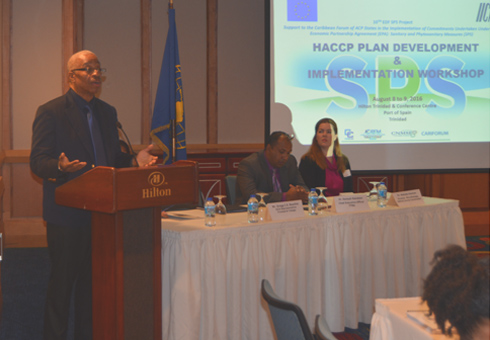
“All countries must comply with SPS Measures in order to successfully export their products to international markets,” he said, adding, “therefore, companies involved in the manufacturing, processing or handling of food products should adopt this system to minimize or eliminate food safety hazards in their product. “
Rawlins urged participants to use the training to strengthen their food safety systems. “This is one sure way of meeting food safety standards in your own country which will then pave the way for exporting to regional and international markets,” he told workshop participants.
Rawlins said that the Institute had decided to focus on the private sector with a “timely and important” workshop by contracting the Washington D.C.-based Grocery Manufacturers Association Science and Education Foundation (GMA SEF) to build HACCP capacity. The workshop launched the second phase of that capacity-building, which began with training of regional trainers.
Robert Ross, of Sterling Products in Guyana, a participant at the workshop, also foresees a tightening of food safety regulations, even within the CARICOM market.
“There is going to be a revision of a number of the food laws in the region, and I’m pretty sure HACCP will become a key requirement,” said Ross. “We want to make sure we are ready for that.” Sterling manufactures margarines, shortenings, yogurt and ice cream. Ross, the Strategic Business Manager and Head of Quality Assurance said the company hopes to grow by becoming more export-oriented.
Richard Trotman, Managing Director of Trinidad Chocolate Factory Ltd, which produces a range of fine cocoa and chocolate products, said his company aspires to the highest standards and has already engaged a HACCP consultant.
“People are trusting us that what they put in their mouths is safe. So we want our product to be enjoyed and to be safe, for the local public as well as international consumers.”
Two Surinamese attendees, attending the workshop, said they hoped the training would help their businesses—makers of soy-based marinades and milk drinks and puddings—to distinguish their products as high quality.
CEO of the Trinidad and Tobago Manufacturers’ Association (TTMA), Dr. Ramesh Ramdeen in addressing the participants, said that food safety issues could occur anywhere along the supply chain. “You want to ensure that you do everything possible so when that product leaves your factory gate, it’s optimal,” said Ramdeen.
The private sector workshop is being conducted by Food Technologists Janelle Yarde-Blackman and Melissa Agbeko who were trained during the first phase of IICA’s efforts to build regional capacity in HACCP.
Agbeko, who works in the Tobago House of Assembly’s Marketing Department and is in charge of Quality Assurance at the recently opened Fresh Produce Packinghouse in Tobago said that Hazard Analysis is the heart of the food safety system. “Coming out of the training we’re hoping that the participants will have a better grasp of how to conduct a Hazard Analysis, properly and accurately.”
The HACCP system originated in the aerospace industry in the 1960s, when NASA was conducting research on minimizing pathogens and biological toxins in space foods. Putting a good HACCP plan in place doesn’t mean abandoning quality assurance protocols that a company might already have in place, but often requires a revision of the procedures and their appropriate integration into a HACCP plan.
More information: