As part of the support it provides to the Agricultural Policies Program (APP) of the Caribbean, IICA analyzed the challenges Guyana’s producers are facing to tap into local markets.
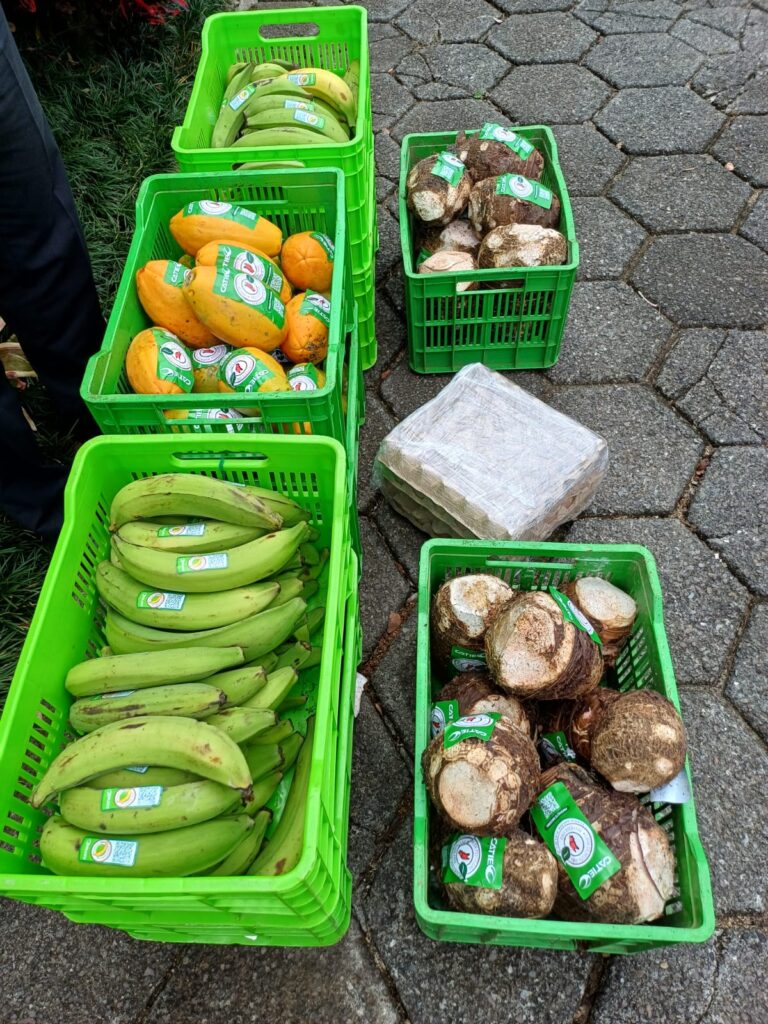
Georgetown, Guyana, April 22, 2015 (IICA). Small producers of cassava and ruminant breeders in Guyana will be able to improve their ties to the local market, and in turn make their farms more productive and profitable, thanks to the support that the Inter-American Institute for Cooperation on Agriculture (IICA) is providing for research in these value chains.
A study carried out by the IICA Office in that country will support the development of sustainable agricultural systems and the strengthening of the sector’s capabilities, which will also contribute to eradicating poverty.

This analysis is one of the follow-up actions being carried out by IICA’s Agricultural Policies Program (APP), the Caribbean Agricultural Research and Development Institute (CARDI), and the Caribbean Community (CARICOM), with funds from the European Union.
IICA, through this program aimed at improving ties between producers and the market, carried out field work in Guyana’s ten administrative regions. Specialists analyzed the challenges faced by producers to introduce their products to the market, as well as the use of food by consumers.
According to Selwyn Anthony, facilitator for IICA’s value chains, participants in the study are convinced that this work could benefit their productivity and profitability, and have therefore collaborated by providing information.
The study was carried out with support from local agencies such as New Guyana Marketing Corporation, the National Agricultural, Research and Extension Institute, and the Guyana Livestock Development Authority, as well as producer organizations, academics, and persons from the tourism and service sectors, among others.
The final phase of this initiative consists in systematizing the recommendations, which will be handed in to CARDI as input for technology transfer, and to the CARICOM Secretariat for the creation of a favorable policy framework for producers.
IICA will also establish a cassava and small ruminant dialogue platform to ensure fluid communication among the relevant stakeholders.
With information from the Guyana Chronicle.
Más información:
wilmot.garnett@iica.int