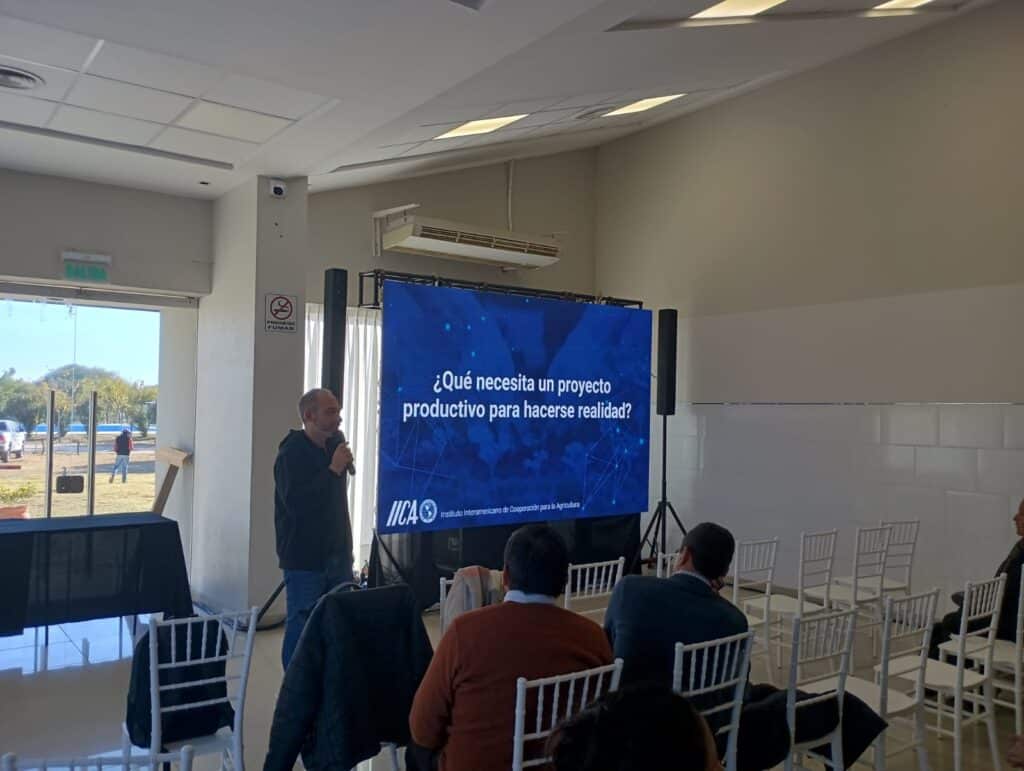
Mario Anastasio, Specialist in Project Management and Rural Development, IICA Argentina.
Catamarca and Posadas, Argentina, 10 July 2025 (IICA) – Together with young people and teachers from northern Argentina, the Inter-American Institute for Cooperation on Agriculture (IICA) is participating in the regional meetings of the National Congress on Technical and Vocational Education, which bring together 1,600 participants representing 530 agrotechnical schools from across the country.
Catamarca, Mendoza, and Misiones are the Argentine provinces that have already hosted the regional meetings, which serve as platforms to promote and strengthen the exchange of knowledge and best practices among students, teachers, school administrators, producers, agro-industrial companies, scientific and technological research agencies, and international cooperation agencies.
The Congress will continue with other regional meetings and a national gathering, featuring various workspaces and discussions on technological, pedagogical, and institutional management innovations aimed at improving technical agricultural education.
The National Congress is organized by the National Institute of Technological Education (INET), and IICA is participating in the workshops focused on connecting schools with their surrounding environment and the productive sector. INET is the agency under Argentina’s Secretariat of Education responsible for coordinating the implementation of public policies related to technical education.
INET and IICA have been working together on a project to strengthen agrotechnical schools. The goal is to foster a new vision of rural life and build bridges between the countryside and cities through tools such as digital agriculture, the bioeconomy, value addition in agricultural production, and technological innovation.
The activities prepared by the hemispheric agricultural development agency for the Congress focus on AgTech and digital agriculture on one hand, and on project design and financing on the other.
“Productive projects designed in the classroom: Is being innovative enough to secure resources?” and “Agricultural technologies: Future and present” were the titles of IICA’s workshops, led by Mario Anastasio, Carolina Pivetta, Sandra Ziegler, and Caterina Dalmasso.
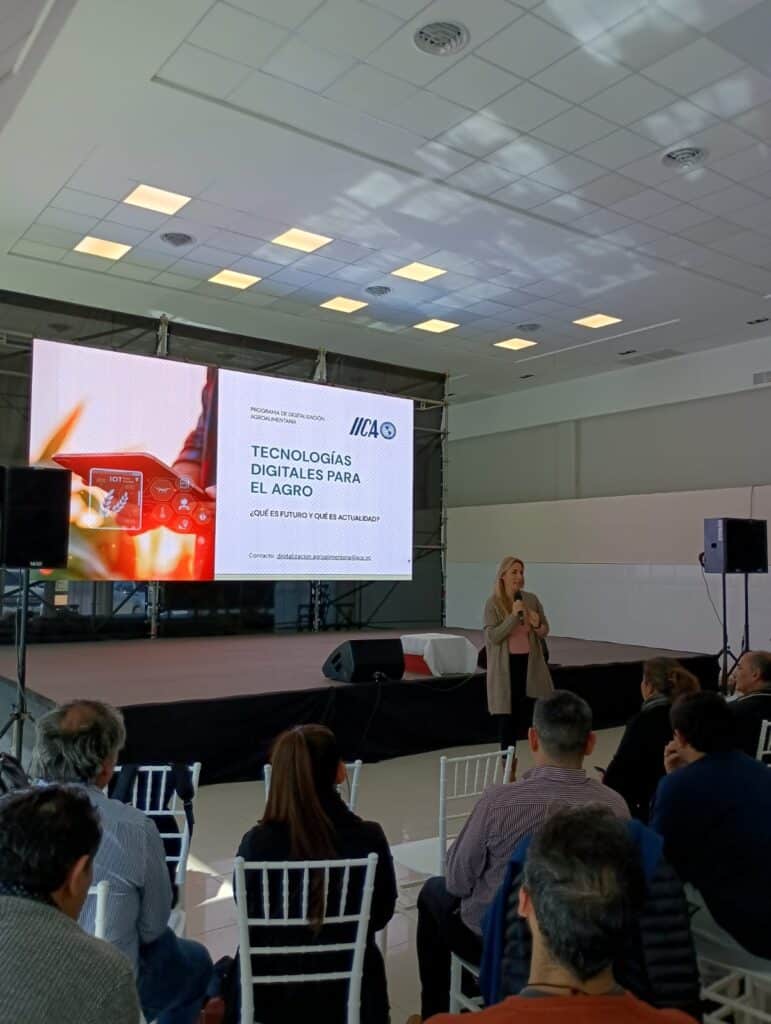
The National Congress is organized by the National Institute of Technological Education (INET), and IICA is participating in the workshops focused on connecting schools with the surrounding environment and the productive sector.
The first workshop emphasized key elements valued by those who support projects, such as the presence of work teams, growth or scaling potential, market prospects, financial viability, environmental care, and social impact. The second explored the scope of digital transformation, with topics such as proximate and remote sensing, the Internet of Things, robotics and automation, big data and artificial intelligence, blockchain and traceability, and information and communication technologies.
Focus areas of the Congress
The meeting in Catamarca included students and teachers from the provinces of Tucumán, Santiago del Estero, Jujuy, Salta, and Catamarca, while the one in Posadas gathered participants from Corrientes, Chaco, Misiones, and Formosa. In Mendoza, participants came from that province and neighboring San Juan, San Luis, and La Rioja.
Key themes addressed at the Congress include technological innovation in agricultural, agro-industrial, and service production, and strengthening the links between schools and the productive, scientific, and technological sectors. A federal document will be produced at the end of the process, compiling conclusions, criteria, and recommendations from the collective work, which will serve as a basis for guiding public policies for continuous improvement in the sector.
IICA participates through one-hour workshops that include a presentation, a space for questions and exchange, group work based on guiding questions, and a plenary discussion of group reflections. The same questions are used for each theme in each workshop to allow for systematization and comparison of results by region. In all cases, participants are given an overview of new technologies, work on envisioning the agriculture of the future, and explore the tools and skills needed to make that vision a reality.
Agustín Sánchez, Brian Medina, and Axel Gutiérrez, students at the Juan Mantovani Agrotechnical School in Santa Ana, Tucumán, participated in the regional meetings and shared their interest in new technologies. “To develop future projects, first and foremost we need education and personal drive. Knowledge is power, and we need to acquire as much of it as we can. Then, of course, we would need capital to launch our projects and organize our time. We believe that sacrifices bring rewards,” they said.
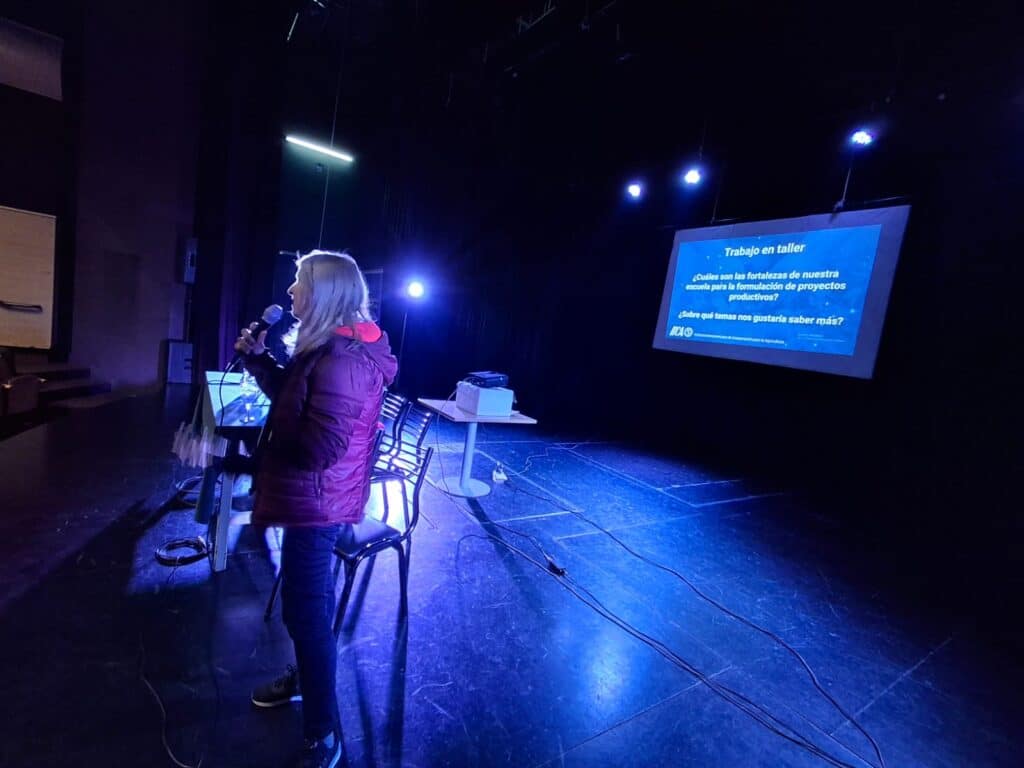
Sandra Ziegler, Specialist in Education and Rural Connectivity.
The three students explained that their school has a 20-hectare farm where squash, potatoes, sugarcane, and corn are grown. The corn is used to feed goats, chickens, and rabbits. There is also a greenhouse where tomatoes and zucchini are produced. “Many students who finish school go on to study for a degree in agricultural management and later start their own projects. That’s a good thing because they can stay in their communities and also have opportunities to work in some of the productive sectors of our province,” they said.
More information:
Institutional Communication Division.
comunicacion.institucional@iica.int