New agreement will make it possible to generate projects related to tissue culture and specialized training.

Mexico City, 14 January 2015 (IICA). The Inter-American Institute for Cooperation on Agriculture (IICA) and the Centro de Investigación Científica de Yucatán (CICY) will work together on sustainable development projects designed to benefit agriculture and rural well-being in the Americas.
The Directors General of IICA, Víctor M. Villalobos, and the CICY, Lorenzo Felipe Sánchez Teyer, signed a framework agreement for technical cooperation on topics related to biochemistry research, plant molecular biology, biotechnology, water sciences, renewable energies, natural resources and development, and the processing and recycling of new materials and their application in technical cooperation activities for the agricultural sector.
The joint, complementary efforts of the CICY and IICA will aim to generate projects related to tissue culture and specialized training in that area.
IICA, an international agency of the Inter-American System specializing in agriculture with over 70 years’ experience, and the CICY, a renowned public research center, will promote higher productivity and increased competitiveness in agriculture and the production of high-quality staple foodstuffs to help achieve food security.
The two agencies hope that the agreement will facilitate the establishment of public policies and institutional frameworks in the agricultural sector, and enhance agricultural health and food safety and the development of expertise among stakeholders in agricultural chains and rural territories.
The CICY and IICA are already implementing other joint projects, such as the Program to Promote Capacity Building and Agricultural Development in the Caribbean and Central America, whose theoretical and practical courses and technical follow-up have made it possible to identify replicable agricultural productivity models based on plant pathology.
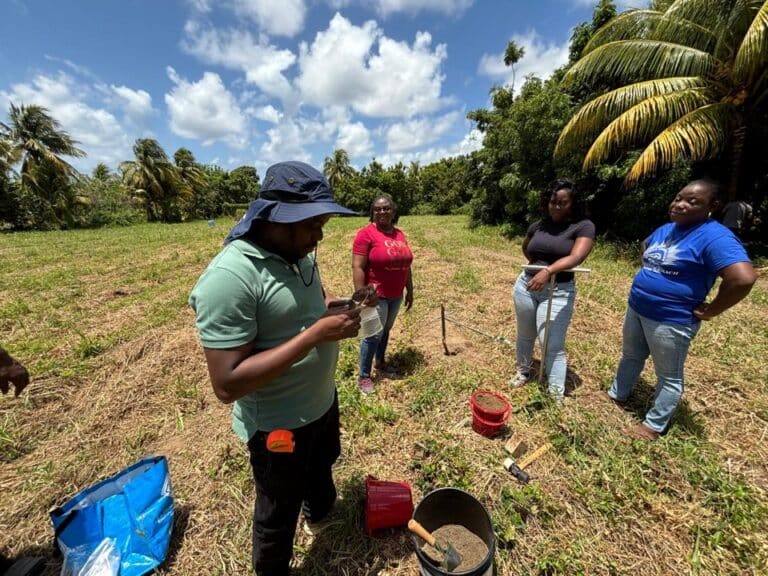
Under the program, technical officers from Suriname, St. Lucia, Barbados, St. Vincent and the Grenadines, Bahamas, Dominica, Grenada, Guyana, Jamaica, Trinidad and Tobago, Antigua and Barbuda, and Belize took part in a course on protected agriculture given by CICY specialists.
For further information:
gloria.abraham@iica.int