Inter-American Institute for Cooperation on Agriculture

Agribusiness Agricultural Health Biotechnology Food safety Inclusion Sustainable development

Key concepts in food processing, product development and general concepts of Food Technology

Tiempo de lectura: 3 mins.

These tutorial-style videos are intended to increase a viewer’s understanding of basic concepts of food science.
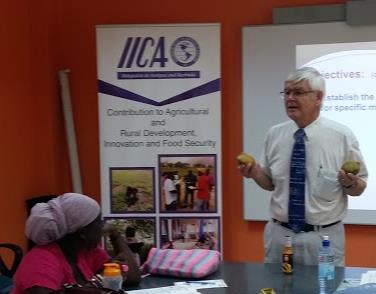
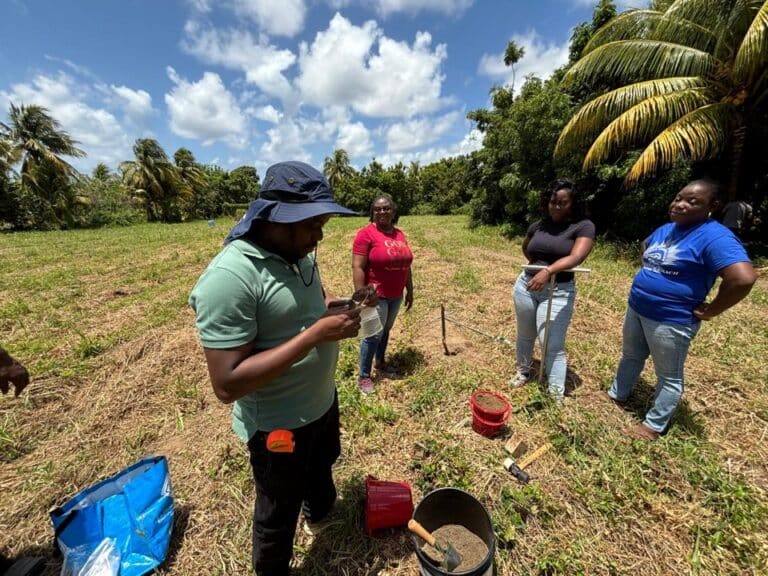
Dr. Donald Mercer during the “Mango Worshop” in Antigua and Barbuda

IICA Canada, through its Research and Internship Assistance Program (RIAP), is pleased to present a series of tutorial-style videos on key concepts in food processing, product development and general training topics. 

This initiative was triggered as consequence of feedback received after holding a series of workshops sponsored under IICA’s Canada RIAP program on food processing in the Caribbean. Participants of these workshops expressed the need for on line availability of the videos to allow further dissemination to small scale food processors, students and instructors in educational institutions.

Dr. Don Mercer, Associate Professor at Department of Food Science, University of Guelph, developed the instructional material during his participation in the RIAP. Twenty two videos were produced and grouped into three categories relating to processing activities; food products and training.

Instructional videos were produced in a manner that permit viewers to follow the topic using PowerPoint “slides” with an audio commentary. The complete list of the videos including their duration is shown below:

Processing-related Videos:

  1. Reasons for Processing Foods (18:17)
  2. Blanching of Food and Vegetables (15:59)
  3. Chilling and Freezing (31:09)
  4. Beverage formulation (19:32)
  5. Osmotic Dehydration  (16:21)
  6. Solvent Extraction and Precipitation (15:41)
  7. Tofu Making (16:15)

Product-Related Videos:

  1. Mango Leather Preparation (6:41)
  2. Mango Powder preparation (10:22)
  3. Trail Mix preparation (7:04)
  4. Dried product costing (19:29)
  5. Beverage costing exercise (20:56)
  6. Sugar content of beverages (36:31)
  7. Food Safety , Quality and Spoilage (20:07)

Training-Related Videos:

  1. Dimensional Analysis (20:29)
  2. Moisture Calculations ( wet-dry basics)(20:24)
  3. Pressure and Pressure conversion (31:09)
  4. Density determination (28:26)
  5. Basic Statistics (32:57)
  6. Rate Calculations (31:31)
  7. Mathematical modeling (25:50)
  8. Effects of Temperatures on the Kinetics of Chemical reactions (34:36)
Share

Related news​

San José, Costa Rica

May 29, 2026

IICA Director General receives overwhelming support in presenting the key pillars of the Institute’s work for the next four years, with a focus on strengthening the agriculture sector of the Americas

Member countries of the Inter-American Institute for Cooperation on Agriculture (IICA) expressed support for a presentation by Director General Muhammad Ibrahim during a meeting of the Special Advisory Commission on Management Issues (SACMI), where he outlined the key areas of focus of the organization’s work from now until 2030.

Tiempo de lectura: 3mins

San José, Costa Rica

May 28, 2026

Latin America and the Caribbean develop shared agenda for sustainable dairy farming with support from IICA, CAF, and regional partners

Producers, technical specialists, and institutions in different areas of Latin America and the Caribbean are taking part in a coordinated effort to develop a regional agenda for sustainable dairy farming. The initiative is spearheaded by the Inter-American Institute for Cooperation on Agriculture (IICA), CAF-Development Bank of Latin America and the Caribbean, the Pan-American Dairy Farming Federation (FEPALE) and Chile’s Dairy Consortium.

Tiempo de lectura: 3mins

San José

May 27, 2026

IICA and CIRAD renew strategic partnership to promote agroecological innovation and more sustainable agrifood systems in Latin America and the Caribbean

The work will prioritize initiatives that form part of a comprehensive approach to agroecological transition and agricultural health in areas such as agroforestry and forest management, resilient and competitive tropical agriculture, science, technology and innovation, bioinputs that reduce dependence on agrochemicals, integrated crop management and regenerative agriculture, precision agriculture, animal and plant health, soils and ecosystems, public policies for sustainable agrifood systems, governance, and institutional coordination.

Tiempo de lectura: 3mins