
San José, 15 October 2025 (IICA) – Eradicating hunger in Latin America and the Caribbean is possible and would entail a relatively low fiscal cost for the countries of the region, according to a study conducted by the Inter-American Institute for Cooperation on Agriculture (IICA) together with the International Monetary Fund (IMF).
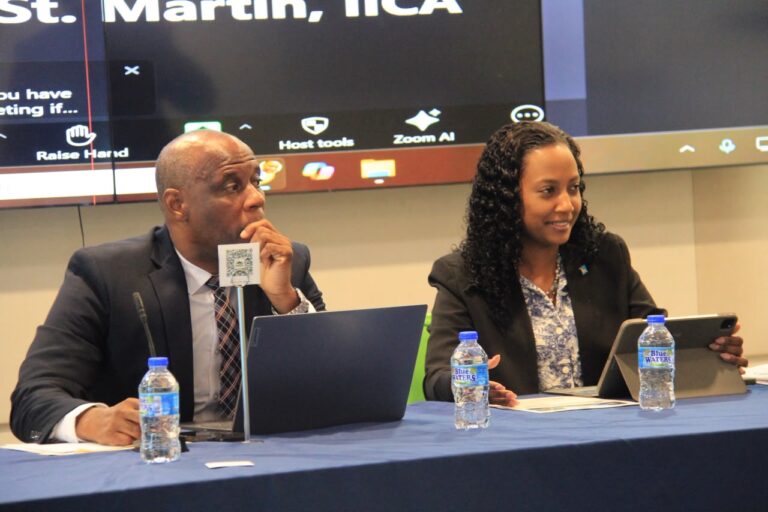
The details of the document, which contains a rigorous technical analysis, were presented to experts from the agri-food sector, opinion leaders, journalists and communicators committed to positively influencing public recognition of agricultural and livestock value chains, during an event held at IICA headquarters in Costa Rica.
“How Much Would It Cost to Eradicate Hunger in Latin America and the Caribbean? A Simple Approach to Estimating the Required Transfers” is the title of the paper, prepared by economist Eugenio Díaz-Bonilla, Special Advisor to IICA and Senior Researcher at the International Food Policy Research Institute (IFPRI), together with IMF economist and researcher Tewodaj Mogues.
“There are two costs to consider: the cost of solving the problem of hunger and the cost of not solving it, which may be even higher. And we have long known that this is a poverty problem, not a food production problem”, explained Díaz-Bonilla during a joint session of the Advisory Council for the Transformation of Agri-food Systems (CATSA) — composed of leading figures from the public, private, and academic sectors who have made major contributions to the agri-food sector — and IICA’s Communication Committee, made up of specialized journalists and communicators.
Also speaking during the session, which took place in hybrid format (in person and virtually), were Carolina Trivelli, Peru’s first Minister of Development and Social Inclusion (2011–2013), who led the implementation of key social policies; Carmine Paolo De Salvo, Italian agricultural economist and Lead Rural Development Specialist at the Inter-American Development Bank (IDB); and Manuel Otero, Director General of IICA.
Bridging the income gap for low-income sectors
The study analyzes different goals, indicators and means of implementation, acknowledging the challenges involved in harmonizing measurement criteria that vary among countries in Latin America and the Caribbean.
It shows that the region’s per capita calorie consumption exceeds the minimum required to avoid hunger by more than 20%. Only one country falls below the necessary average. The key, therefore, is to find a way to close the income gap relative to food costs — a gap that currently leaves around 44 million people suffering from hunger.
“Many countries in Latin America and the Caribbean could eradicate hunger at a relatively low additional cost. Nearly three-quarters of the countries would face a direct additional cost of less than 0.25% of their Gross Domestic Product (GDP), according to the international poverty line, currently set at three dollars per person per day, which in the region could be considered extreme poverty”, said Díaz-Bonilla.
“One possible financing mechanism would be to reallocate regressive subsidies or those with other negative impacts, such as fossil fuel subsidies, which in 2024 represented 0.7% of Latin America and the Caribbean’s GDP”, he added.
The study emphasizes the need for comprehensive plans to expand and diversify food production, as well as to implement an effective cash transfer program for low-income sectors, complemented by improvements in nutritional education, food information, and labeling.
“The central message is that it is indeed possible to end hunger, because it is not a problem of food availability but of economic access: families simply cannot afford the basic food basket”, said Carolina Trivelli, who noted that the fiscal cost would be comparable to that of other social programs currently in place across the region.
She also pointed out that the fiscal effort required to eradicate hunger would be offset by other positive effects, such as increased consumption of locally produced food and a boost to agricultural productivity.
For his part, Carmine Paolo De Salvo praised the study’s data, expressed surprise at its conclusions, and opened a debate on the possibility of launching a pilot case in a country of the region — within the framework of a new generation of public policies for agri-food systems — to test the feasibility of eradicating hunger at a relatively low fiscal cost, building on existing social programs.
“We’ve been discussing this issue for decades”, he acknowledged, “and wondering why it hasn’t happened. It’s time to see, in practice, which challenges we’ve underestimated, what to do with the programs already in place, what the obstacles are, and how to avoid creating perverse incentives”.
“It is clear that eradicating hunger in our region is possible”, said IICA Director General Manuel Otero in closing, “but it requires strong political will and maturity, which are no small matters. We need an inter-institutional approach — agriculture ministries must work hand in hand with finance ministries”.
The Director General of IICA emphasized that while the region is a net food producer, it still has not achieved food security — a goal to which IICA is firmly committed through its work on bioeconomy, territorial development, and science and innovation. “We know that without agriculture there can be no food security,” he concluded. “That is the fundamental issue if we are to strengthen the foundations of our societies”.
More information:
Institutional Communication Division.
comunicacion.institucional@iica.int