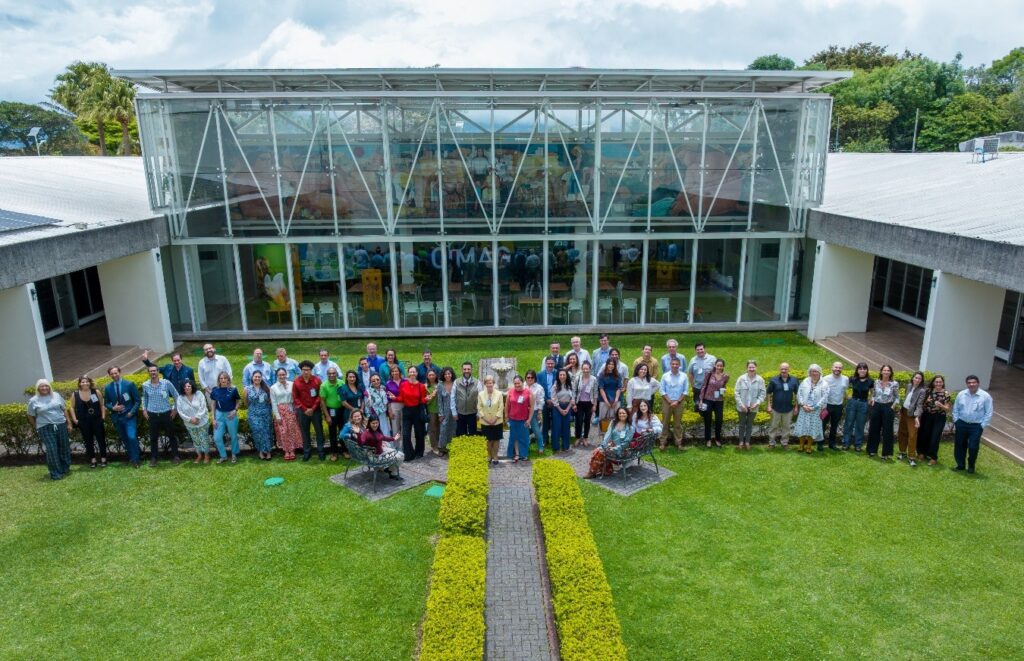
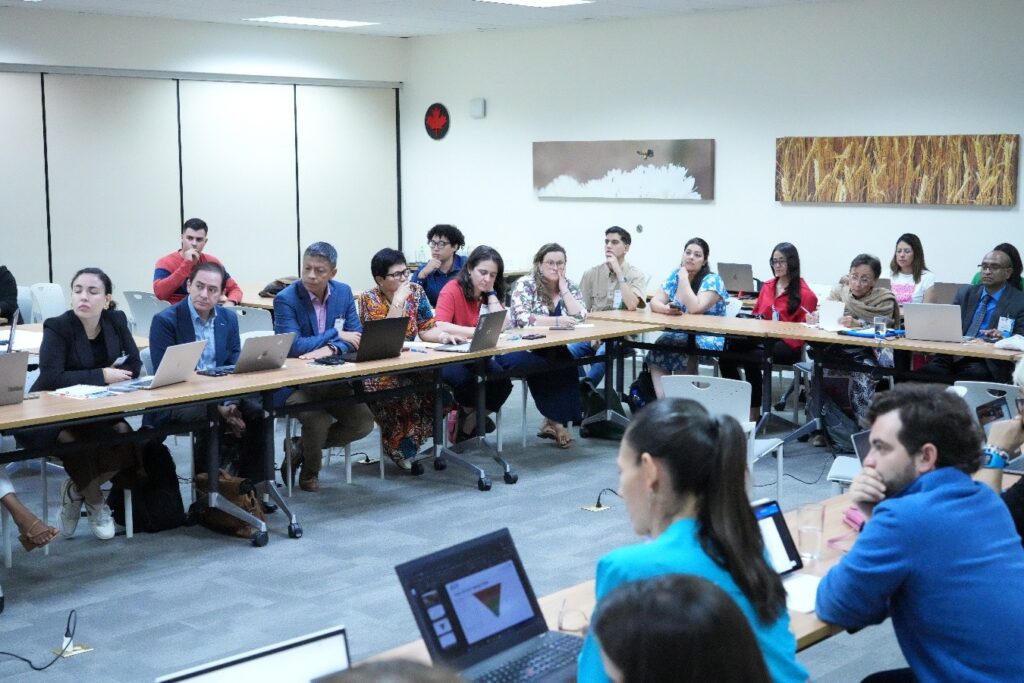
San José, Costa Rica, 21 May 2025 (IICA)- The wealth of biological resources, the strength of agriculture and industry, and cultural diversity are the main comparative advantages that countries in the region have to turn the bioeconomy into the driving force of their development. This was the key message at the close of the 2025 Conference of the Latin American Bioeconomy Network, which brought together over 150 participants at the headquarters of the Inter-American Institute for Cooperation on Agriculture (IICA).
Over four days, the event featured more than 40 presentations, seven workshops, various strategic planning sessions, and field visits to witness bioeconomy initiatives in action.
The 170 participants—including business leaders, public officials, academics, researchers, and representatives of international cooperation organizations—discussed the outlook for the key variables that will shape the future of the bioeconomy in the region and globally.
The event explored global and regional trends and highlighted the importance of decarbonization and circularity. It also underscored technological and social innovations as transformative pillars of agriculture, agri-food systems, and rural areas.
IICA Director General Manuel Otero emphasized that, for IICA, the bioeconomy is the major bridge connecting agriculture, the environment, and rural territories: “It represents a unique opportunity to integrate the goals of a more efficient, competitive agriculture with greater value addition, the conservation and restoration of the environment, and the creation of broader economic opportunities and linkages in rural areas.”
“If we harness technologies, innovations, and local knowledge,” Otero added, “to make use of our biological resources and principles, we can increase the production of food, clean energy, and other biomaterials, while promoting economic development, improving the quality of life in rural communities, and contributing to the protection of our planet.”
Hugo Chavarría, Manager of Innovation and Bioeconomy at IICA and Executive Secretary of the Latin American Bioeconomy Network, noted that each country, territory, and value chain has its own form of bioeconomy with unique characteristics, but the challenges are shared.
“Cooperation among the public and private sectors, academia, and civil society,” he stressed, “is not optional—it’s essential. This conviction gave rise to the Latin American Network and is what calls us today to join forces to build the sustainable future of our region.”
Chavarría reported that the Network, established two years ago, now includes more than 90 institutions from 15 countries working together to build capacity, formulate and implement strategies and policies for the bioeconomy, promote support services for bioenterprises, and position the region on the international agenda.
Alexander Leicht, UNESCO Representative in Costa Rica, emphasized that “the answer to most of the challenges the world faces lies in the generation of science-based knowledge that is accessible to all and used for peace and the common good.”
“This knowledge cannot be generated in isolation; its development requires investments that no country can afford alone,” he added.
Edith Paredes, Executive Director of the Amazon Cooperation Treaty Organization (ACTO), also stressed the importance of cooperation among different actors—including academia, science and technology institutions, national and regional governments, civil society, and youth—as essential to fulfilling the Latin American Network’s agenda.
Innovation and collaboration in the bioeconomy
The event also featured a fair showcasing entrepreneurs and established companies working in the bioeconomy. These ranged from food-related bioproducts, bio-inputs, bioplastics, and impact investing, to research centers and bioeconomy start-ups, biorefineries processing residual biomass from tropical products, large-scale biodigestion plants, and sustainable tourism initiatives.
During the conference, IICA also inaugurated the Agrobiobusiness and Investment Center, an initiative aimed at promoting the creation and development of ventures in agriculture and the bioeconomy. The center will offer innovation services, technical and business capacity-building, and comprehensive support throughout all project development stages, with the goal of fostering a more dynamic, inclusive, and employment-generating bioeconomy.
Future of the Latin American Bioeconomy Network
The event concluded with a co-creation session to collaboratively build a joint work agenda for the 2025–2026 period. This process included participation from current Network members as well as leading bioeconomy institutions from the United States, Canada, Europe, Africa, and other regions.
Priority topics for the Network’s efforts over the next two years include strategies and policies, capacity-building, financing, sustainable development of the Amazon, metrics, and bioenterprises. For each of these areas, a project agenda will be developed that brings together the capacities of Network members and strategic partners.
All outputs developed by the Network are available at https://bioeconomialatam.net/
More information:
Institutional Communication Division.
comunicacion.institucional@iica.int