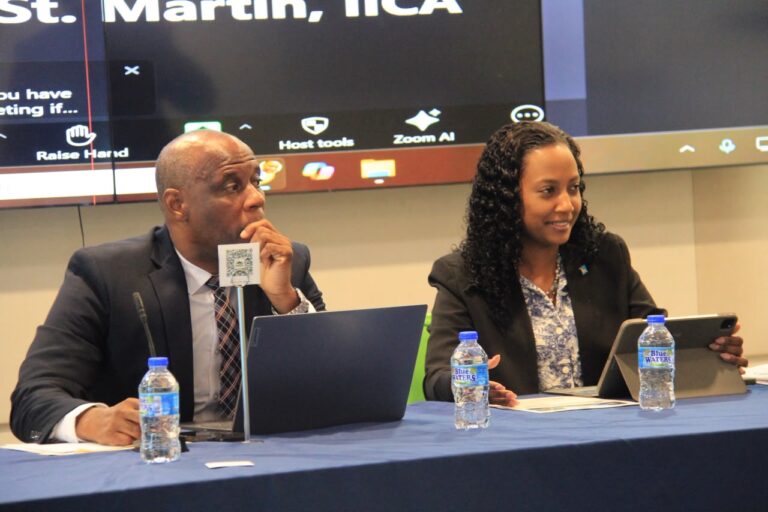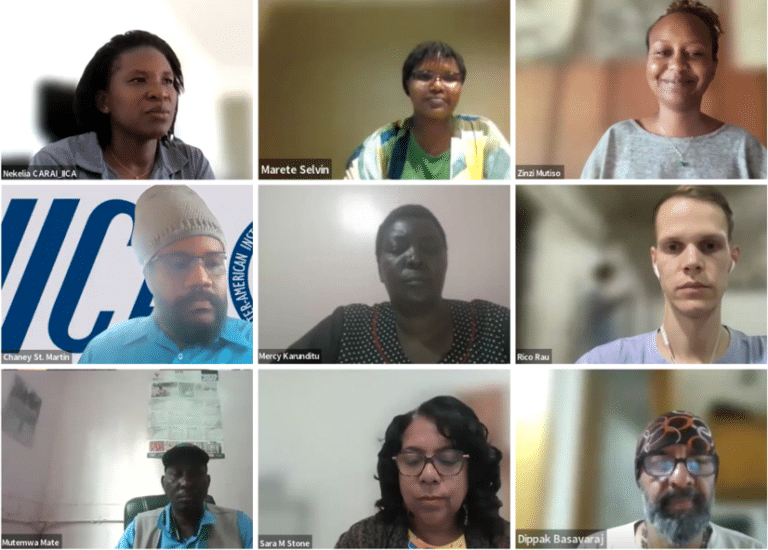
IICA and the US Department of Agriculture discussed the potential advantages and implications of this science for various sectors of the economy.
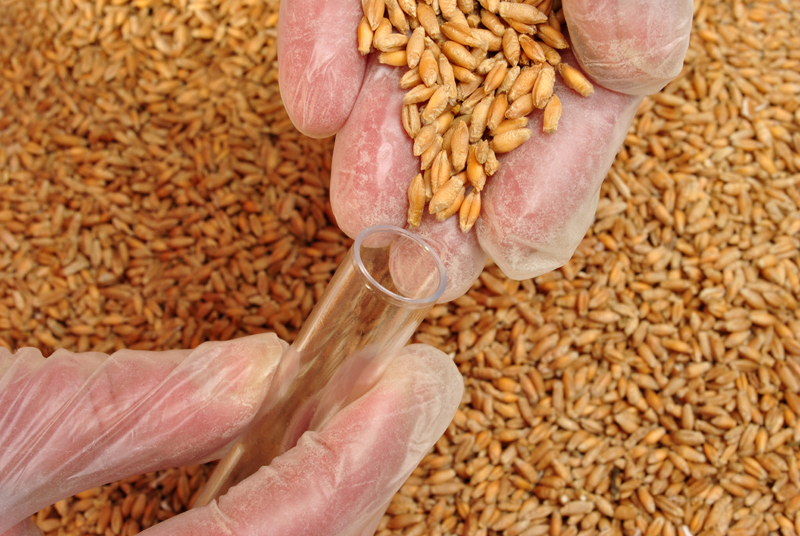
San Jose, April 5, 2016 (IICA). During a meeting organized jointly by the Inter-American Institute for Cooperation on Agriculture (IICA) and the United States Department of Agriculture (USDA), experts from the United States, Mexico, Brazil and Europe met with decision-makers from Latin America and the Caribbean (LAC) to discuss the fundamentals of synthetic biology (SYNBIO) and explain its potential advantages for development of agriculture, industry, the environment and health.
Participating in person and online, representatives from more than 20 countries in the western hemisphere had an opportunity to strengthen their knowledge and capacity in this topic, with a view to better understanding the national and international discussions that are currently taking place.
According to Pedro Rocha, IICA’s Biotechnology and Biosafety Specialist, “synthetic biology is an interdisciplinary branch of biology that involves the design and construction of biological systems. Its potential uses are enormous and it can be applied in different fields. Since the regulatory aspects are still under discussion, we consider it essential to organize these types of meetings to facilitate understanding and communication between countries.”
This modern biotechnology combines science, technology and engineering to facilitate the understanding, design and modification of genetic materials, living organisms and biological systems.
According to Fan-Li Chou of USDA, the need to innovate must go hand in hand with the regulatory aspects. “We need to regulate in order to protect the environment and human health and, if this is done well, it is possible to achieve higher levels of economic development, create more jobs and generate benefits for society,” he explained.
Marcelo Freitas, of the Brazilian Agricultural Research Corporation (EMBRAPA), described the potential applications of SYNBIO in agriculture. “Scientists have developed genetically modified crops that can produce greater yields using less land and with greater resistance to drought, diseases and pests.”
Freitas explained that the use of synthetic biology in agriculture benefits the development of plants by improving their yields, resistance and the quality of products. In addition, he pointed out that it can indirectly reduce methane gas emissions (resulting from livestock production) and can improve the quality of soils.
The two-day seminar was transmitted from IICA Headquarters and is the first of a series of events to be organized by both institutions during 2016.
“We wish to provide countries with scientifically validated information that will enable them to take appropriate decisions in relation to the use of new technologies and options to improve the development of agricultural fields,” Rocha concluded.
More information: