Executives from Bayer, Cargill and Walmart and private sector trade associations highlighted the digitalization of technical assistance, fund raising and improved communication about agricultural innovation research, as areas that are critical to investment.
San Jose, 27 November 2020 (IICA). Business leaders and agriculture sector organizations endorsed the efforts of the Inter-American Institute for Cooperation on Agriculture (IICA) to promote public-private partnerships for increased investment in agricultural research, development and innovation. Connectivity and communication were identified as priority areas.
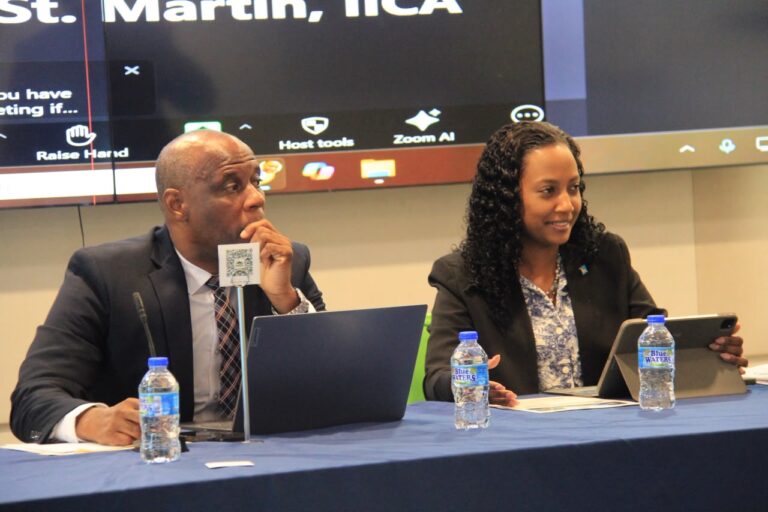
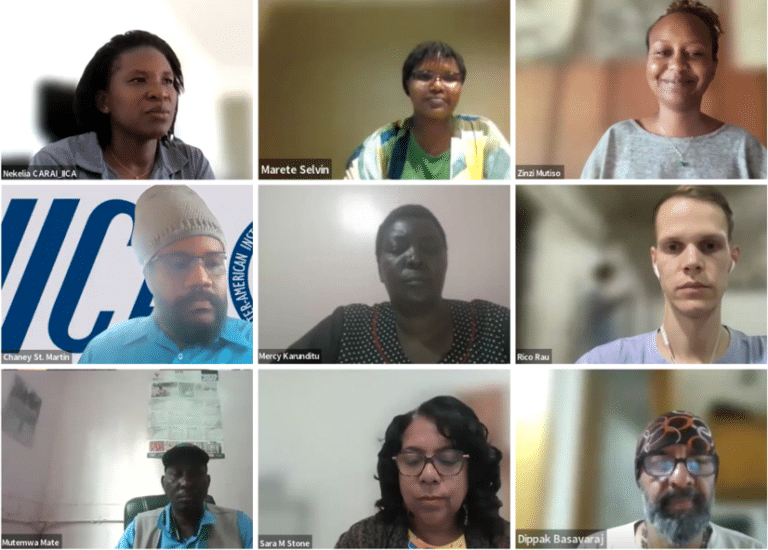
The comments took place during a virtual meeting that IICA organized to gather perspectives about the main agricultural innovation needs in Latin America and the Caribbean and to incorporate them into the Institute’s work agenda to position agriculture as a critical part of the solution to preserve biodiversity and to produce more food with fewer available resources.
High-level executives participated in the meeting, representing Bayer, Cargill, Walmart, the Colombian Agricultural Society, the Colombian Oil Palm Research Center (CENIPALMA), the Peruvian Association of Agricultural Producers (AGAP) and Ecuador’s National Association of Food and Beverage Manufacturers (ANFAB), among others. IICA was represented by the Director General, Manuel Otero.
Ronald Guendel, Global Head of Food Security at Bayer, remarked that the creation of innovation hubs through public-private sector partnerships and improved communication about ongoing research would be a means of attracting agricultural RD&I investment, by providing concrete incentives for companies to fund this research.
David Nelson, Cargill representative and former Ambassador of the United States to Uruguay, remarked that, “Research results must be commercialized and there is also a need for coherence among the regulatory processes of countries, to enable more transparent and timely approval of technology for use in agriculture”.
Christian Gómez, Walmart’s Director of Global Governmental Affairs for Latin America explained the need to digitalize agricultural processes in order to streamline relationships with producers, as the pandemic has restricted the movement of people, including clients’ ability to access supermarkets.
“We will require public-private collaboration to transform agriculture into a more competitive, sustainable and socially inclusive sector”, said Manuel Otero. “At IICA, we are convinced that this transformation calls for institutions that are committed to innovation”.
The IICA Director General emphasized that, “As we look to the United Nations Food Systems Summit 2021, we must be clear that there can be no food without agriculture. We are seeking to build a strong agenda to be effective spokespersons on issues such as digital agriculture, the bioeconomy, public-private partnerships and sustainable livestock, recognizing that agriculture is part of the solution and not of the problem”.
Thrust towards the bioeconomy and digitalization
The Director General of CENIPALMA of Colombia, Alexandre Cooman, explained that his organization’s ongoing agricultural research, development and innovation projects are focusing on biorefineries as a means of making use of biomass, but that this has been at the expense of other areas of study, such as crop protection
“We cannot let down our guard”, stressed Cooman. “Leveraging private investment will undoubtedly be the means of also increasing public investment in RD&I.
Christian Wahli, Executive President of ANFAB Ecuador, called for the increased digitalization of technical support in the field, saying that, “This will strengthen technology transfer to producers, while the companies could support the research and its dissemination”.
Wahli remarked that agricultural cooperatives should also be promoted for this purpose, as a means of channeling funding for research and development and for technical support.
“IICA has a vital role to play, such as in the generation of public goods for rural areas. Under the current circumstances and amidst Covid-19, we should aim to promote an expanded digital infrastructure to enable producers to adopt new agricultural technologies and to empower rural women, who have significant entrepreneurial capacity”, said Jorge Henrique Bedoya, President of the Colombian Agricultural Society.
Gabriel Amaro, Executive Director of AGAP in Peru, remarked that, “Greater RD&I in agriculture should assist the sector to overcome current challenges related to water use, pest management and even access to credit and greater technical support. However, the long-term challenge is to maintain a competitive business climate in the sector, as all producers want to sell their products in free markets that are profitable”.
The perspectives shared at the virtual meeting with the private sector will enable the Institute to further its efforts to satisfy the mandate of the Ministers of Agriculture of the Americas, who in 2019, instructed IICA to promote a network of organizations that would increase agriculture RD&I; foster more inclusive connectivity of rural areas; and fuel the development of the bioeconomy in the region.
“Our aim is to be a bridge to government services, the private sector and other actors who are seeking to move in the direction of the new agricultural frontier”, said Otero.
More information:
Institutional Communication Division, IICA.
comunicacion.institucional@iica.int