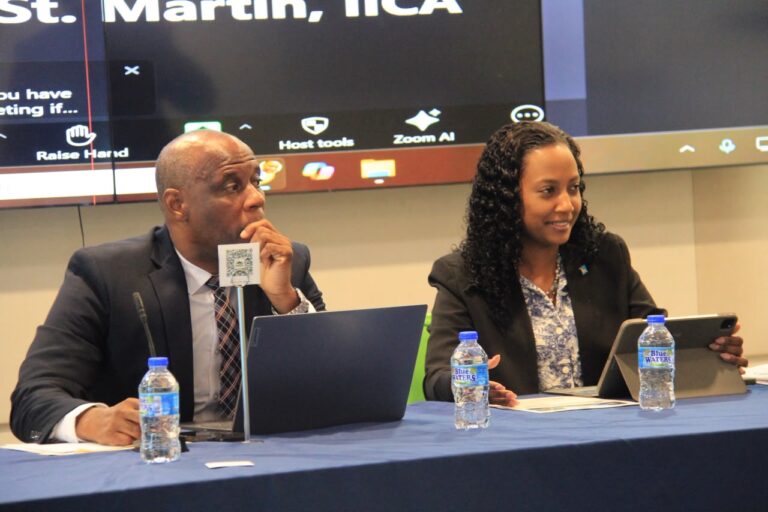
A regional training event focused on the requirements for better access to and participation of Caribbean agri-food companies in local and export markets.

Castries, St. Lucia, August 4, 2016 (IICA). Improving their revenue-earning potential by adopting suitable food safety systems and promoting consumer acceptance of their products is what 16 small businesses from the Caribbean are seeking to accomplish, following their participation in a training event organized with support from the Inter-American Institute for Cooperation on Agriculture (IICA) in St. Lucia.
The training event also sought to improve market access and participation of small agri-food companies by making use of a key element for food companies: develop and implement a Hazard Analysis Critical Control Point (HACCP) plan.
“This intervention is important for equipping small businesses to be compliant with food safety and standards requirements for better access to and participation in both local and export markets”, stated Brent Theopile, IICA’s National Specialist in St. Lucia.
Participants were drawn from the Bahamas (Field to Fork Community Farm and the Nature’s Way Poultry), Haiti (CIETAISA), St. Vincent and the Grenadines (National Fisheries, and Aurora’s & Vincy Klucs) and St. Lucia (Belles Ruche Apiary; Divine Orchards Inc.; S&C Heritage Food Inc.; St. Lucia National Fairtrade; Fond Assau processing plant, SUNFRESH Ltd., Eden Herbs, Cacoa Caribe and Cacoa Saint Lucie).
The training event was organized by IICA within the framework of 10th EDF Sanitary and Phytosanitary Measures (SPS) Project, with financial support from the European Union and in collaboration with implementing partners CARIFORUM, CARICOM Secretariat, Caribbean Regional Fisheries Mechanism (CRFM) and the National Committee for the Application of Sanitary and Phytosanitary Measures (CNMSF) of the Dominican Republic.
In Saint Lucia, the Ministry of Agriculture, Fisheries, Physical Planning, Natural Resources and Cooperatives and SUNFRESH Ltd partnered on facilitating the workshop.
A dynamic training event
The activity was implemented in two phases, one held in May and the second one in July. The first phase consisted of a “train-the-trainer” programme, in which one representative from the public and private sector was trained to function as a HACCP resource person in the country. During the second phase, this representative had to lead the national capacity building.
In the second phase small agri-food business owners learned about principles of food safety, identification of types of hazards and their effects on food, as well as suitable control methods for common food hazards. This was completed online through a 15-module web programme.
They also received face-to-face training over 2 days from the beneficiaries of phase one, during which topics such as initial tasks in developing HACCP plans and identification of critical control points were covered; this concluded with the implementation and execution of a Hazard Analysis.
“It is expected that the local trainers will transfer and build the capacity of local technicians to deliver HACCP training and support services to small businesses in their respective countries”, Theopile added.
More information: