According to a seminar held at IICA, the fact that financial entities view agriculture and ICTs as high-risk ventures hampers the development of technologies designed to promote the agricultural sector in Latin America and the Caribbean.
San Jose, Costa Rica, April 23, 2013 (IICA). The information and communication technologies (ICTs) employed by public agricultural institutions in Latin America and the Caribbean are mostly for internal use, with few products and services being offered to end users. This situation has to change, to enable ICTs to have a bigger impact on the development of agriculture and rural territories in the region.
This was the conclusion reached at the seminar Digital technologies for competitiveness, social inclusion, and sustainable development in Costa Rican agriculture, organized by the Inter-American Institute for Cooperation on Agriculture (IICA), the Economic Commission for Latin America and the Caribbean (ECLAC), and Costa Rica’s Chamber of Information and Communication Technologies (CAMTIC) and Ministry of Agriculture and Livestock (MAG).
Public sector staff may be incorporating ICTs into their work processes, but the fact goes largely unnoticed by their institutions’ end users (e.g., producers and agricultural organizations).
“To increase the impact of ICTs within such institutions, it is important to include the entities that have the most contact with the end user. Furthermore, we need to increase digital literacy, promote the creation of markets of ICT developers, and learn from the experiences and good practices of others territories,” stressed Hugo Chavarría, a specialist with IICA’s Center for Strategic Analysis for Agriculture (CAESPA).
“Investing in training in the use of technologies will also help to close the rural and gender gaps that exist in our countries’ agricultural sectors,” said Marta Villegas, Director of the MAG’s Executive Secretariat for Agriculture Sector Planning (SEPSA).
Otto Rivera, executive director of CAMTIC, remarked that ICT development had to be linked to the priorities of the agricultural sector. “Digital technologies are another tool that we need to harness,” he observed.
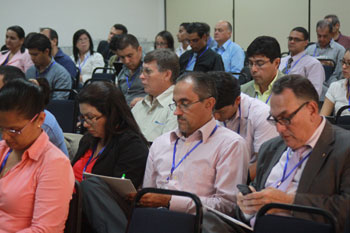
The participants in the seminar, held at the Institute’s Headquarters, included senior Costa Rican agricultural officials, as well as representatives of private-sector agrifood and technology enterprises. The activity was used to discuss how ICTs could promote the productivity of agriculture, the integration of rural territories into national development, and the sustainable use of natural resources.
The discussions also focused on the current situation vis-à-vis access to, and use of, such technologies by Costa Rica’s public agricultural institutions. “Initiatives have already been implemented that have had a major positive impact. For example, a cattle traceability system was developed that has made it possible to address problems such as animal diseases, illegal slaughter, and the theft of livestock,” Chavarría commented.
Other experiences in the public sector include the use of cellular messaging to disseminate agricultural price information (Agromensajes), and a system of the State Plant Health Service that reduces the time and costs involved in registering agrochemicals and the equipment used to apply them.
Private sector representatives, including dairy, pineapple, and vegetable producers, as well as flower wholesalers, explained how they had used ICTs to improve productivity, traceability, profitability, the incorporation of technologies into processes, and contact with their customers.
Tasks still pending
The participants in the seminar identified a series of challenges that have yet to be tackled to promote the use of ICTs in agriculture not only in Costa Rica but also throughout Latin America and the Caribbean. “Agriculture and ICTs are considered high-risk sectors, not only by financial entities but also by decision makers, which reduces the possibilities of obtaining resources for the development of technologies geared toward the agricultural sector,” the IICA specialist noted.
“In light of this, it is essential to generate State policies for increasing access to telecommunications in agricultural areas, and promoting the development of ICT solutions to farmers’ problems at the local level,” he added.
The policies implemented should promote efforts in relation to connectivity for rural territories (to ensure access to telecommunications), training for users (use of technologies and digital literacy), as well as the management of content and knowledge.
Adrián Rodríguez, Head of ECLAC’s Agricultural Development Unit, pointed out that incorporating ICTs into the political agenda called for dialogue between the agriculture and technology ministries, and between these entities and the private sector.
For more information, contact:
hugo.chavarria@iica.int