
San José, 30 July 2025 (IICA) – Tropical agriculture in Latin America and the Caribbean is crucial to global food security, and it is time it receives greater support to transform its vast natural wealth into productivity. That was the core message at the opening of an intercontinental conference taking place in San José, Costa Rica, which brings together many of the world’s leading experts in the field.
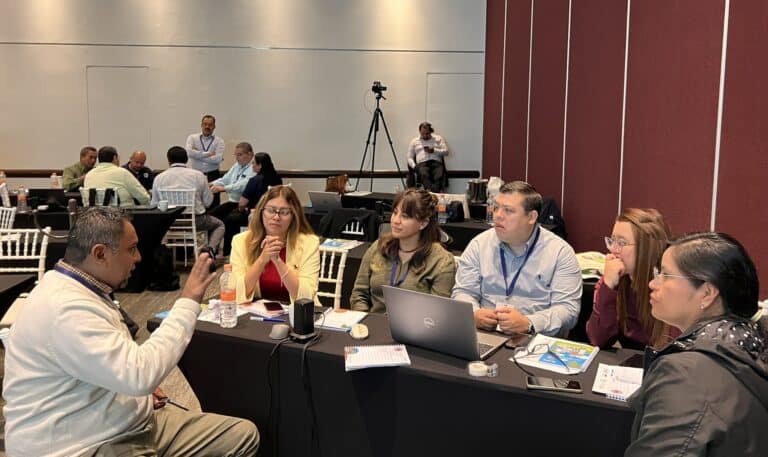
The three-day event, which combines debate and experience-sharing, focuses on pathways to scale up sustainable and resilient agricultural production in tropical regions by building bridges between production, education, science, innovation, and finance.
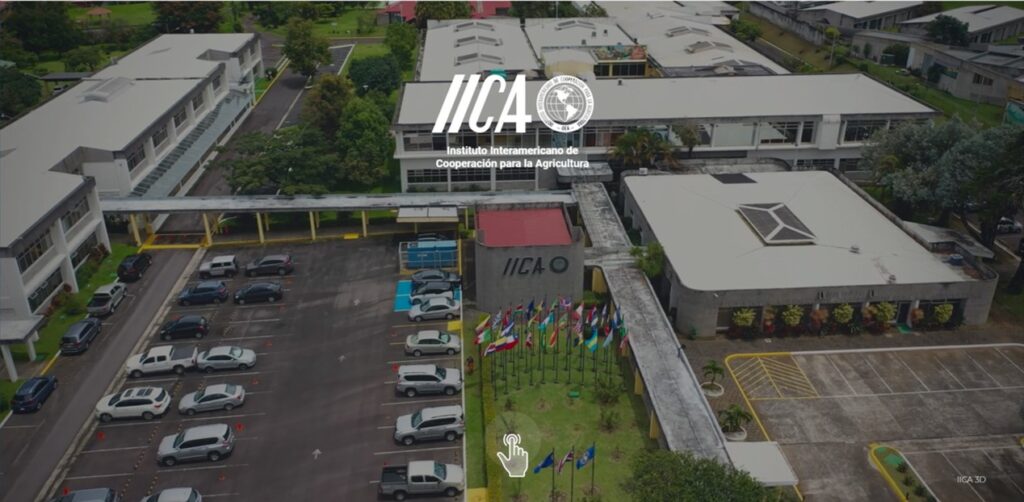
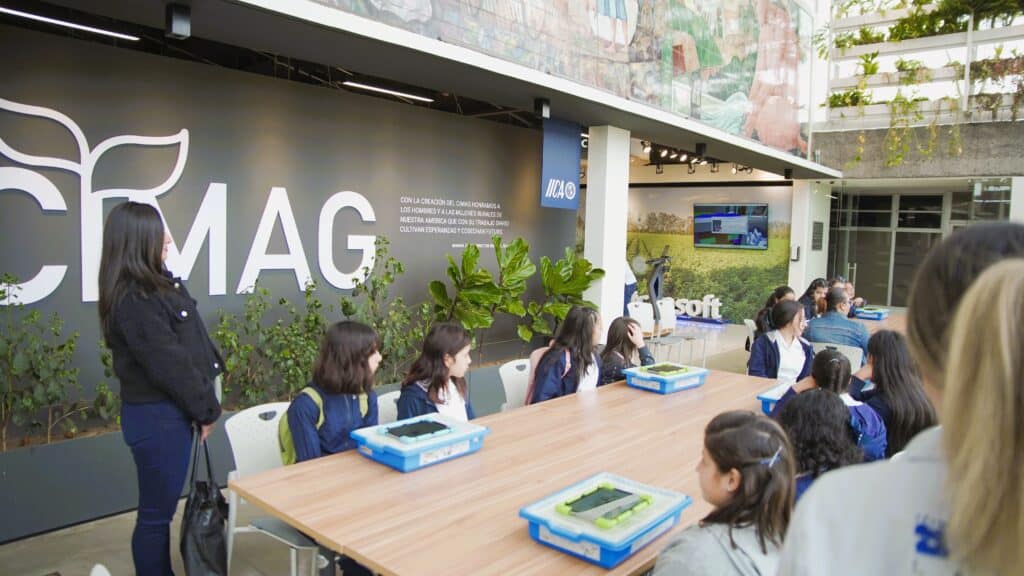
The headquarters of the Inter-American Institute for Cooperation on Agriculture (IICA) hosted the opening of the conference, which will move over to the Tropical Agricultural Research and Higher Education Center (CATIE) the following two days. This leading academic institution in innovation and sustainable development is based in the city of Turrialba and is a close partner of IICA.
Costa Rica’s Minister of Agriculture and Livestock, Víctor Carvajal; former Mexican senator, expert in sustainable rural development, and IICA Goodwill Ambassador, Beatriz Paredes; CATIE Director General, Luis Pocasangre; and IICA Director General, Manuel Otero, gave opening remarks at the conference.
Alongside renowned scientists specializing in tropical agriculture, the event will also bring together representatives of the Alliance Biodiversity-CIAT, the World Bank, FONTAGRO, the International Food Policy Research Institute (IFPRI), and other international institutions that play an important role in financing and developing technologies for food security, as well as officials from ministries of agriculture and representatives of the private sector.
Minister Carvajal emphasized that changes in global trade dynamics are narrowing profit margins and increasing the need for investment in research and new technologies.
“However,” he warned, “resources are not necessarily abundant—neither in countries nor in companies. That’s why it’s essential to share knowledge and experiences; every time we do, producers and consumers both benefit.”
Carvajal praised IICA’s efforts to create these kinds of spaces and pointed to climate variability as one of the most pressing challenges affecting all countries and farmers in tropical regions.
Pocasangre reviewed CATIE’s long-standing relationship with IICA and the academic center’s work in agriculture, natural resource management, conservation, and sustainable use, which attracts thousands of professionals.
“With IICA,” he said, “we have forged a friendship and, above all, a joint effort for tropical agriculture and for the countries of the region.”
Pocasangre especially highlighted the participation of internationally renowned experts such as Professor Rattan Lal, widely regarded as the world’s leading soil science expert, and Rodomiro Ortiz, professor at the Swedish University of Agricultural Sciences. He also praised the contributions of Muhammad Ibrahim, former Director General of CATIE and until recently IICA’s Director of Technical Cooperation.
Pillar for global development
Former Senator Beatriz Paredes, who serves as IICA Goodwill Ambassador for Sustainable Development and Social Equity, emphasized that tropical agriculture is far from being a peripheral issue—it is a central pillar of global development.
“However,” she acknowledged, “tropical regions of our continent face structural challenges. One of them is inequality: some areas operate with advanced technologies, while others still rely on nearly archaic production methods. Modernization not only generates wealth—it also stabilizes politics, strengthens national economies, and ensures equitable participation by the population. Unfortunately, tropical agriculture has long been underestimated.”
Paredes, who also served as Mexico’s Ambassador to Brazil, noted that family farmers and Indigenous communities—who both work on and own significant tracts of land in the tropics—must be granted access to credit and public policies that enable them to prosper.
“We need to rethink tropical development with the awareness that we must involve the very people who have been marginalized from the land,” she stressed.
She also pointed to tangible opportunities for transforming tropical agriculture, highlighting innovations developed by CATIE, such as agroforestry and silvopastoral systems. These integrated models—combining trees, crops, and livestock—enable productive use of land while protecting soil, conserving water, and diversifying rural incomes.
“Now more than ever must be the time for the tropics in Latin America. It must become a priority for budget allocation, for relevant financing, and for bold and innovative national and international policies. Let us be as visionary and pioneering as the founders of IICA, the founders of CATIE, and the ancient Mayan and Olmec civilizations in the heart of the tropics.”
IICA Director General Manuel Otero, in turn, emphasized the need for continued collaboration among all agricultural stakeholders as the only way to boost productivity and improve living conditions in rural communities.
“Rather than complain about the global context, we must come together and move forward through collective action. More than ever, there is no other option but to build consensus. We must create agreements and make progress,” he said.
“Tropical agriculture,” he added, “is undergoing a transformation so that this part of the world can become a key player in global food and nutritional security—and in energy security as well. We must turn our potential into tangible results.”
More information:
Institutional Communication Division.
comunicacion.institucional@iica.int