The course will be geared towards producers, entrepreneurs and students from Mexico, Guatemala, Belize, El Salvador, Honduras, Nicaragua, Costa Rica, Panama, the Dominican Republic, Colombia, Venezuela, Ecuador, Peru, Bolivia and Brazil.
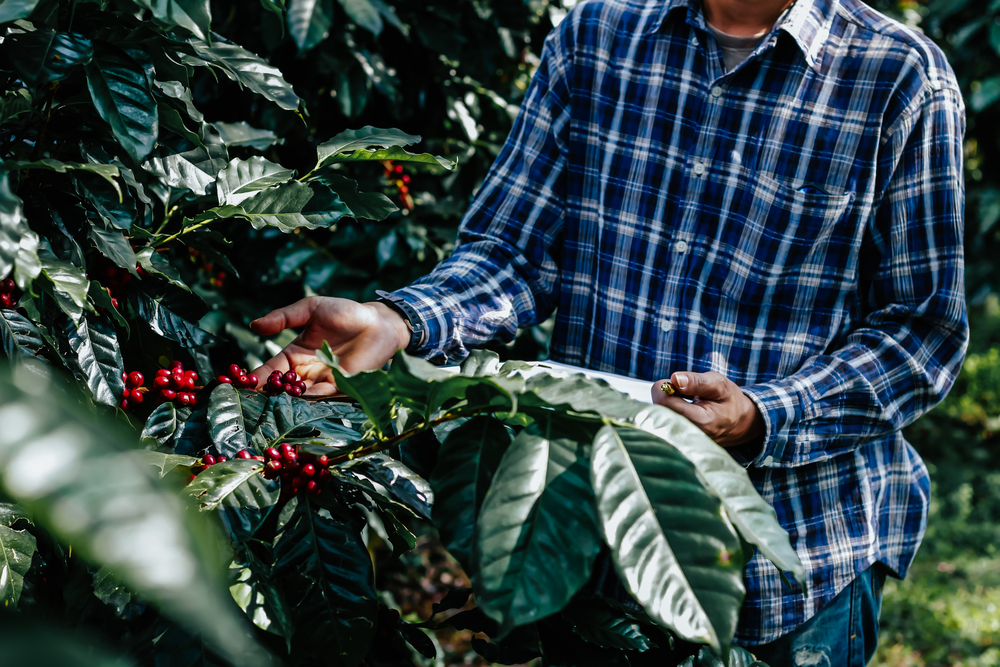
San Jose, 1 August 2023 (IICA). The Technological University of Pereira (UTP) in Colombia, UNESCO Chairs and the Inter-American Institute for Cooperation on Agriculture (IICA) will jointly deliver an online International Diploma Course on Applied Bioeconomy in the Coffee Value Chain. Online registration will be open until August 5.
The diploma course will strengthen participants’ knowledge of the possibilities afforded by the bioeconomy to sustainably capitalize on biomass in the coffee value chain and transform biological resources into new bioproducts and bioservices.
The bioeconomy taps into the new frontiers of science, technology and knowledge to improve the economic, social and environmental sustainability of coffee farming and other production activities in rural areas of Latin America and the Caribbean.
The course is geared towards producers, entrepreneurs, family farmers and students involved in the coffee value chain in Mexico, Guatemala, Belize, El Salvador, Honduras, Nicaragua, Costa Rica, Panama, the Dominican Republic, Colombia, Venezuela, Ecuador, Peru, Bolivia and Brazil who are interested in exploring opportunities to diversify production and generate new businesses by capitalizing on the bioeconomy.
The diploma course will be delivered virtually from 17 August 2 November 2023 (90 hours) under a self-paced modality that fosters autonomy and knowledge sharing among participants.
Full scholarships will be granted to participants in this first edition. Interested individuals may register at the following link.
All participants must possess a high school degree, have access to a computer and an Internet connection, be proficient in Spanish and be available for four hours each Thursday for the duration of the course.
Participants will have the opportunity to learn more about the status of the coffee chain, including challenges and opportunities; apply various tools to design and implement new biobusinesses; and develop skills to assist in the complementary training of other producers, technical specialists and entrepreneurs involved in their family businesses or organizations.
Participants must receive a minimum grade of 70 to pass the course, and will receive a diploma certificate issued by the Technological University of Pereira and IICA. Any queries may be emailed to bioeconomia@iica.int.
More information:
Institutional Communication Division.
comunicacion.institucional@iica.int