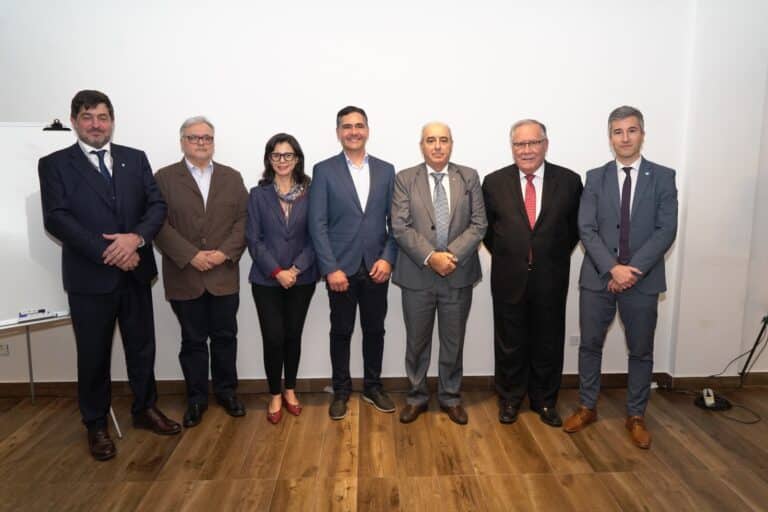
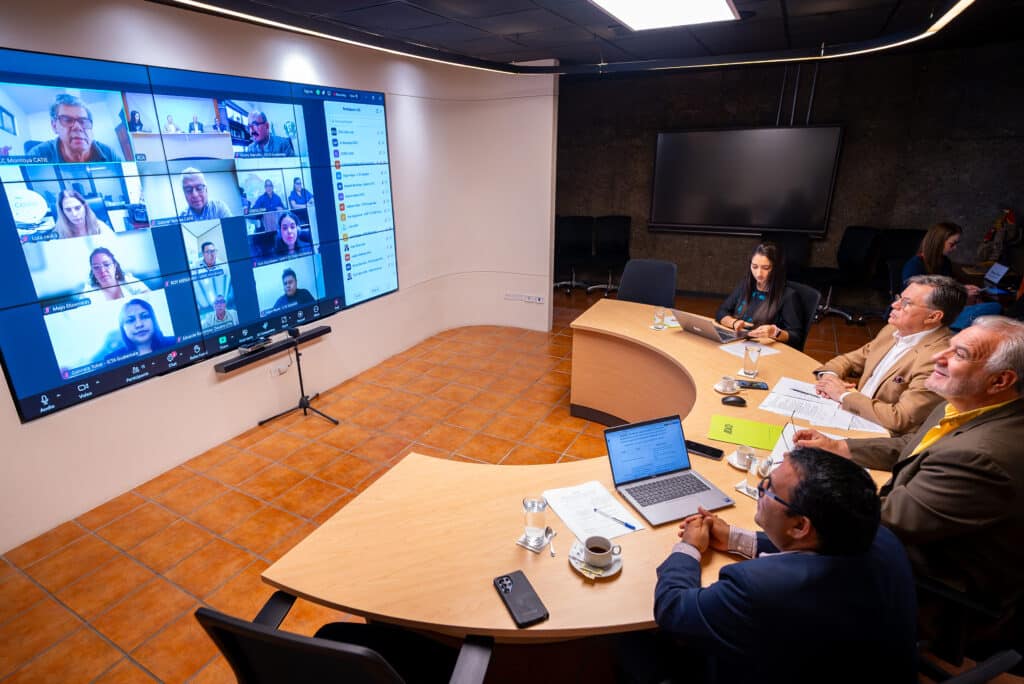
San José, Costa Rica, 20 October 2025 (IICA). Representatives of academic and research institutions from Costa Rica, El Salvador, Guatemala, Honduras, Panama and Andalusia (Spain),andthe Director General of the Inter-American Institute for Cooperation on Agriculture (IICA), Manuel Otero, agreed to lay the foundations for the new Central American Inter-Institutional Agrifood Consortium of Excellence (CEIAC).
The CEIAC, designed to promote academic development and strengthen research, education and innovation in agrifood systems, is the fruit of a strategic partnership aimed at promoting academic and scientific integration in order to tackle the challenges of sustainable development, food security and the digital transformation of the sector.
“Opting for partnerships and seeking synergies that will make us stronger is a good way to achieve progress. I wish to congratulate IICA on this initiative, as we take the first steps towards establishing this interinstitutional partnership”, said Lola de Toro, manager of Andalusia’s Campus of International Excellence in Agri-Food (ceiA3).
The ceiA3 is an initiative based in Andalusia, Spain, with more than 15 years of experience. Comprised of several universities and research centers, it promotes training, research, innovation and knowledge transfer in the agrifood sector.
“We have an opportunity to replicate an experience and adapt it to the situation in Central America. This will allow us to speed up the updating of programs, conduct research and establish joint training programs that benefit teachers and students from all the Central American countries, making efficient use of resources and sharing findings and experiences”, explained IICA Director General Manuel Otero, who announced the allocation of a seed fund of $30,000 to promote the first joint projects.
A regional commitment to sustainable development
Under the agreement, the institutions decided to promote a series of joint actions, including the development of regional diploma, specialization and microcredential programs on strategic topics such as the bioeconomy, digitalization and rural development; the creation of a network to facilitate teacher and student exchanges; and the construction of a shared platform on best practices and institutional capacities in the agrifood sector.
Other actions will include the organization of regional forums, discussions and weekly publications, the formulation of pilot projects for technical and scientific cooperation with the potential to be scaled up and obtain international financing, as well as access to IICA’s academic cooperation systems such as the Alliance for Agricultural Information Services (SIDALC) and Agriperfiles.
During the meeting, the institutions expressed their commitment to consolidating the CEIAC as a regional development tool capable of promoting academic integration, building technical capacities and fostering joint solutions to the challenges facing the Central American agrifood sector.
“This is a partnership that transcends borders. The CEIAC will be a catalyst for cooperation and a space where science, innovation and education are placed at the service of our countries’ rural wellbeing”, said Franklin Marín, Coordinator of IICA’s Knowledge Management and Horizontal Cooperation Center.
More information:
Institutional Communication Division.
comunicacion.institucional@iica.int