The National Institute of Technological Education (INET) of Argentina and the Inter-American Institute for Cooperation on Agriculture (IICA) have taken the first step in a joint effort aimed at strengthening and providing better tools to agricultural technical schools in this South American country, one of the world’s largest food producers.
Buenos Aires, 5 July 2024 (IICA) – The National Institute of Technological Education (INET) of Argentina and the Inter-American Institute for Cooperation on Agriculture (IICA) have taken the first step in a joint effort aimed at strengthening and providing better tools to agricultural technical schools in this South American country, one of the world’s largest food producers.
Supervisors, teachers from agricultural technical schools, and provincial teams participated alongside the IICA technical team in a virtual exchange meeting where they discussed ways to align technical professional education with the demands of local and global agri-food systems, which face the challenge of feeding a growing population without using more natural resources.
INET is the Argentine Education Secretariat’s agency responsible for coordinating the implementation of public policies related to technical education. Considering the project’s importance for agricultural productivity and sustainability, its content will be coordinated with the Secretariat of Bioeconomy and the National Institute of Agricultural Technology (INTA).
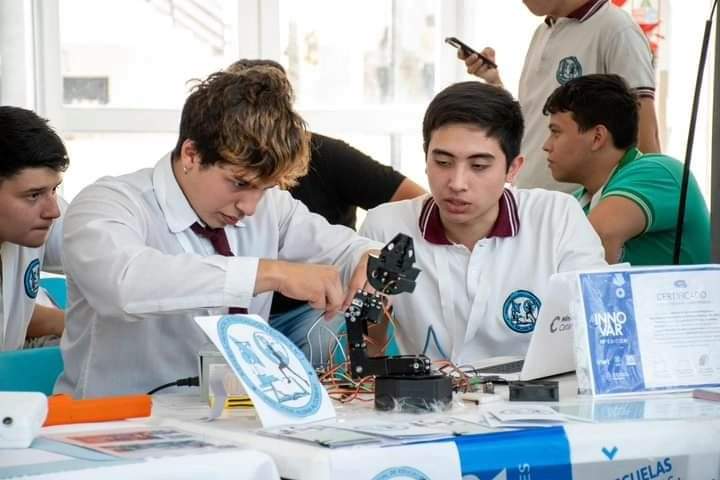
Argentina has more than 500 agricultural technical schools, which are not only strategic agents for the development of rural communities and for promoting the incorporation of technological innovation into agricultural activities but also crucial for encouraging young people to stay in the countryside.
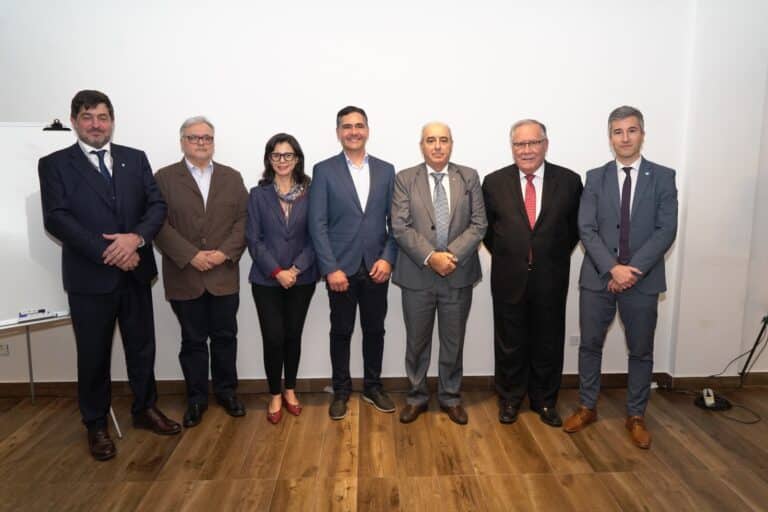
The program details were agreed upon in a meeting between Argentina’s Secretary of Education, Carlos Torrendell, and INET Director Ludovico Grillo, with IICA Representative in Argentina, Fernando Camargo, and Special Advisor on Institutional Relations for Mercosur, Ignacio Hernaiz.
Opening remarks at this meeting were shared by IICA Director General, Manuel Otero, together with Grillo and Camargo, who underscored the importance of the project.
The content of the program was presented by Carolina Pivetta, IICA’s Technical Coordinator in Argentina; Federico Bert, Manager of the Agri-Food Digitalization Program; and Sandra Ziegler, Specialist in Education and Rural Connectivity.
Strengthening food security
“At IICA, we work to improve the quality of agricultural production, but above all, to strengthen food security. In this sense, training human resources in rural areas is essential,” said Otero.
“Agricultural technical schools,” he added, “must provide new approaches and concepts within agri-food systems that reflect the dynamism and multiple integration possibilities that agriculture and rural life represent. These schools are fundamental in countering the narrative that portrays rural life as lagging, or a space with fewer opportunities than those offered by cities.”
The cooperation project between INET and IICA aims to promote a new vision of rurality and build bridges between the countryside and cities through tools such as digital agriculture, the bioeconomy, value-added agricultural production, and technological innovation.
The authorities of INET and IICA stated that moving forward with these objectives will only be possible through constant dialogue with the private sector, producers, cooperatives, tech startups, and small and medium-sized agricultural enterprises, working together to present agriculture as a viable livelihood and an option for the future.
Supervisors, teachers from agricultural technical schools, and provincial teams who participated in the exchange meeting with IICA professionals highlighted the program’s value and emphasized the importance of considering Argentina’s diverse regional realities, given its vast territory and varied geographical, productive, and social conditions.
More information:
Institutional Communication Division.
comunicacion.institucional@iica.int