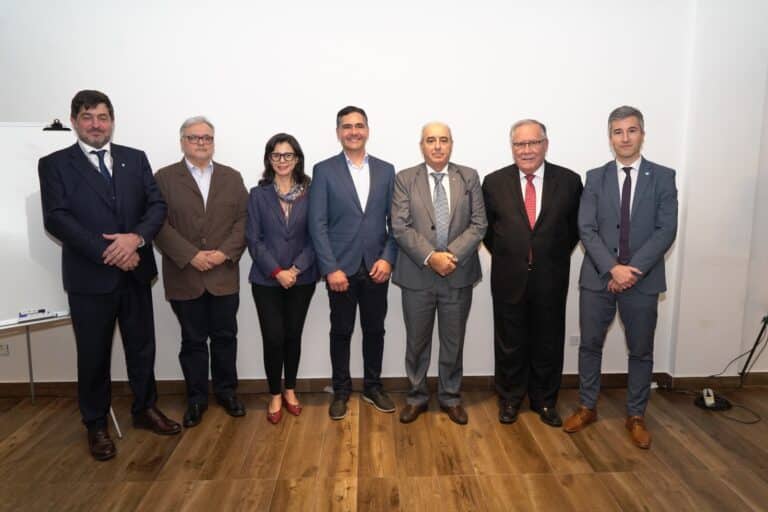
Recently, BDB has been meeting with IICA to discuss opportunities for financing agri-tourism, climate resilience, and Family Island development, and this MOU is the result of those meetings.
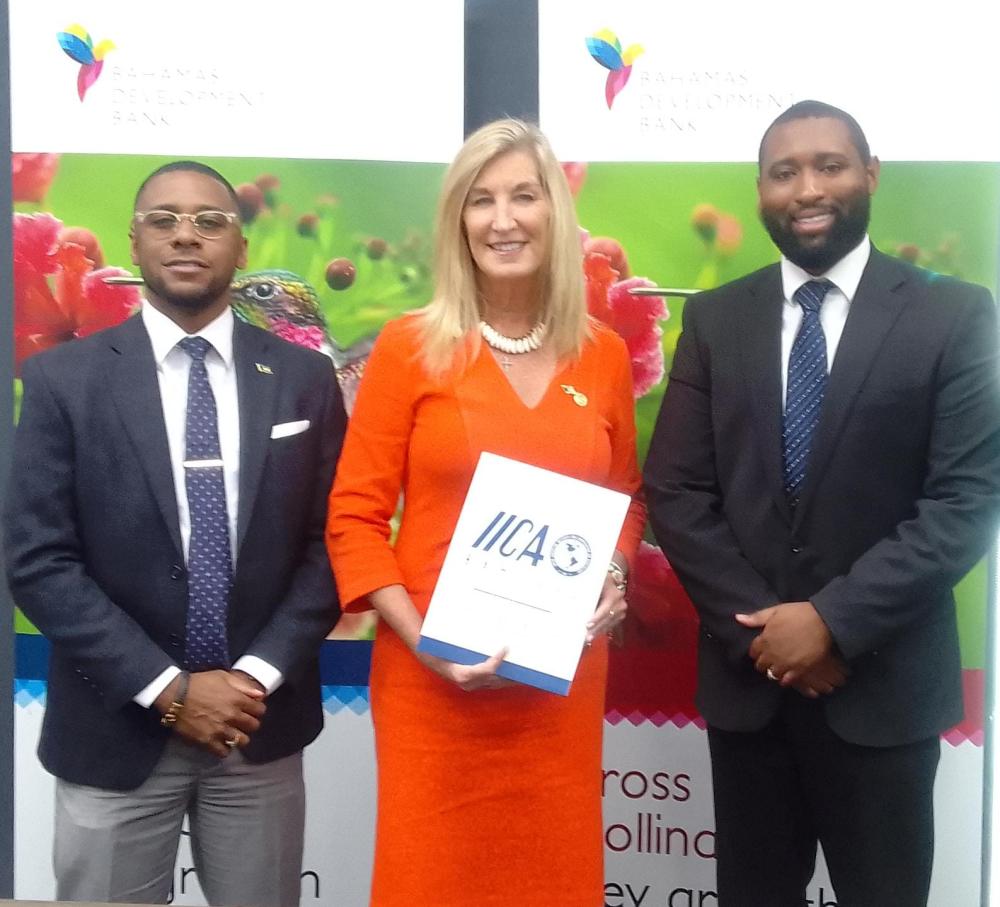
Nassau, The Bahamas, January 24 (IICA). In continuation of the partnership between The Bahamas Development Bank (The Bank or BDB) and the Inter-American Institute for Cooperation on Agriculture (IICA), both organizations have signed an official Memorandum of Understanding (MOU) to provide technical cooperation, innovation, and specialized knowledge to aid in the competitive and sustainable development of agriculture in The Commonwealth of The Bahamas.
The Bank is mandated under the 1974 BDB Act, to promote industrial, agricultural, and commercial development through financing and investing in approved enterprises; and IICA is a specialized agricultural agency that provides support to its 34 member states to promote and encourage agricultural development and economic growth. As such, this ongoing partnership meets both The Bank’s mandate and IICA’s mission.
Recently, BDB has been meeting with IICA to discuss opportunities for financing agri-tourism, climate resilience, and Family Island development, and this MOU is the result of those meetings. The Bank and IICA have a long history of collaboration, having worked together previously on several initiatives including the Apiary Project in Grand Bahama which trained and provided financing for young beekeepers; this newest project will provide technical capacity building to increase the agriculture sector and aid in economic growth and sustainable development.
Previously, The Bahamas Development Bank has cooperated with IICA to support the development of the recently launched “Integrated Landscape Management for Addressing Land Degradation, Food Security and Climate Resilience Challenges in The Bahamas Project”. This project is sponsored by The Bahamas Government (led through the Department of Environmental Planning & Protection (DEPP)) in collaboration with United Nations Environment Program (UNEP), and the Inter-American Institute for Cooperation on Agriculture (IICA), with funding from the Global Environmental Facility (GEF). The ILM project is a $20M initiative which will result in improved livelihoods, well-being, and global environmental benefits through improvements in the sustainability, productivity, health and resilience of productive ecosystems across seven islands. BDB will continue to support this project throughout its upcoming phases as a member of the project’s steering committee.
“Family Island development is integral to The Bank’s mission, especially as it relates to agriculture,” noted Quinton Lightbourne, BDB Chairman. “Currently, The Bank has a slate of projects targeted toward sustainable development in the chain of family islands, and this MOU is an integral step toward that development. This partnership with IICA will increase the technical capacity of farmers throughout The Bahamas, and allow them to increase their output, leading toward a decrease in food importation, which is a big goal for the current administration.”
“Family Island development is also fundamental to IICA’s core mission,” echoed IICA Representative Mari Dunleavy. “At IICA, we firmly believe in and support our family island farmers and rural development, which are bedrocks of economic growth and food security. IICA’s partnership with BDB is a natural alliance and I’m excited for the potential our relatioinship holds for the Family Islands.”
As a part of the MOU, BDB and IICA agree to cooperate and work together for the expansion and enhancement of agriculture and rural development throughout The Bahamas and to share resources in the conduct of programs and projects intended to achieve the above purpose. The MOU also contains several areas of cooperation, including joint programs, sourcing of funding for agricultural projects in the Family Islands, and other forms of cooperation as agreed on by both parties, including meetings on a regular basis.
Both organizations are committed to supporting agricultural growth and sustainable development throughout The Bahamas, and this MOU is evidence of their cooperation to achieve the above.
More information:
Institutional Communication Division.
comunicacion.institucional@iica.int