Among SENASA’s objectives in aiming to streamline its services are a focus on capacity development, horizontal management, and most of all, determining how to address the changing nature of pests and diseases affecting the agrifood industry, using a One Health approach.
San Jose, 19 May 2023 (IICA) – The National Service for Agrifood Health and Quality (SENASA) of Argentina and the Inter-American Institute for Cooperation on Agriculture (IICA) will bolster their joint work agenda to drive the modernization of health services in Latin America and the Caribbean, through experience and solution sharing, focusing on innovation; the use of technological tools; inclusion and communication with consumers.
SENASA is a leading organization in implementing food safety, quality and agricultural health processes in the Southern Cone, and in transferring expertise to other countries in the region.
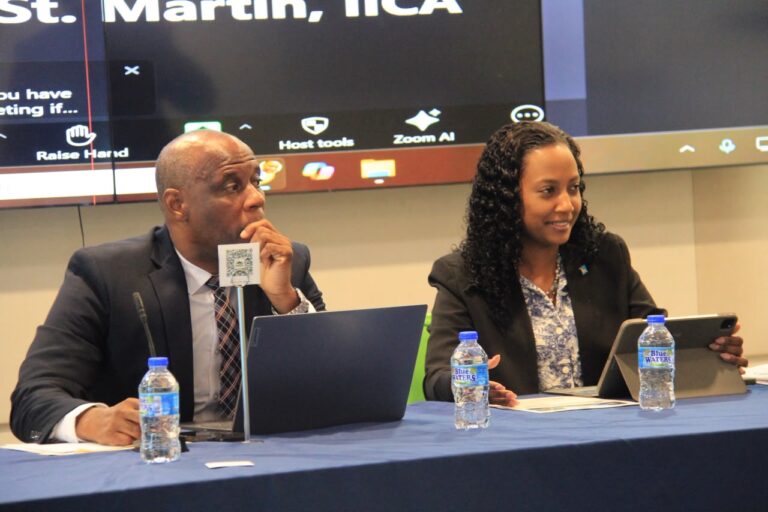
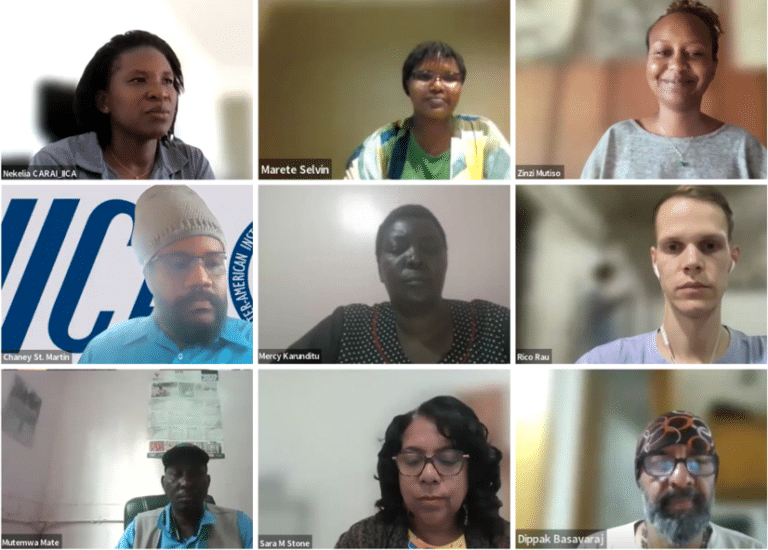
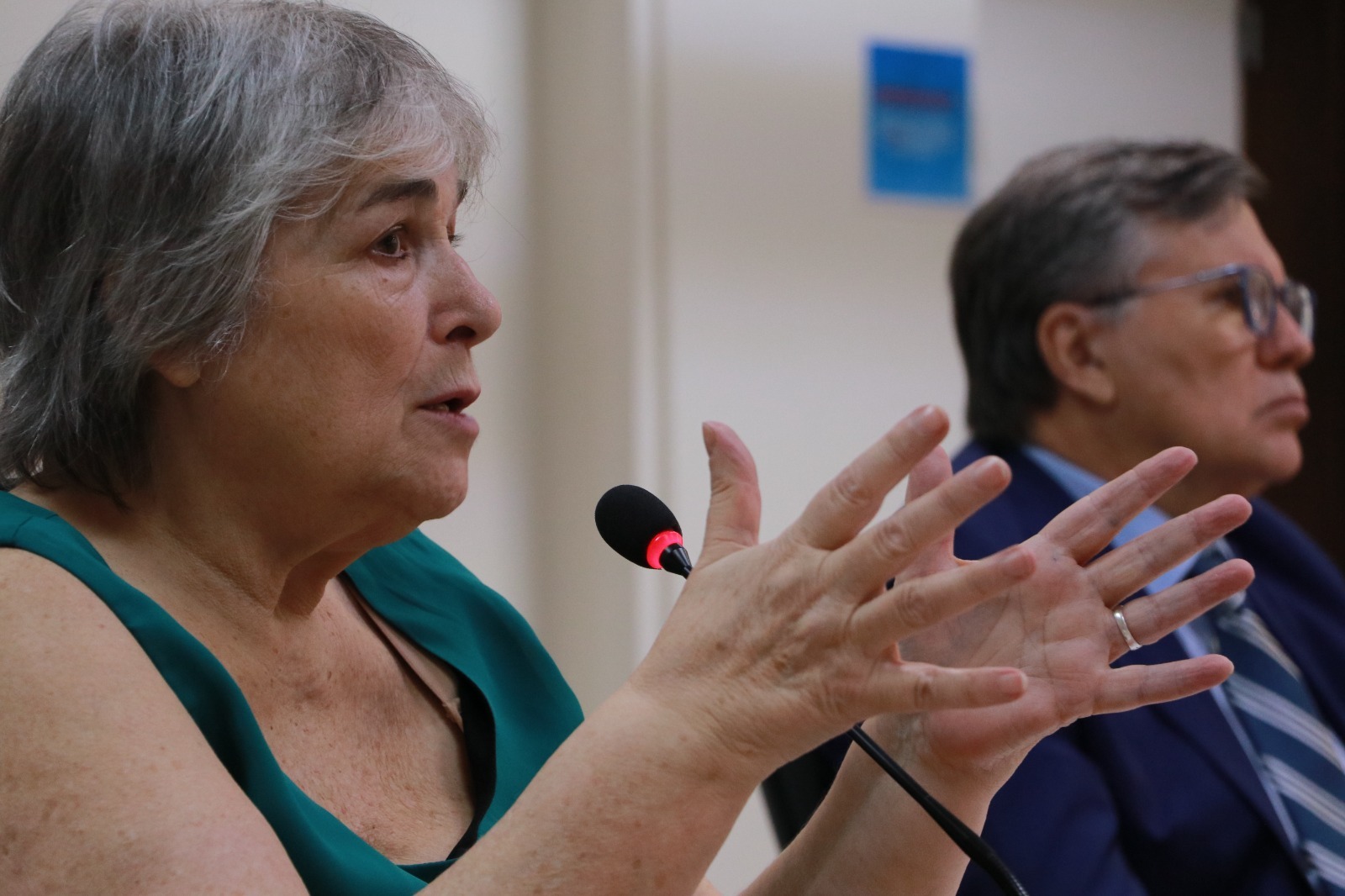
To begin the information exchange and the search for innovative solutions, SENASA President, Diana Guillén, and IICA Director General, Manuel Otero, engaged in a discussion organized by the Institute at its Headquarters in San Jose, Costa Rica. The event also featured the remote participation of agricultural health authorities from other Latin American and Caribbean countries.
Guillén explained that, “One of the challenges that phytosanitary services in the Americas face in terms of innovation and modernization is the need to incorporate new technologies. Services must keep pace with current trade-related demands and that requires innovation and new management approaches”.
She pointed out that among SENASA’s objectives in aiming to streamline its services are a focus on capacity development, horizontal management, and most of all, determining how to address the changing nature of pests and diseases affecting the agrifood industry, using a One Health approach.
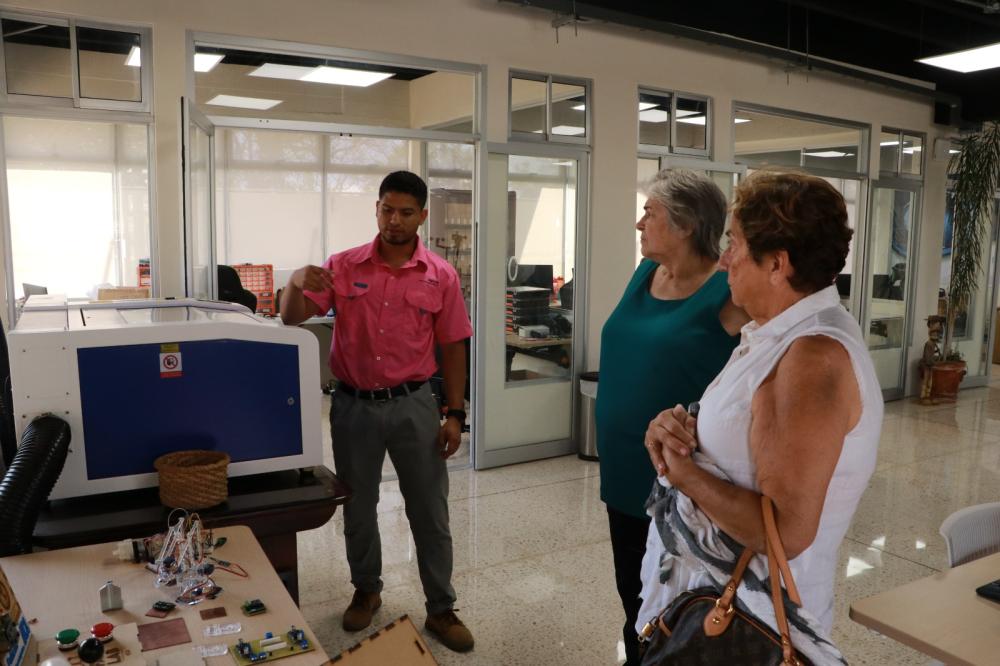
The Argentinian official, who also toured the modern facilities of the Interpretive Center for Tomorrow’s Agriculture (CIMAG) and the agricultural innovation Fab Lab at the Institute’s Headquarters in Costa Rica, stressed that, “We must also consider reviewing our regulations, since markets are outpacing countries in the area of regulatory innovation and we must be aware of the new challenges”.
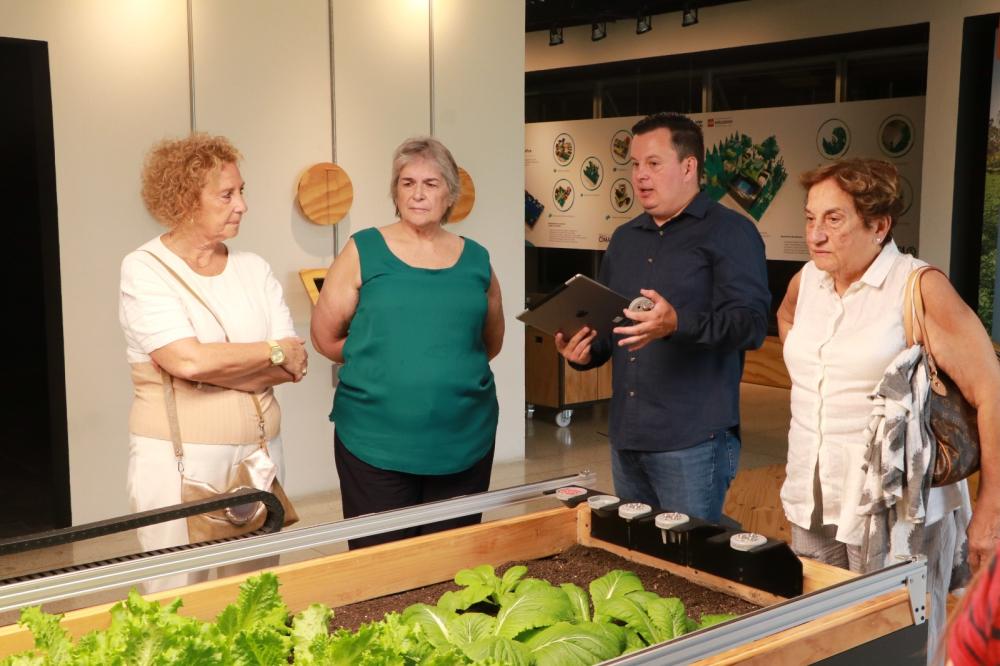
Both facilities, along with the Plaza of Agriculture of the Americas are flagships of the “IICA of Open Doors” initiative – a symbol of the modernization and upgrading of the specialized agency for agricultural and rural development.
The IICA Director General expressed the view that SENASA has been key to the development and strengthening of technical agencies in the expanded MERCOSUR region (Argentina, Brazil, Chile, Paraguay and Uruguay) that are directly involved in agricultural health and food safety regulations, for example, the Southern Cone Plant Health Committee (COSAVE) and the Permanent Veterinary Committee (PVC).
He pointed out that the joint SENASA and IICA work agenda must focus on how to collaborate to understand the challenges of the Argentinian organization in the 21st century and to determine a concrete response.
Otero maintained that, “We must monitor the changes in various diseases that affect our crops and livestock, focusing on how to improve the standard of living of our people. SENASA has a major responsibility to continually communicate that behind every liter of milk or any food in a supermarket, is the often overlooked efforts of a myriad of professionals—food health and safety workers—who enable us to have access to abundant, cheap and top quality food”.
The SENASA President also expressed her support for opportunities for exchange, such as the IICA meeting in San Jose, which was also attended by members of Costa Rica’s State Phytosanitary Service
She reflected that, “When you are facing a problem- and you are trying to find a solution, you are focusing on the problem in front of you and the immediate context. Therefore, you may believe there is only one solution and one option, when in fact there may be a neighboring country that has found other more successful options”.
Turning to the matter of cooperation to tackle foot and mouth disease (FMD)—a contagious disease, affecting cattle, pigs and sheep, among other animals—Guillén indicated that Argentina stands ready to work with other countries in the hemisphere or the world to effectively control the disease.
In closing, the SENASA President reported that, “Argentina has a foot and mouth disease-free zone without vaccination and a disease-free zone with vaccination, and we intend to continue to vaccinate, although our status has already improved tremendously. For human diseases, we consider vaccination to be a tool and that is what vaccination means to us. If you have achieved FMD-free status, through vaccination, you are no less FMD-free”.
More information:
Institutional Communication Division.
comunicacion.institucional@iica.int