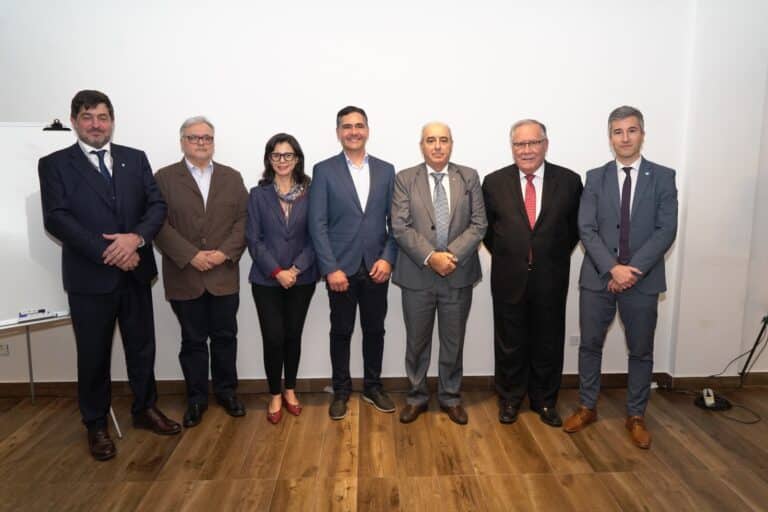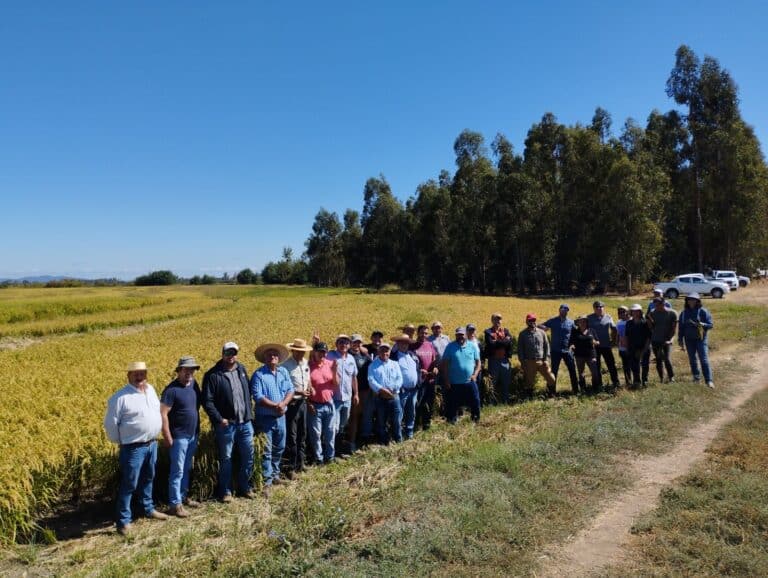
The occasion was the VI Conference and XIII Territorial Development Forum, organized by IICA, in collaboration with the Territorial Management Networks (GTD) of Mexico, Colombia, Brazil and Spain.
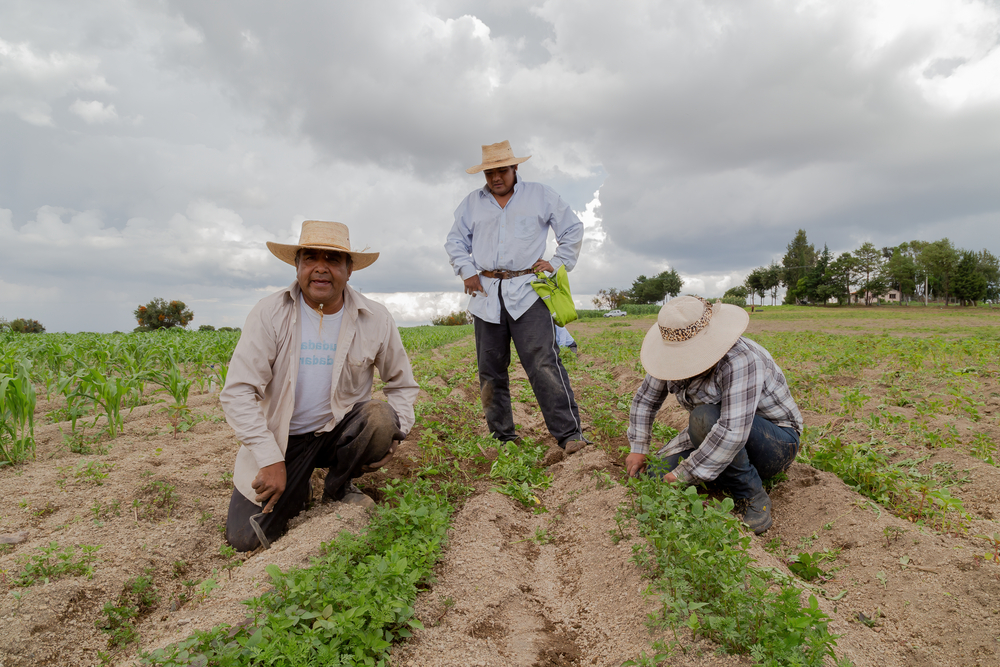
Mexico City, 28 April 2021 (IICA). The Coronavirus pandemic has precipitated a deterioration in the economic and social situation of countries in Latin America and the Caribbean, demonstrating that approaches to territorial development applied in the region in recent decades are no longer relevant, creating the need for a participatory review. This was the conclusion of international experts participating in the VI Conference and XIII Territorial Development Forum, organized by the Inter-American Institute for Cooperation on Agriculture (IICA).
Spearheaded by IICA, in conjunction with the Territorial Management Networks (GTD) of Mexico, Colombia, Brazil and Spain, the event is a forum for dialogue and exchange of opinions, to respond to the challenges faced by Latin America and the Caribbean, with a view to charting the path to development and achieving the goals committed to under the United Nations 2030 Agenda.
Experts at the forum indicated that revised approaches to territorial development through participatory processes, should foster a new generation of public policies that take into account multisectoral and multidimensional needs, facilitating an equal distribution of goods, resources and services.
The Director General of IICA, Manuel Otero, stressed the importance of creating a new image of rural areas, through renewed public and private partnerships.
“Rural territories are undervalued and therefore we must devise new policies that assist in providing solutions in their multiple spheres of action to achieve equitable and sustainable development”, he said.
Ramón Mariaca, Director General of Statistics and Environmental Information at Mexico’s Secretariat of the Environment and Natural Resources (SEMARNAT), remarked that the post-Covid-19 scenario will necessitate collaboration to stimulate harmonious growth in all the countries. It will also call for the establishment of an international trade system that is fairer and creates decent and equitable jobs, particularly in rural areas, as well as better educational and health systems.
Rafael Echeverri, Associate Researcher at the University of Córdoba (Spain) and Coordinator of the Mexican GTD Network, remarked that the current and post-pandemic situation creates serious concerns about territorial development approaches adopted in recent decades. It is critical that public policies be based on territorial and socioeconomic cohesion, inclusion, the green economy, the bioeconomy and social economy, as well as territorial planning, common territorial projects and governance instruments that establish an identity for the territory.
Echeverri maintained that, “The social disorder triggered by the Coronavirus pandemic will necessitate changes in the territorial development model and public policies that encourage sustainable development, to achieve the targets defined in the Sustainable Development Goals (SDGs) and to establish intervention mechanisms that build communities”.
Faustino Torrez, of the Latin American Coordination of Rural Organizations– La Vía Campesina, stated that creating a new production model, in collaboration with local actors and focusing on agroecology and the small farmer to produce healthy food in an environmentally friendly manner, is a challenge which will require political will and a proper institutional framework.
“We will need to strengthen rural and indigenous agriculture, while improving agrifood chains, agrifood systems, food sovereignty, sustainable development, with a view to Agenda 2030”.
During the debates, which will end on 30 April, specialists convened by IICA and the GTD networks, will analyze high priority areas for the sustainable development agenda in Latin America, based on a rural perspective: agrifood systems and agroecology; urban-rural relations and medium-sized cities; the digital revolution and knowledge management in the rural environment; as well as management of strategic ecosystems and the energy transition.
More information:
Institutional Communication Division, IICA.
comunicacion.institucional@iica.int