The Congress included “Ethanol Day,” reserved for a discussion of a new biofuels agenda for Argentina. Among those taking part were the IICA and the Pan-American Liquid Biofuels Coalition (CPBIO), made up of the main business and industrial associations of the Americas dedicated to the production and processing of sugar, alcohol, corn, sorghum, soybean, vegetable oil, grains, and other agricultural products.
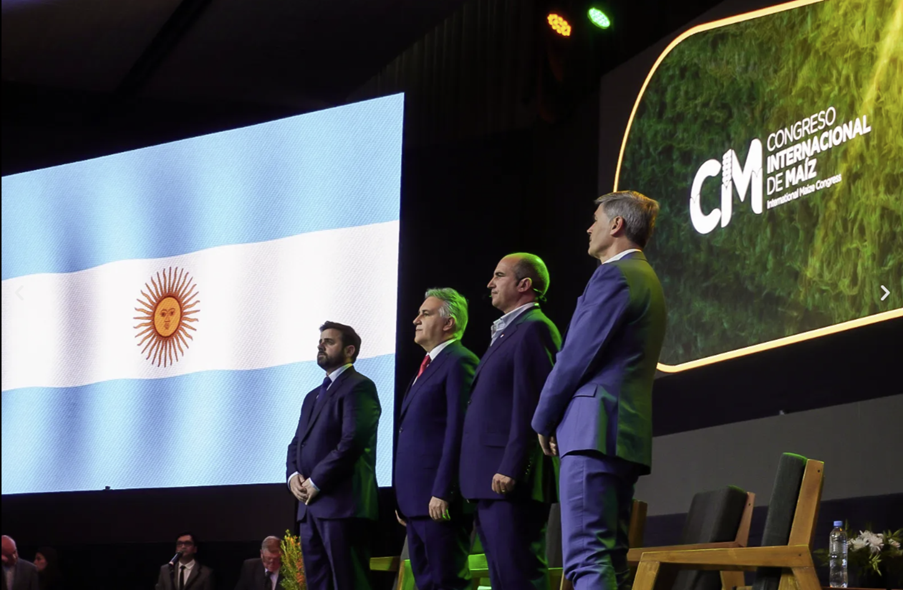
Córdoba, Argentina, 26 September 2024 (IICA). Experts and sector representatives who took part in the International Corn Congress, held in the Argentine province of Córdoba, underlined the fact that corn ethanol production represents a great opportunity for Argentina, given the scale and sustainability of the country’s corn production.
The Congress included “Ethanol Day,” reserved for a discussion of a new biofuels agenda for Argentina. Among those taking part were the Inter-American Institute for Cooperation on Agriculture (IICA) and the Pan-American Liquid Biofuels Coalition (CPBIO), made up of the main business and industrial associations of the Americas dedicated to the production and processing of sugar, alcohol, corn, sorghum, soybean, vegetable oil, grains, and other agricultural products.
In the short term, Argentina is expecting to see new biofuels legislation enacted authorizing an increase in ethanol and biodiesel blends in a competitive, deregulated market. Congressman Carlos Gutiérrez announced the presentation of a biofuels bill drafted by the Bioenergy League (comprised of six provinces) that enjoys broad consensus in the private sector. Dozens of members of the lower and upper houses have already expressed support for the initiative.
“In the medium term, we must work on sustainable mobility legislation, including green hydrogen, biogenic CO2, the creation of a carbon market, and biofuels for planes and maritime and river transport, within a context of policy convergence with Mercosur,” said Patrick Adam, Executive Director of the Chamber of Corn Bioethanol Producers.
“Argentine corn emits 58% less greenhouse gases than the average for the rest of the planet and has the world’s lowest carbon footprint. We have industrial plants with the best technologies in the world that are complemented by plants for the recovery, treatment and purification of carbon, and/or biomass/solar electricity generation, so the carbon footprint is one of the lowest in the world,” Adam concluded.
During the event, the Governor of Córdoba, Martín Llaryola, acknowledged that “politics” had failed biofuel producers: “Argentina is not a leader in biofuels because politics has not been up to the task required by this productive ecosystem. We have to accept responsibility; it is not the fault of producers or processers,” he underlined.
Agustín Torroba, IICA international biofuels specialist and technical and executive secretary of the CPBIO, said: “Argentina exports more than 35 million tons of corn. That is sufficient to produce more than eight million cubic meters of sustainable aviation fuels (SAF), equivalent to more than four times the current global production of fuel of this kind. So the corn value chain is extremely well placed to be a global supplier of SAF, taking advantage of its low carbon intensity and current developments in the ethanol industry.”
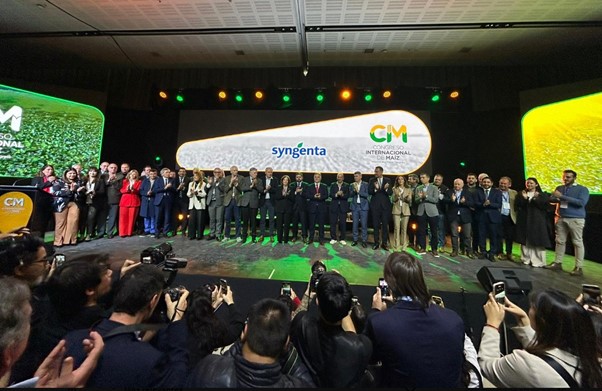
National lawmakers from both houses expressed support for the agreement on biofuels reached by the Bioenergy League. Plants producing bioethanol from sugarcane achieve great environmental results by using bagasse to generate renewable electricity and steam for the industrial process. Bioethanol is also the cheapest and most sustainable source of octane for gasoline.
National and international specialists, as well as various business chambers, explained that biofuels are one of the best tools Argentina has at its disposal to add value to raw materials, promote national development and employment, and comply with international climate agreements. By increasing the ethanol blend from 12% to 15% in petroleum fuels, the processing of corn in Argentina would go from 1.6 million tons to 2.5 million tons with regional and national value added.
More information:
Institutional Communication Division.
comunicacion.institucional@iica.int