The forum promoted efforts to propose the One Health concept as a mainstay in the process of strengthening food security in Latin America and the Caribbean.
San Jose, 6 October 2023 (IICA) – During the Conference of Ministers of Agriculture of the Americas 2023, a forum on Agricultural Health in Agrifood Systems emphasized the need to promote a holistic and integrated approach to agricultural health.
One Health is an integrated and unifying concept that seeks to optimize and strike a balance between animal, plant, human and environmental health.
The conference in San Jose, Costa Rica was organized by the Inter-American Institute for Cooperation on Agriculture (IICA). Agricultural health experts and authorities from the region attending the One Health forum all agreed that the countries of the Americas are walking a tightrope and urgently need to take rapid and decisive action to safeguard environmental and human health.
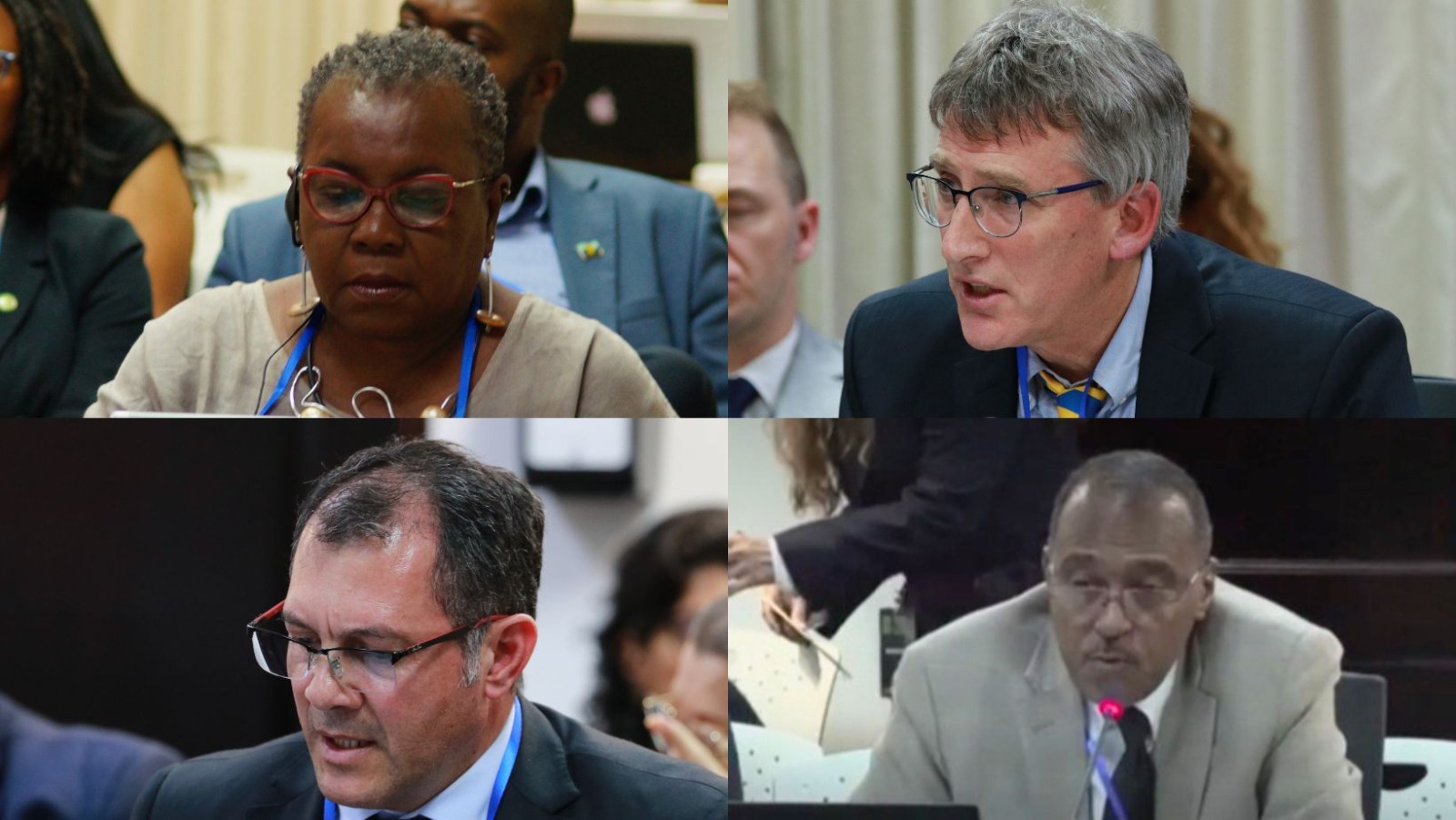
Carol Thomas, international Agrifood Health and Food Safety consultant opened the discussion, by providing an overview of agricultural health in the countries of the hemisphere.
During her presentation, Thomas stressed that the countries of the region must work to implement decisive hemispheric measures to improve the agricultural health system by adopting a One Health approach.
Thomas highlighted the fact that diseases such as African swine fever (ASF), the Fusarium TR4 or Fusarium wilt disease (that could spread to banana crops across the globe), avian influenza (AI) and the New World screwworm (NWS) are latent in the hemisphere and are creating a significant social and economic impact, and even affecting trade relations.
These diseases endanger the food supply, nutrition and public health, resulting in lower productivity and a loss of human lives, and also producing considerable economic costs and the loss of export goods.
Jason Hafemeister, Acting Deputy Under Secretary for Trade and Foreign Agricultural Affairs of the United States Department of Agriculture (USDA) also participated in the forum. He reiterated the need to appreciate the importance of farmers who, given their direct contact with the land, can assist in improving agricultural health. By working directly with them and utilizing the best techniques and technologies, efficient solutions can be devised to benefit agricultural systems in the region.
He also spoke about the critical need to invest in research and in the identification of financial resources to strengthen the One Health approach.
“We must focus on science, evidence and smart agriculture in order to develop robust, data-based solutions. The United States of America is already sharing its scientific findings to strengthen agriculture”, said Hafemeister.
On the other hand, in his intervention in the discussion, Carlos Giménez, Minister of Agriculture of Paraguay, highlighted smart agriculture as a fundamental pillar in the sustainable development of healthy agrifood systems.
He explained that Paraguay had been adopting innovative practices to safeguard environmental, plant, animal and human health and also keeping abreast of successful health-related actions in other countries. “We believe that innovative precision irrigation systems, crop diversification through biotechnology, soil management and water management will help to improve agricultural health systems”, he stressed.
Challenges in integrated health
Carol Thomas emphasized the need for holistic and sustainable solutions to overcome these challenges. She proposed that solutions be adopted based on a One Health approach to facilitate a more thorough assessment of health challenges, thereby enabling the development of appropriate prevention and preparation strategies.
She also stressed the importance of an appropriate national legislative framework; inter-institutional and intersectoral coordination and collaboration; public-private collaboration and prevention and preparation strategies.
Thomas urged the region to act collectively and to work together to identify solutions, encouraging collaboration and mutual support among countries of the Americas.
Jesús de los Santos, Ministerial Advisor and Coordinator of Special Programs at the Ministry of Agriculture of the Dominican Republic, pointed out that the Americas is in the throes of a health emergency and addressing challenges such as African swine fever is critical to improving agricultural health in island nations, which is an area in which IICA has been playing a fundamental role since 2021.
Santos remarked that, “The Americas must strengthen its biocontainment capacities at borders, ports and airports. Moreover, working to compensate farmers whose animals have been culled should be a cooperative effort”.
The event stressed the importance of tackling agricultural challenges in the region. The participants were of one voice with respect to the need to promote food security, public health, plant health and the economic prosperity of the Americas.
More information:
IICA Institutional Communication Division.
comunicacion.institucional@iica.int