San José, 10 June 2026 (IICA) – The impact of current geopolitical conflicts on agrifood systems in the Americas—particularly rising fertilizer prices and disruptions affecting trade in this key input—demonstrates the urgent need for countries across the Americas to set aside isolated actions and to engage in dialogue and cooperation to develop a coordinated response with the involvement of governments and the sector’s various stakeholders.
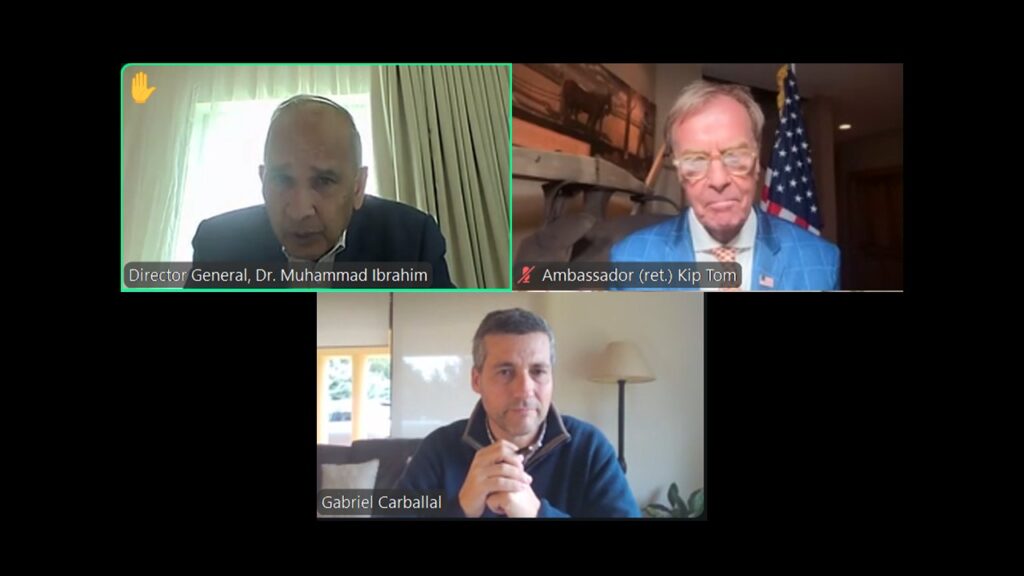
This was emphasized by private sector representatives—including leaders in the fertilizer, inputs, logistics, and energy sectors—who participated in a high-level meeting convened by the Inter-American Institute for Cooperation on Agriculture (IICA) and led by the organization’s Director General, Muhammad Ibrahim.
The goal was to discuss the implications of the current context in the Middle East, as well as other geopolitical and market shocks with global repercussions, particularly on the supply of essential inputs for agricultural production.
IICA convened the discussion based on its conviction that it is essential to deepen interaction between the public sector and the private sector, which plays a central role in production, distribution, and decision-making throughout agrifood value chains.
The meeting was opened by IICA’s Director General and Kip Tom, a prominent figure in the U.S. agriculture sector and Vice Chair of Rural Policy at the America First Policy Institute (AFPI), who previously served as the U.S. Ambassador to the United Nations Agencies for Food and Agriculture in Rome. Uruguayan agricultural producer Gabriel Carballal, who serves as Secretary of the Global Farmer Network, served as moderator.
The participants emphasized that, throughout the hemisphere, the agriculture sector plays an essential role in the economic development of countries and global food security; thus, it is important to develop strategies that reduce vulnerabilities.
They also underscored IICA’s central role and capacity to establish links with governments, research institutions, academia, civil society, and funding agencies, with the aim of promoting public policies and investments in tools that increase agricultural producers’ resilience to crises.
Prioritizing the most vulnerable farmers
The rise in international fertilizer prices was identified as a key issue, as were matters related to energy, transportation and logistics, and trade, which are also sources of concern.
In this regard, they highlighted the need to develop short-, medium-, and long-term responses.
The former should be primarily geared toward small and medium-scale producers, who are the least equipped to face the crisis. From a broader perspective, the participants agreed that there is an opportunity to capitalize on the current context to accelerate the science– and innovation-based transformation of agrifood systems in the hemisphere.
The private sector representatives provided details on the progress that has been achieved across the region in the development of bio-inputs, particularly biofertilizers, which were identified as part of the solution.
Participants also remarked on the need for greater coordination between the public and private sectors to decisively promote technology transfer to small and medium-scale farmers, who are responsible for most of the food produced in Latin America and the Caribbean.
Having to spend more money on fertilizers can alter farmers’ planting decisions or lead them to spend less on other inputs. This, in turn, can result in lower yields and higher food prices, thereby impacting food security.
In this regard, they underscored the region’s tremendous wealth of natural resources as a valuable asset, which is already being transformed into development opportunities through bioeconomy projects that prioritize innovation and care for the environment.
The region also possesses significant reserves of natural gas, an essential raw material for the production of nitrogen fertilizers, which are largely imported and therefore expose countries to external shocks.
The participants agreed that part of the paradigm shift needed to reduce exposure to traumatic situations should be achieved by harmonizing regional regulations on issues related to agricultural trade, in order to promote more open markets in the region.
The need to strengthen information systems to improve countries’ ability to anticipate crises was also emphasized.
Through the meeting, the hemispheric organization reaffirmed its willingness and commitment to lead coordination efforts between various stakeholders in the Americas, with the mission to mitigate the impacts of multiple crises on countries and their populations as well as capitalize on opportunities that may arise.
This dialogue with the private sector was preceded by another dialogue that was recently promoted by IICA, during which ministers and senior agricultural officials of the Americas called for improved coordination between countries to reduce the vulnerabilities of agrifood systems and strengthen the hemisphere’s role as the world’s leading food supplier.
More information:
Institutional Communication Division.
comunicacion.institucional@iica.int