San José, 15 de mayo de 2025 (IICA) – The International Atomic Energy Agency (IAEA) and the Inter-American Institute for Cooperation on Agriculture (IICA) have strengthened their partnership to leverage science and innovation in support of food production and, in particular, to protect agricultural health in the Americas.
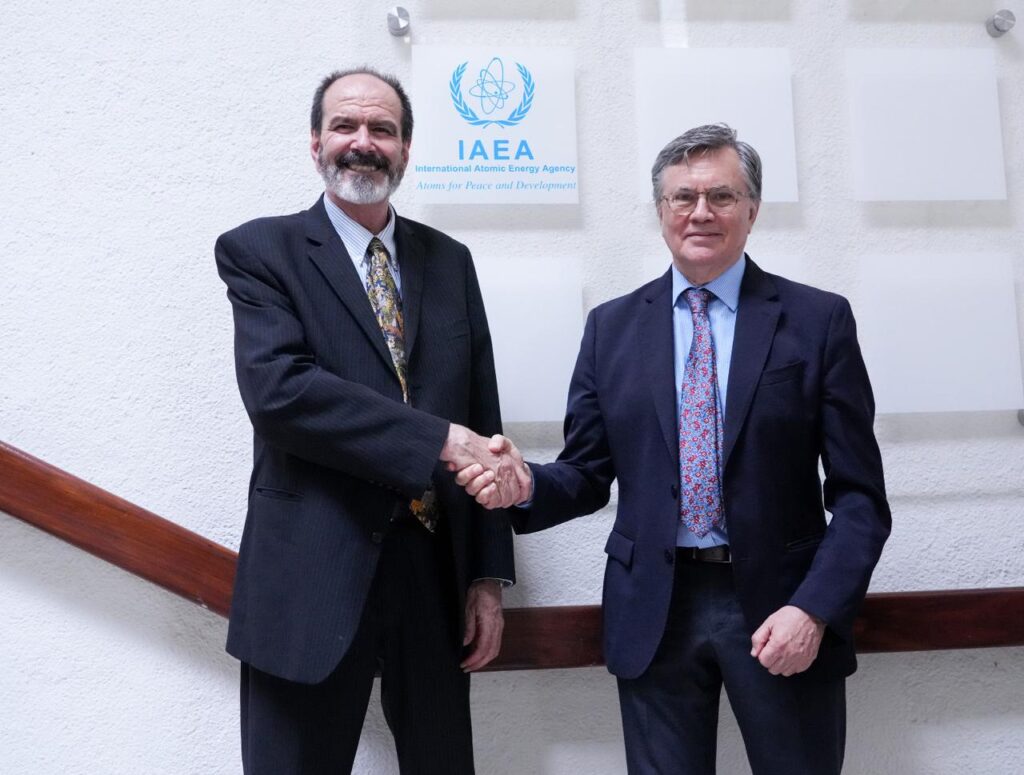
Luis Longoria, Director of Technical Cooperation for Latin America and the Caribbean at the IAEA, visited IICA’s headquarters in San José, Costa Rica, where he was welcomed by Director General Manuel Otero and Deputy Director General Lloyd Day.
The IAEA and IICA have been collaborating on projects involving the use of nuclear technology in agriculture, aiming to contribute to food security and enhance the sustainability of agricultural practices. Both institutions share a commitment to community well-being through science-based solutions, technological innovation, and international cooperation.
Last January, the two organizations signed an agreement under the framework of Atoms4Food—an IAEA initiative to support food security—through which they expanded their cooperation in six areas: soil and water management, genetic breeding, animal health, pest control, food safety, and nutrition in public health. The agreement was signed in Vienna by IAEA Director General Rafael Grossi and IICA Director General Manuel Otero.
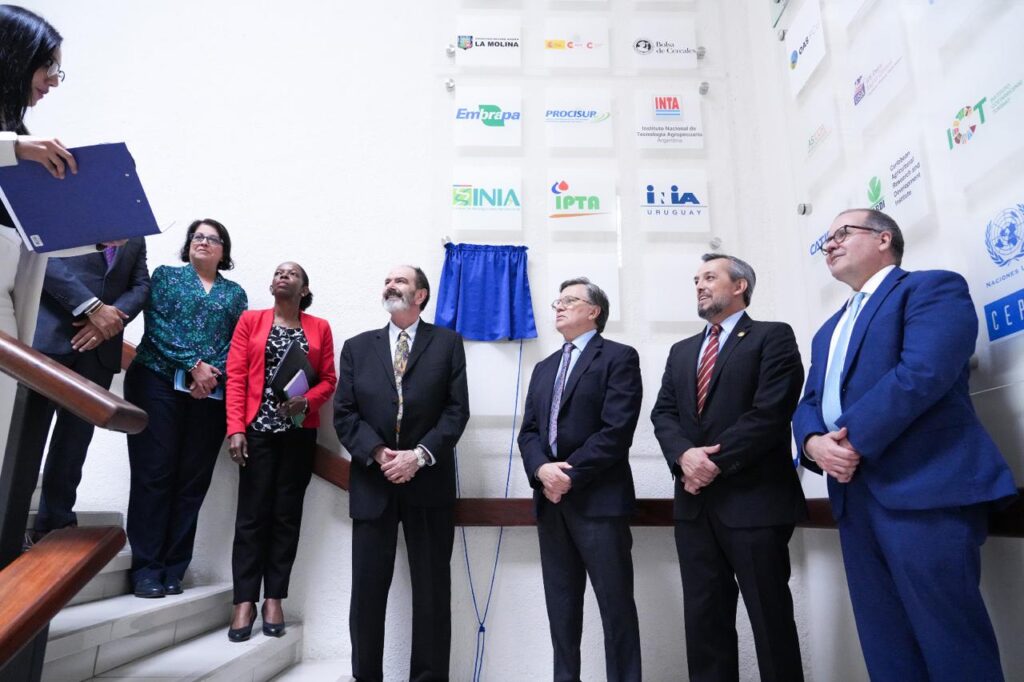
During Longoria’s visit to San José, a symbolic unveiling ceremony was held to add the IAEA’s plaque to IICA’s Friends Panel—a space at the Institute’s headquarters that honors public and private institutions committed to agricultural development and the well-being of rural communities across the Americas.
Combating the screwworm
“With the Atoms4Food initiative, we are promoting the peaceful use of nuclear technologies in agriculture—whether it’s increasing crop yields, eradicating pests, or exploring the connections between agriculture, water, and food. We have partnered with IICA to work on these issues together. One of the methods we use is pest eradication through irradiation, particularly with insects that affect animal production. The technique involves sterilizing insects so they can no longer reproduce naturally, and it does not expose people to any radiation,” explained Longoria.
Among the areas of joint work is the project to control the screwworm, which has made it possible to apply the sterile insect technique as an environmentally friendly solution, thus protecting meat and dairy production in the region. The two organizations have also worked together to address the threat of Fusarium Tropical Race 4 (TR4), a devastating disease for banana production. Thanks to IAEA and IICA collaboration, scientists from six Latin American countries have been trained to detect and contain this disease using cutting-edge nuclear tools.
Longoria and Otero discussed at IICA headquarters the need to scale up efforts across the Americas to combat the screwworm. “We know this is a pest that cannot be tackled at the national level alone. Together with IICA, we will align on a strategy and chart a roadmap to address a problem that is affecting the economies of countries and the well-being of livestock farmers,” said Longoria.
“IICA,” he added, “plays a key role thanks to its presence in all countries of the continent and the diversity of its areas of work. We have joint projects to support, for example, laboratories that analyze agricultural food products, which is especially important for small farmers who don’t have access to large testing facilities. We can also collaborate on food safety. Nuclear technology can be used to reduce the bacterial content in food, if needed, to make it safer for export or domestic consumption.”
IICA Director General Manuel Otero, for his part, emphasized the potential of working with the IAEA on issues related to agricultural health and food safety in the region.
“The friendship between the IAEA and IICA,” he stated, “is a choice to walk together in support of real and peaceful rural development. We recognize the power of agriculture, which must be given the priority it deserves. We must also understand the value of our farmers—not only as food providers but also as stewards of biodiversity and the land,” said Otero.
More information:
Institutional Communication Division.
comunicacion.institucional@iica.int