
Mexico City, May 14, 2026 (IICA) – With the mission of contributing to the sustainable transformation of agrifood systems, the Inter-American Institute for Cooperation on Agriculture (IICA), through the INNOVAGRO Network and in partnership with the National Rosario Castellanos University (UNRC), presented in Mexico the Diploma Program in Bioeconomy and Sustainable Productive Projects.
The academic program is aimed at training professionals to identify local opportunities and develop concrete bioeconomy projects that promote productivity, employment and sustainability in rural territories in Mexico and across the Americas.
Registration for the diploma program is now open and will close on May 22. The full call for applications can be consulted here and interested participants must register through this link. The course consists of 240 hours and has limited enrollment.
The training program is divided into four modules focused on addressing current economic challenges. Real case studies will be conducted and the potential of the main agricultural value chains for the generation of bioproducts will be analyzed. Participants will complete the diploma program with the design and evaluation of an innovative business plan that translates the comparative advantages of the region’s natural resources into economic growth and social development.
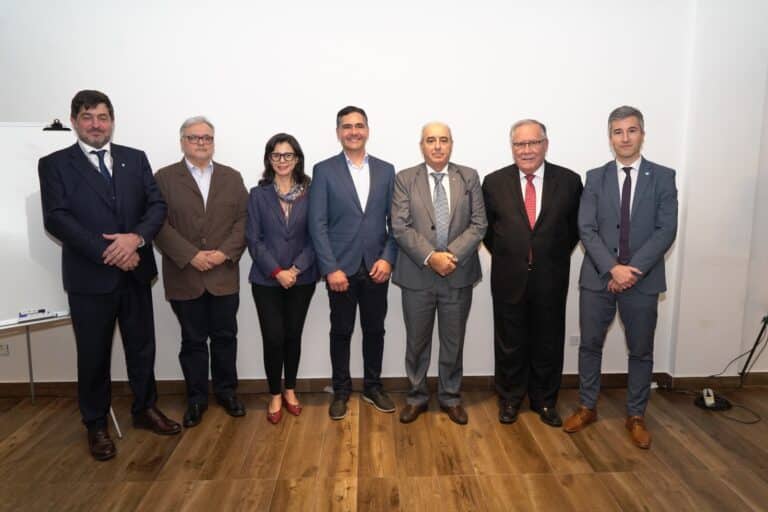
The launch took place at the IICA Delegation in Mexico, during an event supported by the Ministry of Science, Humanities, Technology and Innovation of the Government of Mexico and attended by representatives of institutions that are strategic partners of the Institute and members of the INNOVAGRO network.
This network is an international initiative founded in 2011 in Mexico by IICA and the National Coordination Office for Produce Foundations (COFUPRO), as a space for technical cooperation focused on strengthening institutional capacities in agrifood innovation management. Since then, it has brought together public and private organizations, universities, research centers, regional networks and entities from the productive sector from different countries. Today, the network is a benchmark in stakeholder coordination and the promotion of innovation.
Innovative vision
“The diploma program provides an innovative vision of sustainability, which is necessary for Mexico, for the continent, and for the planet,” said Alma Herrera, rector of the UNRC, a Mexican public university, who explained that the academic project began to be designed in 2020 and highlighted the importance of the alliance between the UNRC and IICA.
“We will seek to plant the seeds of this extremely important initiative throughout Mexico, because we are making the difference between sustaining life from a sustainable perspective or continuing with a trend that could lead us to total catastrophe. We are joining not only the diploma program, but also a way of thinking that seeks to contribute to understanding complex problems and providing strategic solutions. We will continue to be accomplices in favor of life, sustainable development and, in the long term, a life with well-being and progress for all,” she stated.
Diego Montenegro, IICA Representative in Mexico, also recalled the extensive process of dialogue and exchange of ideas that led to the design of the diploma program and highlighted that one of IICA’s priorities is the dissemination of new technologies and innovation mechanisms for agriculture in the Americas, with strong social content and respect for the environment.
“Bioeconomy and the circular economy are central issues for Mexico and other countries of the Americas. The accumulated knowledge is based on concrete experiences from countries that have developed bioeconomy as the paradigm of a new model of inclusive development in harmony with nature,” Montenegro explained.
“We are convinced,” he added, “that the diploma program will contribute decisively to the sustainable transformation of agrifood systems and also to continuing to build innovation agendas together with other sectors of the economy. The objective is to promote the generation of opportunities for production, employment and well-being in rural territories.”
This initiative adds to the efforts that various countries of the Americas, with the support of IICA’s Innovation and Bioeconomy Program, are promoting to strengthen capacities in leveraging bioeconomy.
Among these initiatives are the Diploma Program in Bioeconomy Applied to the Coffee Value Chain, implemented jointly by IICA and the Technological University of Pereira; the Diploma Program in Bioeconomy, developed with the University of Natural Parks of Colombia; and the International Diploma Program in Sustainable Biobusinesses, promoted by the Faculty of Agronomy of the University of Buenos Aires, Argentina.

More information:
Institutional Communication Division.
comunicacion.institucional@iica.int