The U.S. Department of Agriculture announced it will distribute agricultural goods in Haiti among projects supervised by IICA, and acknowledged the Institute’s assistance work in Nicaragua and Honduras.

San Jose, Costa Rica. May 20, 2011 (IICA). The Inter-American Institute for Cooperation on Agriculture (IICA) is to administer a donation worth US$8.5 million from the Food for Progress Program of the United States Department of Agriculture (USDA), with the funds generated to be used to extend technical assistance projects in Haiti.
Each year, the Food for Progress Program donates agricultural inputs to different nations, which are then sold to generate funds that are invested in agriculture or in the creation of employment.
In 2011, Haiti will be receiving funds from the sale of soybean oil and wheat for use in agricultural projects designed to have a big impact on the quality of life of the population, under the technical supervision of IICA.
“The USDA program has been a godsend for the agricultural sector, because small and medium-scale producers who took advantage of it are now attractive clients for funding agencies and other businesses, and for the establishment of strategic partnerships,” said the Director General of IICA, Víctor M. Villalobos.
The financial contribution to cooperation in Haiti was announced on May 17 at a meeting involving the U.S. Secretary of Agriculture, Tom Vilsack, the Director General of IICA and representatives of other international agricultural aid agencies.
IICA and the Food for Progress Program also worked together in Honduras and Nicaragua, and the USDA recognized the Institute’s contribution. Projects financed by the U.S. Department of Agriculture are being implemented in both countries following the signing of the free trade treaty involving the USA, Central America and the Dominican Republic (DR-CAFTA).
IICA is providing technical cooperation under its agreements with the Ministry of Agriculture and Forestry (MAGFOR) of Nicaragua and the Secretariat of Agriculture and Livestock (SAG) of Honduras, the institutions responsible for implementing the USDA program in the two countries.
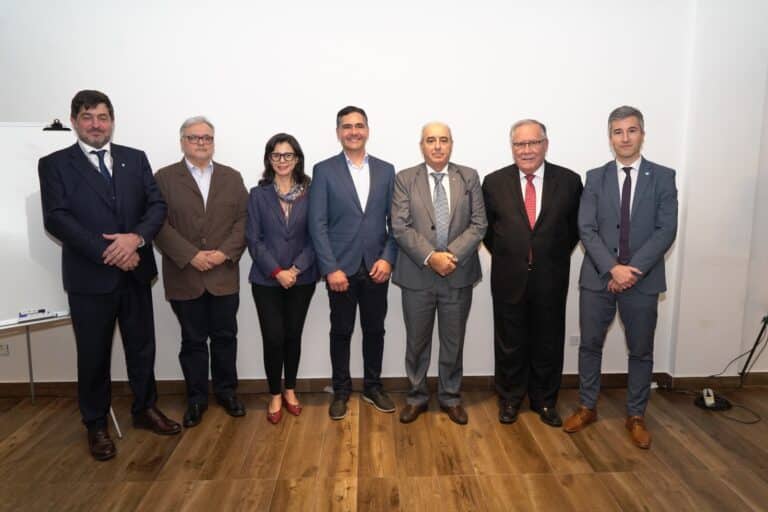
During his visit to Washington, Villalobos met with Vilsack and the other officials invited to discuss future partnerships for collaboration on food security and agricultural development in the Americas.
The IICA Director General and the U.S. Secretary of Agriculture agreed to strengthen the ties between their institutions through the sharing of technical experiences and participation in regional and hemispheric forums such as the ministerial summits.
Assistance in Central America
Between June 2007 and October 2009, Nicaragua implemented six projects funded by the Food for Progress Program, with IICA providing the necessary technical supervision. The initiatives focused on the strengthening of the plan to prevent the spread of leprosis in citrus fruits; the elimination of fruit flies in the northern part of Lake Xolotlán; the promotion and control of good agricultural practices and traceability; the prevention, control and eradication of diseases in low-scale shrimp farming, the certification of farms free from brucellosis and tuberculosis; and, finally, the eradication of classical swine fever.
In Honduras, the USDA resources were invested in 45 public and private projects, such as the implementation of the strategic plan of the National Agricultural Health Service (SENASA), to bring it in line with other Honduran legislation and the Codex Alimentarius.
Small and medium-sized enterprises also benefitted from the funds generated by the Food for Progress Program. Resources were used to facilitate the creation of irrigation systems, fumigation, pest control, the application of good agricultural practices and the germination of seeds in greenhouses, among other contributions.
During the meeting with Tom Vilsack, the Director General of IICA pointed out that the Institute was the only international organization that had provided technical assistance under USDA-approved projects during the political crisis in Honduras.
For more information, contact:
gerardo.escudero@iica.int
salvador.monge@iica.int
alondon@iicawash.org