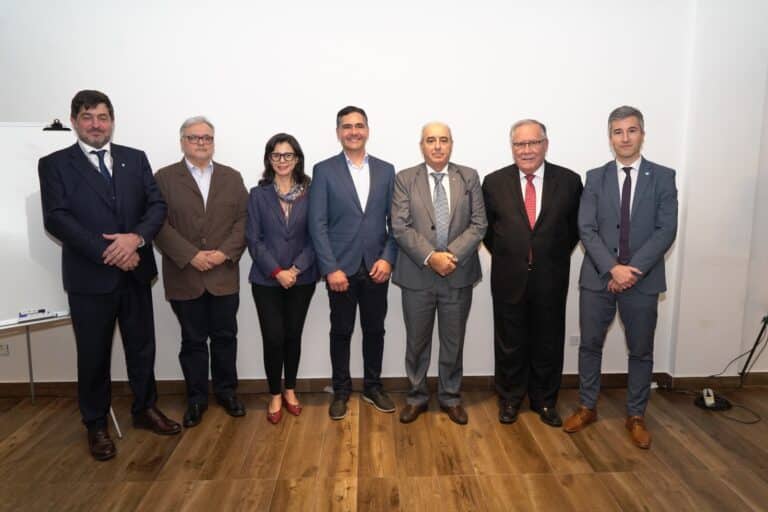
IICA Director General, Manuel Otero, welcomed Costa Rica’s Vice-President, Stephan Brunner Neibig, and outlined the extent of IICA’s cooperation programs and its “IICA of Open Doors initiatives.
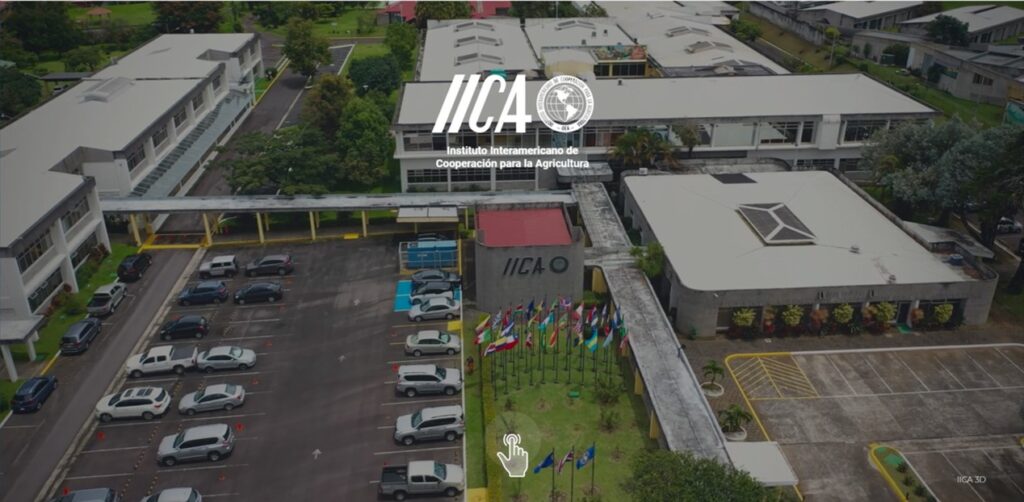
San Jose, 4 August 2022 (IICA) – Vice-President of Costa Rica, Stephan Brunner Neibig, visited the Headquarters of the Inter-American Institute for Cooperation on Agriculture (IICA), in San Jose, where he was introduced to programs and initiatives that the international specialist agency in agricultural and rural development is undertaking in this Central American country, in areas such as distribution channels and generational succession in agriculture and organic agriculture, with a view to improving profitability in the sector.
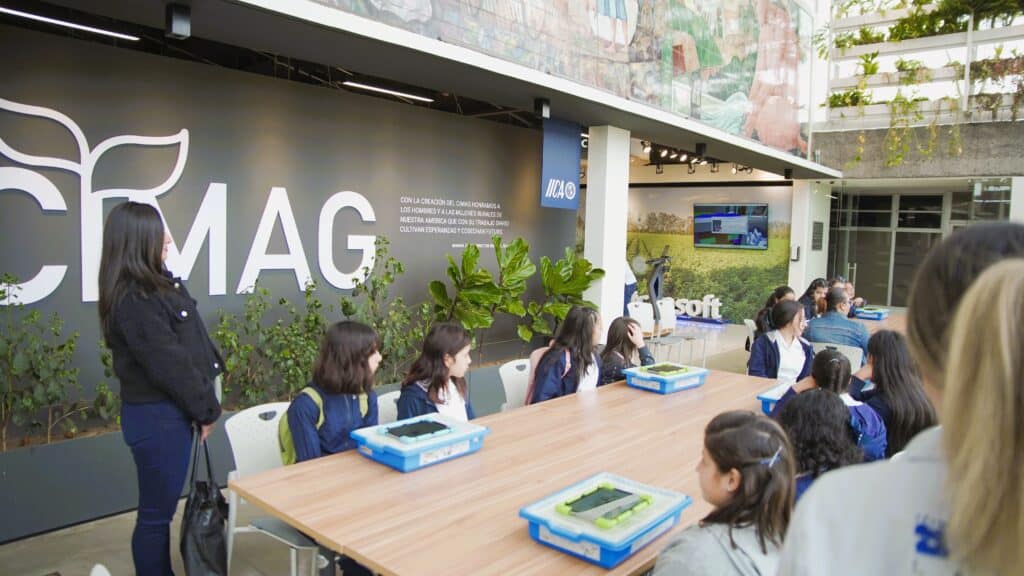
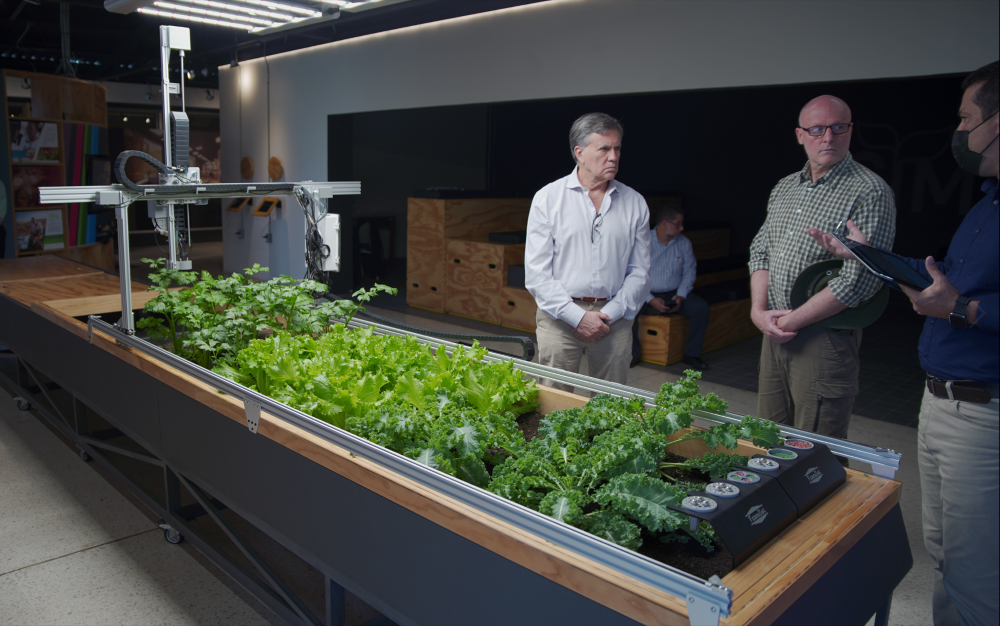
In his meeting with Director General Manuel Otero, Vice-President Brunner Neibig, learned about the extent of IICA’s cooperation programs and then visited the Fab-Lab agricultural innovation laboratory and the Interpretive Center for Tomorrow’s Agriculture (CIMAG) – two of the initiatives in the “IICA of Open Doors” program, which create a direct linkage between the Institute and Costa Rican society.
“We have spoken about various programs that are of great interest to me, such as hemispheric programs in organic agriculture and the agricultural entrepreneurs’ program targeting youth. We have a great interest in the latter, as we consider it extremely important to maintain a production base in rural areas, so as to entice young people to live and remain in these areas”, said the Costa Rican Vice-President, at the end of the visit.
“The agriculture sector has traditionally been very important and we want to highlight this even more. It is a major exporter and employment generator. We also need to reverse the trend of young people leaving rural areas and migrating to the city. We need to restructure rural areas, return areas to their natural state and, most of all, stem the erosion that is creating problems in rivers and then at the mouths of rivers, flowing into the sea. We consider this to be very important”, he said.
Given the current situation, the Costa Rican Vice-President also indicated that his country needs to “take action on the issue of food security”, explaining that for crops, such as basic grains, where local production cannot generate sufficient supplies, “we need to build up reserves”, since this “is the only way in which an importing country can ensure food security in these products”.
Along the same lines, he recommended that, “What we need is to move production closer to consumption centers and to slightly reduce the length of supply chains, in order to create this (food) security, particularly for perishable products”.
More information:
Institutional Communication Division
comunicacion.institucional@iica.int