
San José, 24 October 2025 (IICA). The Director General of the Inter-American Institute for Cooperation on Agriculture (IICA), Manuel Otero, urged investing in youth as key players in agricultural transformation across the Americas, emphasizing that their leadership and innovation will be essential to building more sustainable, inclusive and resilient agrifood systems and harnessing advances in science and technology for rural development.
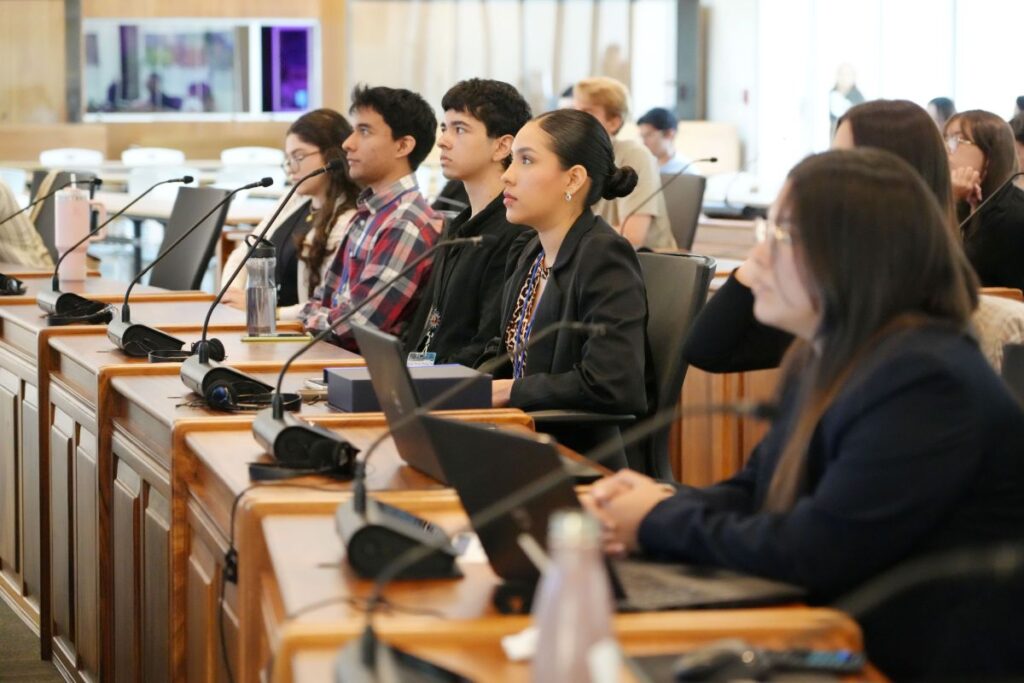
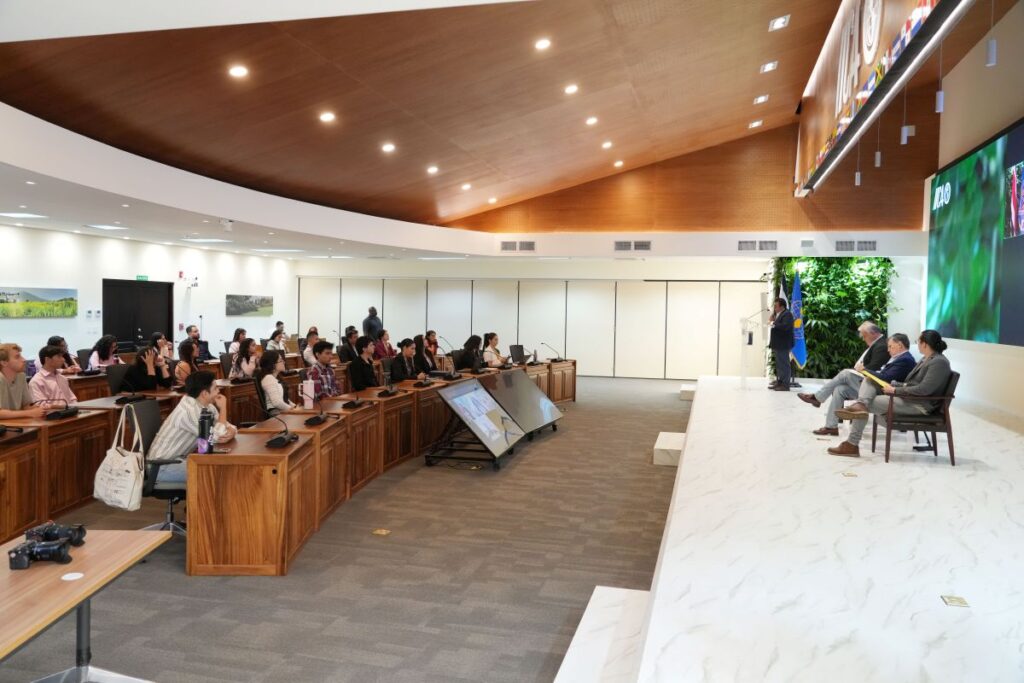
Otero spoke at the Second Youth Summit of the AgriTalent Program of the Americas, which served as a dialogue platform to recognize the contributions of youth to IICA and the agricultural sector across the hemisphere, while also fostering generational renewal.
The AgriTalent Program, created in mid-2018, is IICA’s internship program that provides young professionals and university students with learning and work experience opportunities in the agricultural sector, through internships at the Institute’s headquarters or in its 34 delegations across the Americas. The program offers a multicultural environment where participants can apply their knowledge in various fields.
“We must support youth and build a new narrative for agriculture; we must commit to a new generation of policies and leaders who believe in this sector. We now have a great opportunity to capitalize on the benefits of technology, as long as it is adapted to our realities—and that must be done hand in hand with young people”, Otero stated.
During the meeting, the IICA Director General encouraged young people to become agents of change, to “elevate the standing of agriculture” and to “strengthen the sector’s self-esteem”, given its crucial role in the sustainable development of the region’s countries.
“We must raise the status of agriculture, boost the sector’s self-esteem, and move past the idea that it always comes last in line. Agriculture is not the problem; take the environmental dimension, for example, where agriculture is considered the culprit, when it is actually part of the solution for the sustainable development of our nations. And young people are called to spearhead this sustainable, inclusive, and resilient agriculture”, he added.
Otero also celebrated the achievements of the AgriTalent Program of the Americas, calling on participants to strengthen networks, alliances and collective action, and reminding them that technical cooperation must translate into impact, hope and rural transformation.
AgriTalent Program in numbers
As of 2025, the program has managed 107 internship processes, 78 of which are active and 29 successfully completed.
More than half of the participants—54 international interns—have collaborated at IICA’s headquarters or in its offices in Argentina, Brazil, Canada, Chile, Colombia, Costa Rica, Ecuador, El Salvador, the United States, Guatemala, Honduras, Jamaica, Paraguay, Peru, the Dominican Republic, and Trinidad and Tobago.
Of the total internships, 68 have been undertaken by women and 39 by men. In terms of educational level, most interns hold a bachelor’s degree, while many have completed a master’s and some even a doctorate. The program has also welcomed students from technical high schools for professional practice opportunities.
Interns’ academic backgrounds range from social, agricultural, environmental, economic and political sciences to engineering and technology, among other complementary disciplines.
Their main areas of focus include technology, innovation and digital transformation; social and public policy dimensions; agricultural health, food safety and quality; resilient and sustainable agriculture; bioeconomy; and international trade—all of which align with IICA’s strategic priorities.
“I come from a rural area and know the realities of the productive sector. My internship at IICA has been enriching—it has helped me see the sector’s challenges from new perspectives. I now work as a consultant for an agricultural company in Guatemala, and that opportunity arose thanks to my experience at IICA”, said Juan Valverde, a final-year student in Agricultural Economics and Agribusiness.
“It has been a transformative experience—the program became much more than an internship. It was an enriching process of professional and personal growth. During this time, we have been able to apply our knowledge and discover new skills to help build a more sustainable future for agriculture”, added Fiorella Arauz, a Food Technology Engineer and Librarian.
More information:
Institutional Communication Division.
comunicacion.institucional@iica.int